

The Wild in Yellowstone & Grand Teton: Moose Rut
A thin layer of frost covers the willow flats as the first morning light reaches the towering peaks of the Teton Range. Along the edge of a quiet meadow, a bull moose emerges from the trees, his enormous antlers stretching well beyond the width of his body. He pauses, raises his head, and turns toward movement farther down the creek.
More than a hundred miles to the north, similar scenes unfold along the willow-lined waterways of Yellowstone's northeastern corner. Autumn has arrived in the Greater Yellowstone Ecosystem, and the quiet feeding behavior of summer is beginning to change.
By late September, bull moose throughout Yellowstone and Grand Teton National Parks are entering one of the most important periods of their annual cycle. Testosterone levels rise, bulls begin searching for receptive cows, and these normally solitary animals become increasingly focused on reproduction.
For wildlife photographers, the moose rut offers remarkable opportunities to capture impressive antlers, courtship behavior, and interactions between some of North America's largest mammals. Combined with the golden willows, changing aspens, and dramatic mountain landscapes of both parks, September and early October provide some of the year's most memorable wildlife photography experiences.
The Moose Rut: Seasonal Behavior and Courtship
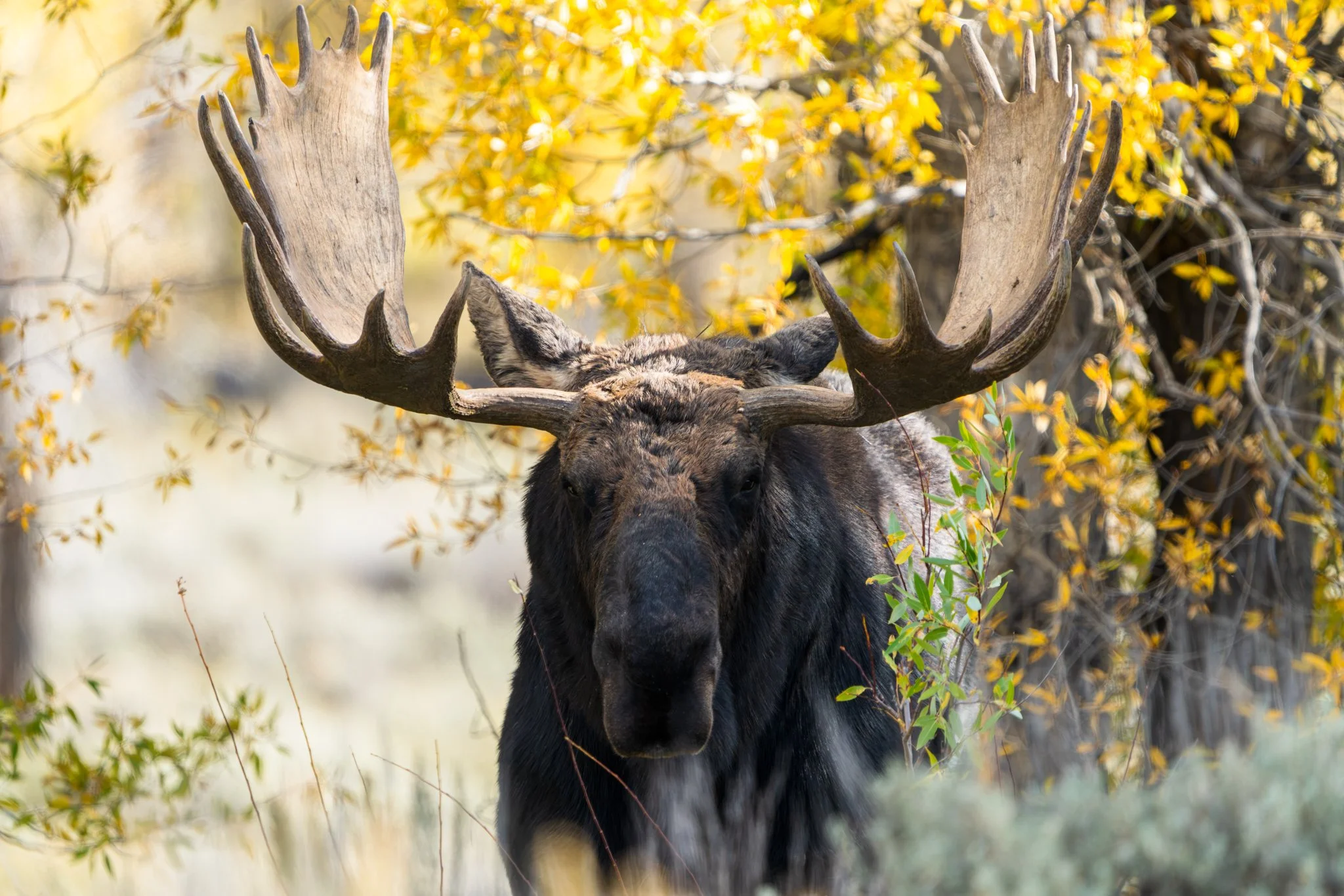
Throughout the Greater Yellowstone Ecosystem, moose mating season generally peaks in late September and early October, although breeding activity can begin earlier and continue later depending on individual animals and seasonal conditions.
During summer, bull moose spend much of their time feeding and growing new antlers beneath a protective layer of velvet. These antlers develop rapidly, supported by the nutrients bulls obtain from willow, aquatic vegetation, and other available plants.
As autumn approaches, hormonal changes cause the velvet to dry and separate from the developing antlers. Bulls rub their antlers against shrubs and trees to remove the remaining velvet, revealing the hardened bone beneath.
By the breeding season, their antlers have become an important part of competition and courtship.
Common Rutting Behaviors
Searching for Cows
Bulls travel through suitable habitat looking for receptive females. During the rut, mature bulls may become considerably more mobile, moving between willow flats, forest edges, and river corridors in search of breeding opportunities.
Scent Investigation
Moose rely heavily on their sense of smell to locate potential mates. Bulls investigate urine and other scent cues that help them determine whether a cow is approaching estrus.
Flehmen Response
A bull may raise or curl his upper lip after investigating scent. This behavior, known as the flehmen response, helps transfer chemical information to a specialized sensory organ.
For photographers, the expression can create an unusual and engaging behavioral portrait.
Raking Vegetation
Bulls rub and strike shrubs or small trees with their antlers. This behavior can occur during velvet removal and may also serve as a dominance display during the breeding season.
Rutting Pits
Mature bulls may scrape depressions into the ground and deposit urine within them. These rutting pits serve as important scent-marking locations, and receptive cows may investigate or wallow in them.
Courtship
A bull may remain close to a cow, following her movements and responding to her behavior. Unlike elk, moose generally do not gather large harems, although a dominant bull may interact with multiple cows during the breeding season.
Competition Between Bulls
When two mature bulls encounter one another, displays may escalate into physical confrontations. These contests can involve posturing, low vocalizations, and powerful pushing battles as the bulls lock antlers.
Not every encounter leads to a fight. Size, experience, and dominance often determine which animal retreats before a confrontation becomes necessary.
Where to Find Moose in Yellowstone National Park
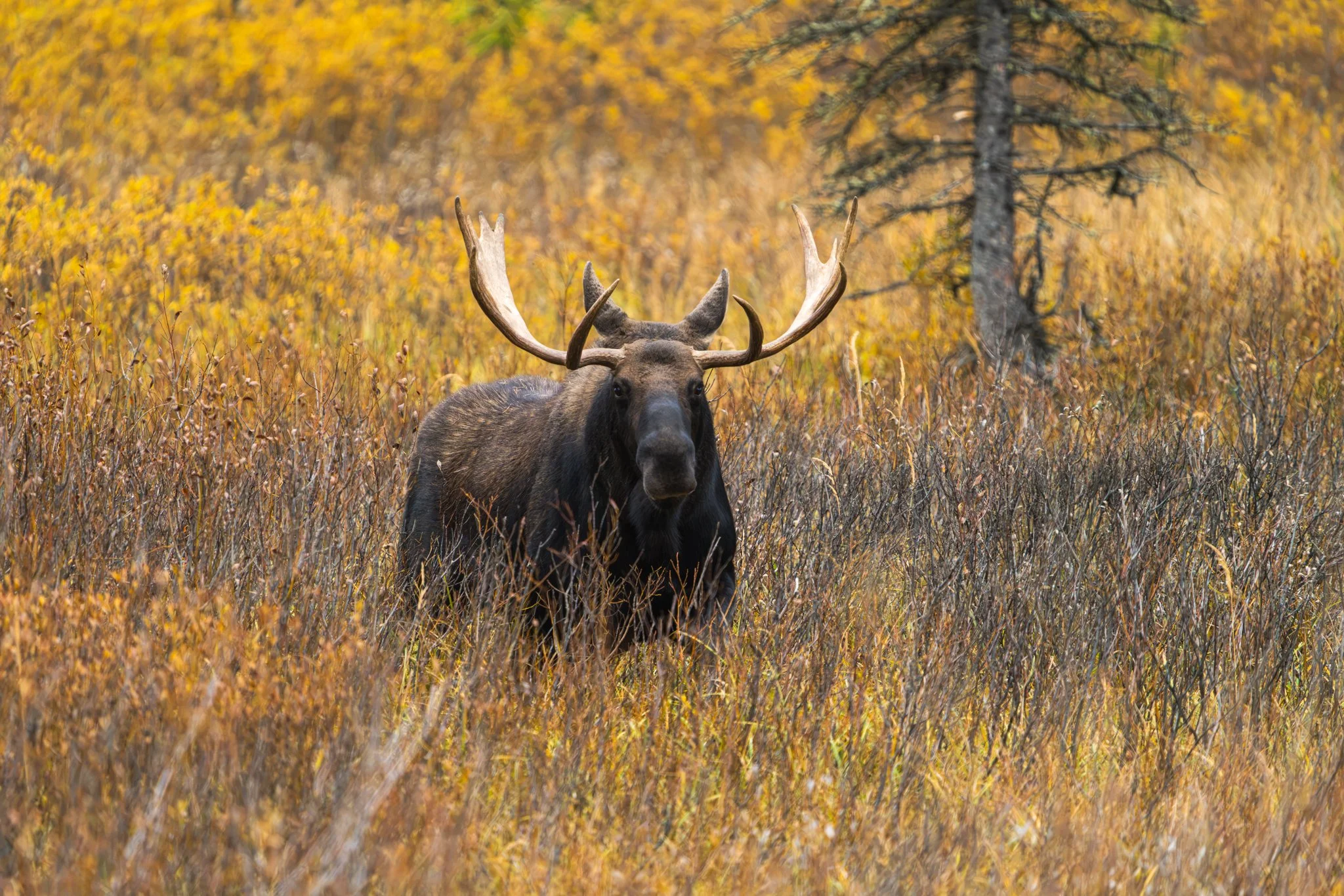
Yellowstone offers a distinctly wild setting for moose photography. Its northeastern corner contains willow-lined creeks, forested valleys, and open meadows where moose can be encountered throughout the year.
Unlike elk and bison, moose occur at relatively low densities in Yellowstone. Finding them often requires patience, careful observation, and an understanding of suitable habitat.
Best Areas in Yellowstone
Pebble Creek
The Pebble Creek region contains excellent moose habitat, particularly along willow-lined waterways and meadow boundaries. The surrounding mountains and forested slopes create beautiful environmental photography opportunities.
Soda Butte Creek Corridor
The Soda Butte Creek drainage is one of Yellowstone's established moose habitats. Willow stands, wetlands, and surrounding conifer forests provide suitable feeding areas and cover.
Northeast Entrance Region
The landscape between Pebble Creek and the Northeast Entrance contains additional willow-rich habitat and forest openings. Moose may move between these areas while searching for food or receptive mates.
Lamar Valley Tributaries
While moose are less commonly encountered in the broad, open center of Lamar Valley, suitable habitat exists along some of its tributaries and forested edges.
Other Yellowstone Habitats
Moose also occur in the Pelican Creek, Lewis River, and Gallatin River drainages. These areas provide additional opportunities where appropriate viewing access is available.
Photographing Moose in Yellowstone
Yellowstone's northeastern corner offers a relatively intimate wildlife photography experience.
The combination of willow flats, mountain streams, evergreen forests, and rocky slopes creates opportunities for environmental portraits that emphasize the moose's relationship with its habitat.
During the rut, watch for bulls moving along creek corridors or investigating areas where cows have been feeding.
Patience is particularly important here. Dense willows can conceal an animal almost completely, and a bull may emerge into an open meadow for only a short period before disappearing again.
Where to Find Moose in Grand Teton National Park
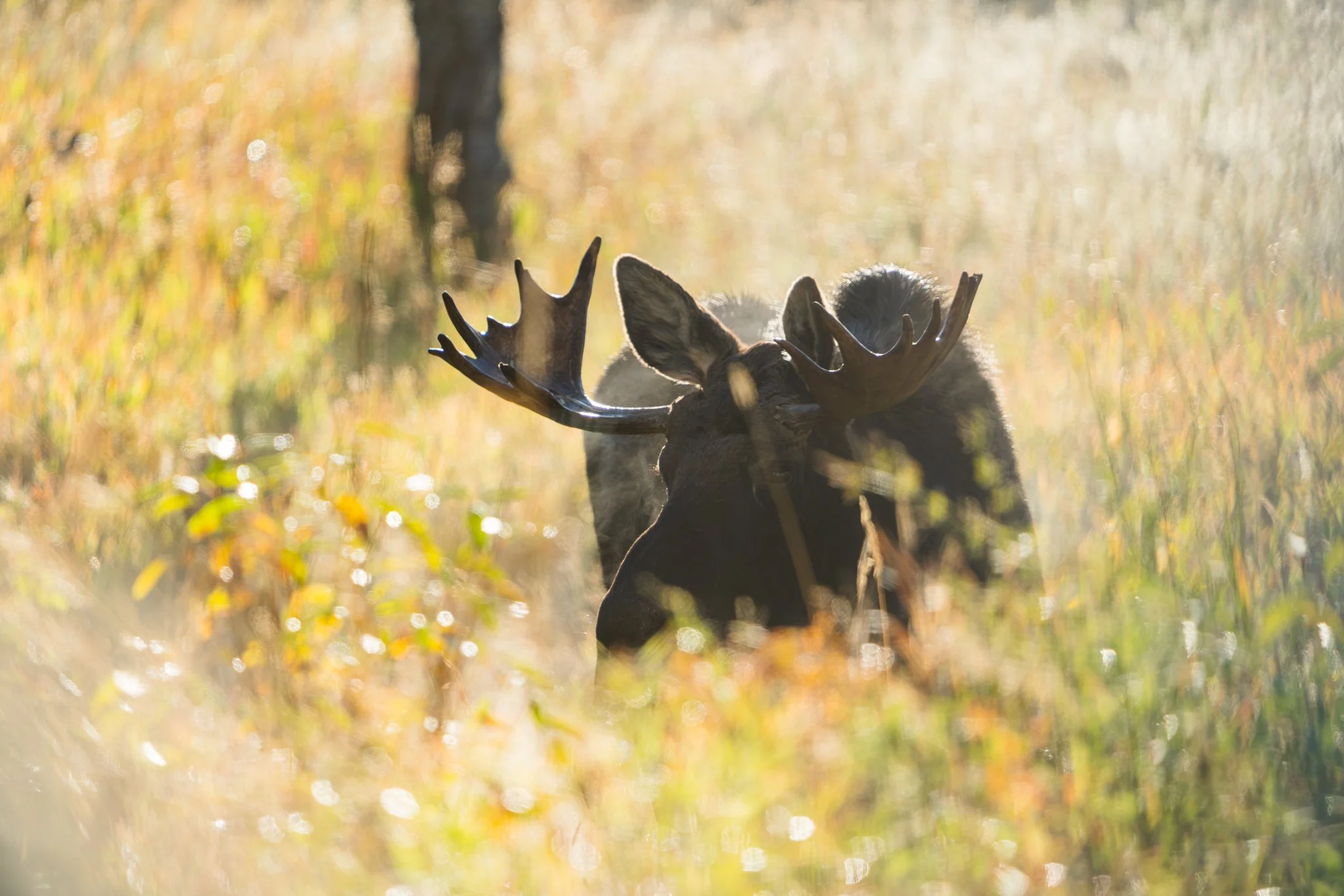
Grand Teton National Park provides a different setting for moose photography, with extensive riparian habitat, willow flats, and some of the most recognizable mountain scenery in North America.
Moose are found throughout suitable areas of the park, particularly around waterways where willows and aquatic vegetation provide important food sources.
The combination of accessible viewing areas and dramatic landscapes makes Grand Teton an especially rewarding place to photograph the autumn moose rut.
Best Areas in Grand Teton
Gros Ventre River Corridor
The Gros Ventre River corridor is one of Grand Teton's notable moose habitats. Cottonwood stands, riverbanks, willow thickets, and open meadows provide feeding areas and cover.
During autumn, bulls may travel through these habitats searching for receptive cows. The area around Gros Ventre Junction and the river corridor is worth observing from established roads and accessible viewing locations.
Oxbow Bend
Oxbow Bend is among Grand Teton's most recognizable wildlife photography destinations.
The slow-moving Snake River, surrounding willows, and views of Mount Moran create opportunities for environmental portraits and reflections.
Moose may browse along the river's willow-lined edges, making this an excellent area to observe from the designated overlook and roadside pullouts.
Willow Flats
Located near Jackson Lake Lodge, Willow Flats contains extensive willow habitat, wetlands, and open terrain.
The surrounding mountains create a dramatic setting for wildlife photography, especially during early morning light when the peaks begin catching the first sunlight.
Use established overlooks and roadside viewing locations rather than approaching animals through dense willow vegetation.
Blacktail Ponds and the Snake River Corridor
The Blacktail Ponds area, north of Moose Junction, contains wet meadows and willow-lined habitat where moose may feed and travel.
The surrounding Snake River corridor also supports suitable habitat, with opportunities to observe wildlife from designated viewing areas.
Moose-Wilson Road Corridor
The Moose-Wilson corridor contains forest, wetlands, and willow habitat that support a variety of wildlife, including moose.
Visibility can be limited by dense vegetation, so sightings may be brief and unpredictable. Road closures and construction can also affect access, making it important to check current conditions before visiting.
Photographing Moose in Grand Teton
What makes Grand Teton particularly special for moose photography is the combination of wildlife and landscape.
A mature bull standing among golden willows with the Teton Range rising in the background creates an entirely different image from a tight portrait taken at 600mm.
Rather than concentrating entirely on filling the frame with the animal, consider stepping back photographically and including the environment.
Reflections, autumn color, river corridors, and dramatic mountain light can all contribute to images that communicate not only the behavior of the moose but also the landscape it inhabits.
When to Photograph the Moose Rut
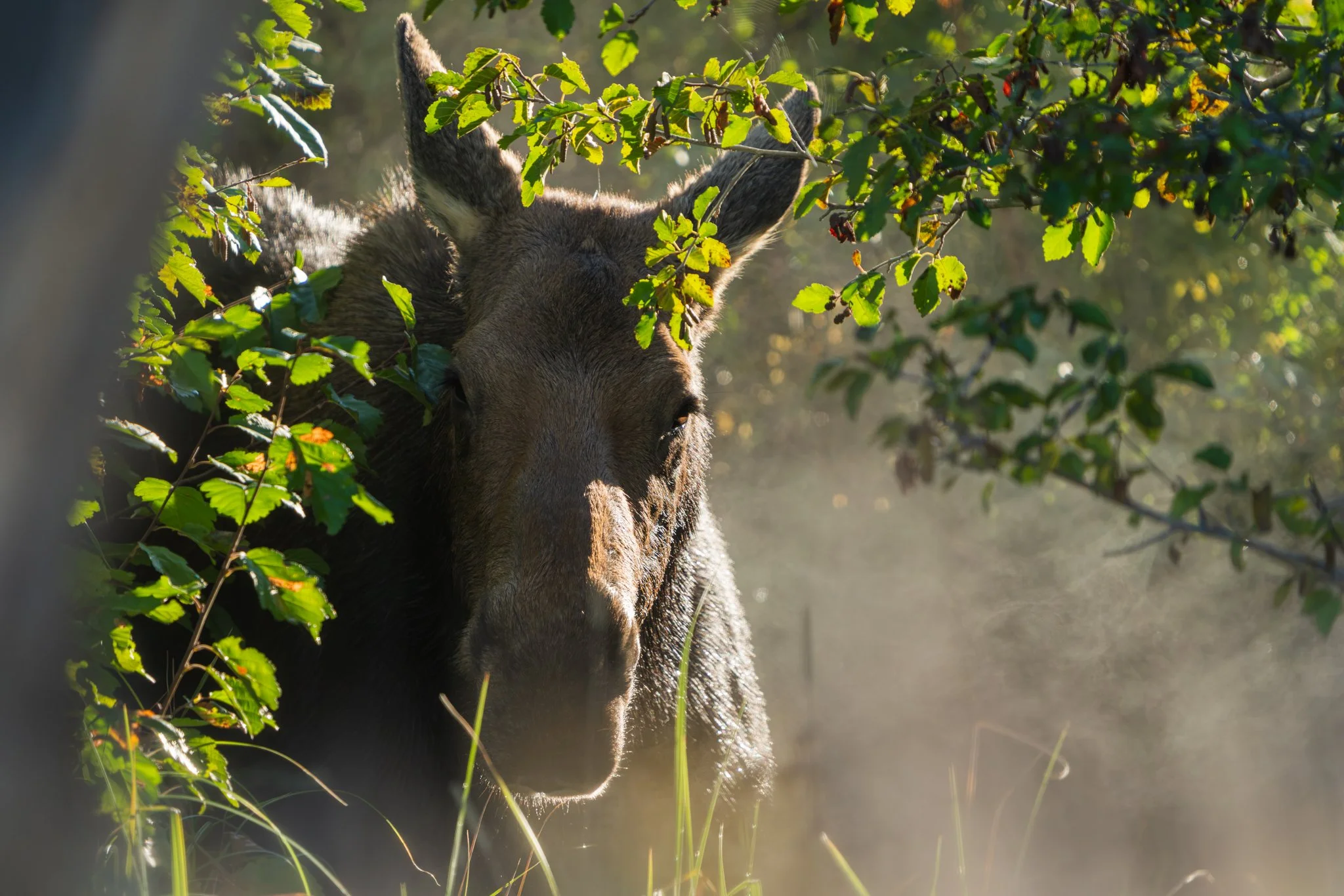
Although moose can be active throughout the day, certain periods offer better combinations of light, temperature, and behavior.
Best Time of Day
Early Morning: Sunrise through mid-morning is especially rewarding. Cooler temperatures and soft light can encourage movement while creating excellent photographic conditions.
Late Afternoon: The final hours before sunset often provide warm directional light and opportunities to observe moose emerging from shaded habitat.
Throughout the Day: Bulls searching for receptive cows may travel outside their usual feeding periods, particularly during the peak of the rut.
Seasonal Timing
Early September
Bulls are finishing velvet removal, continuing to feed, and beginning to show changes in breeding-related behavior.
Mid-September
Movement may increase as bulls begin searching more actively for receptive cows. Courtship behavior becomes increasingly possible.
Late September through Early October
This is generally the most important period for observing the moose rut throughout Yellowstone and Grand Teton.
Bulls may become more vocal, travel between breeding areas, and engage in courtship or competition with other males.
Because rutting behavior varies between individuals and years, these periods should be treated as general seasonal windows rather than guaranteed dates.
Capturing the Autumn Giants: Moose Photography Tips
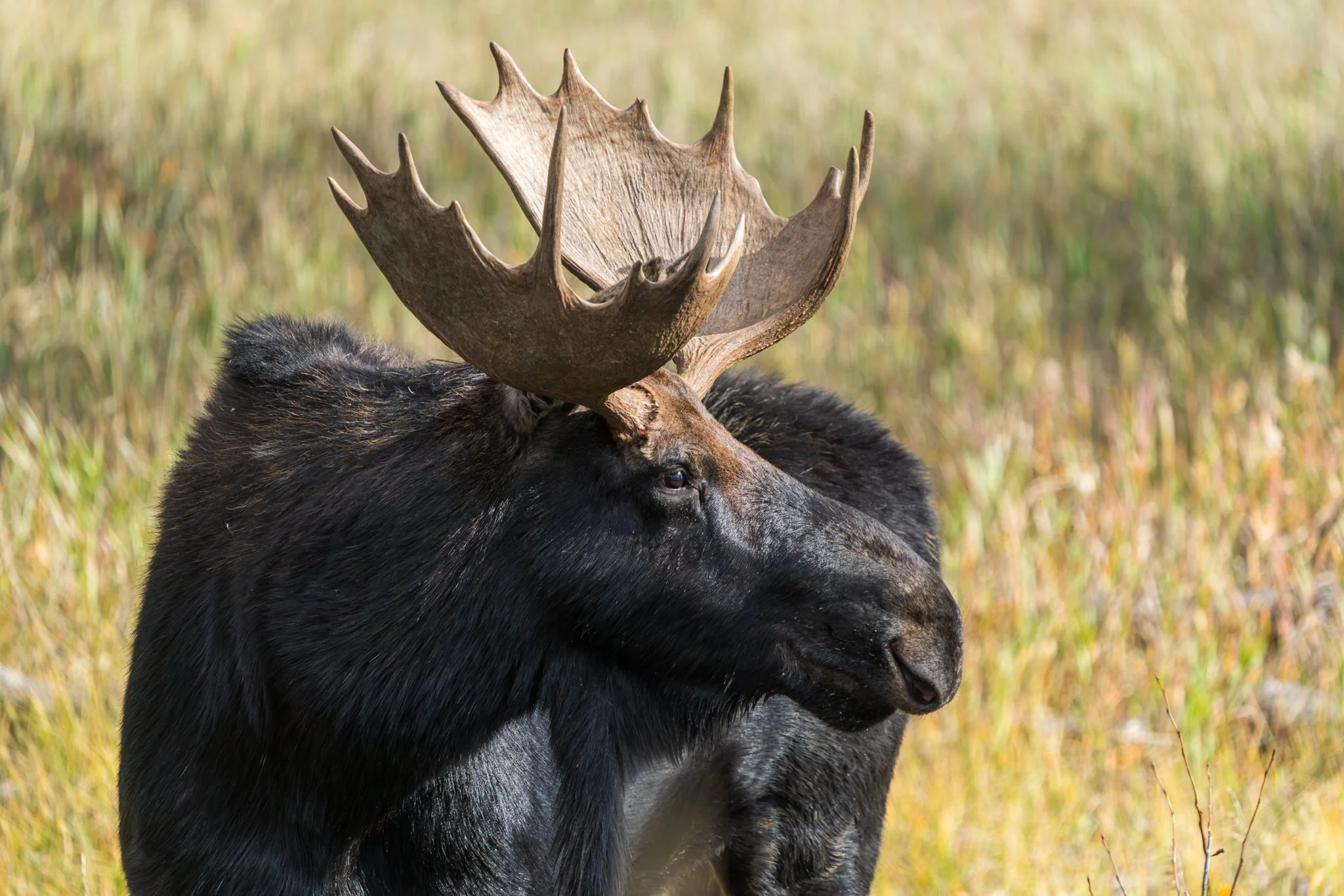
Photographing rutting moose requires patience, preparation, and an understanding of animal behavior.
Whether you're working the willow-lined creeks of Yellowstone or the mountain backdrops of Grand Teton, the goal is to capture natural behavior without influencing the animal.
Recommended Gear and Settings
Lens: 200–600mm telephoto for portraits, behavior, and distant subjects.
Wide-Angle or Standard Zoom: 24–70mm or 70–200mm for environmental compositions when wildlife is sufficiently distant.
Aperture: f/5.6–f/8 for most telephoto images, adjusting depth of field depending on the composition.
Shutter Speed: 1/1250s for walking movement; 1/2000s or faster for interactions or confrontations.
ISO: Auto ISO, allowing the camera to respond to changing light.
Autofocus: Continuous animal subject tracking when available.
A sturdy tripod or monopod can be helpful during extended periods of observation, particularly when working with longer focal lengths.
Composition Tips
Show the Antlers
Broadside portraits can emphasize the extraordinary width and shape of a mature bull's antlers.
Try adjusting your composition so the antlers stand clearly against an uncluttered background.
Capture Courtship and Interaction
Look for bulls investigating cows, displaying the flehmen response, raking vegetation, or responding to other males.
These behavioral moments often produce stronger storytelling images than a stationary portrait.
Use the Autumn Landscape
In Yellowstone, include willow flats, streams, evergreen forests, and surrounding mountains.
In Grand Teton, take advantage of golden aspens, open meadows, reflections, and the dramatic peaks of the Teton Range.
Watch the Background
Moose often occupy dense vegetation, which can create distracting backgrounds.
Look for opportunities when the animal naturally moves into an opening rather than attempting to reposition it.
Anticipate Movement
A bull turning its ears toward another animal, repeatedly investigating scent, or beginning to follow a cow may signal that an interaction is developing.
Prepare your composition and camera settings before the moment occurs.
Ethical Reminder
In both Yellowstone and Grand Teton National Parks, visitors must maintain at least 25 yards (23 meters) from moose, although substantially greater distances are advisable during the rut.
Grand Teton park officials have recommended remaining at least 100 yards from rutting bull moose because of their unpredictable behavior.
Never position yourself between a bull and cow, approach an animal through dense willows, or interfere with wildlife movement.
Moose can charge with little warning. If an animal changes its behavior because of your presence, give it additional space immediately.
The photograph is never worth compromising the safety of the animal, yourself, or other visitors.
Exploring the Wild: Two Parks, One Remarkable Season
One of the things I find most fascinating about photographing moose is how dramatically their behavior changes throughout the year.
During summer, bulls spend much of their time feeding and growing antlers. By September, those antlers have become part of an entirely different story.
What makes photographing the rut across Yellowstone and Grand Teton especially rewarding is how differently the landscapes frame that behavior.
In Yellowstone, willow-lined streams, forested valleys, and rugged mountain terrain provide a quieter, more secluded setting for moose encounters.
In Grand Teton, the combination of broad valley floors, cottonwood stands, and towering mountain peaks creates opportunities for beautiful environmental photography.
The behavior is fundamentally the same, but the photographic possibilities can be remarkably different.
When observing a mature bull, I pay attention not only to the animal itself but also to where he's looking, how he responds to scent, and whether another moose may be nearby.
Learning to recognize those signals can reveal the beginning of an interaction long before it becomes obvious.
Whether that moment unfolds along Soda Butte Creek or beneath the Teton Range, it's a reminder that successful wildlife photography begins with understanding the animal.
See It for Yourself
September and early October are among the most rewarding times to experience wildlife photography in the Greater Yellowstone Ecosystem.
From the willow-lined creeks of Yellowstone's northeastern corner to the spectacular autumn landscapes of Grand Teton, the moose rut provides opportunities to observe some of North America's largest mammals during one of the most important periods of their annual cycle.
If you'd like to experience this season firsthand, join Wildscape Adventure for a private instructional wildlife photography tour. Each experience focuses on understanding animal behavior, working with natural light, improving composition, and photographing wildlife responsibly.
Explore upcoming adventures:
Wild Yellowstone Photography Tours
Wild Tetons Photography Tours
Antlers in the Tetons: Moose Rut Photography Workshop
