

The Wild in Yellowstone: Grizzlies in Hyperphagia
Cold October winds sweep across Yellowstone's northern range, carrying the unmistakable signs of approaching winter. Golden grasses bend beneath the breeze, patches of fresh snow appear along distant ridgelines, and the last colors of autumn begin to fade.
Across the landscape, grizzly bears are preparing for one of the most demanding periods of their lives.
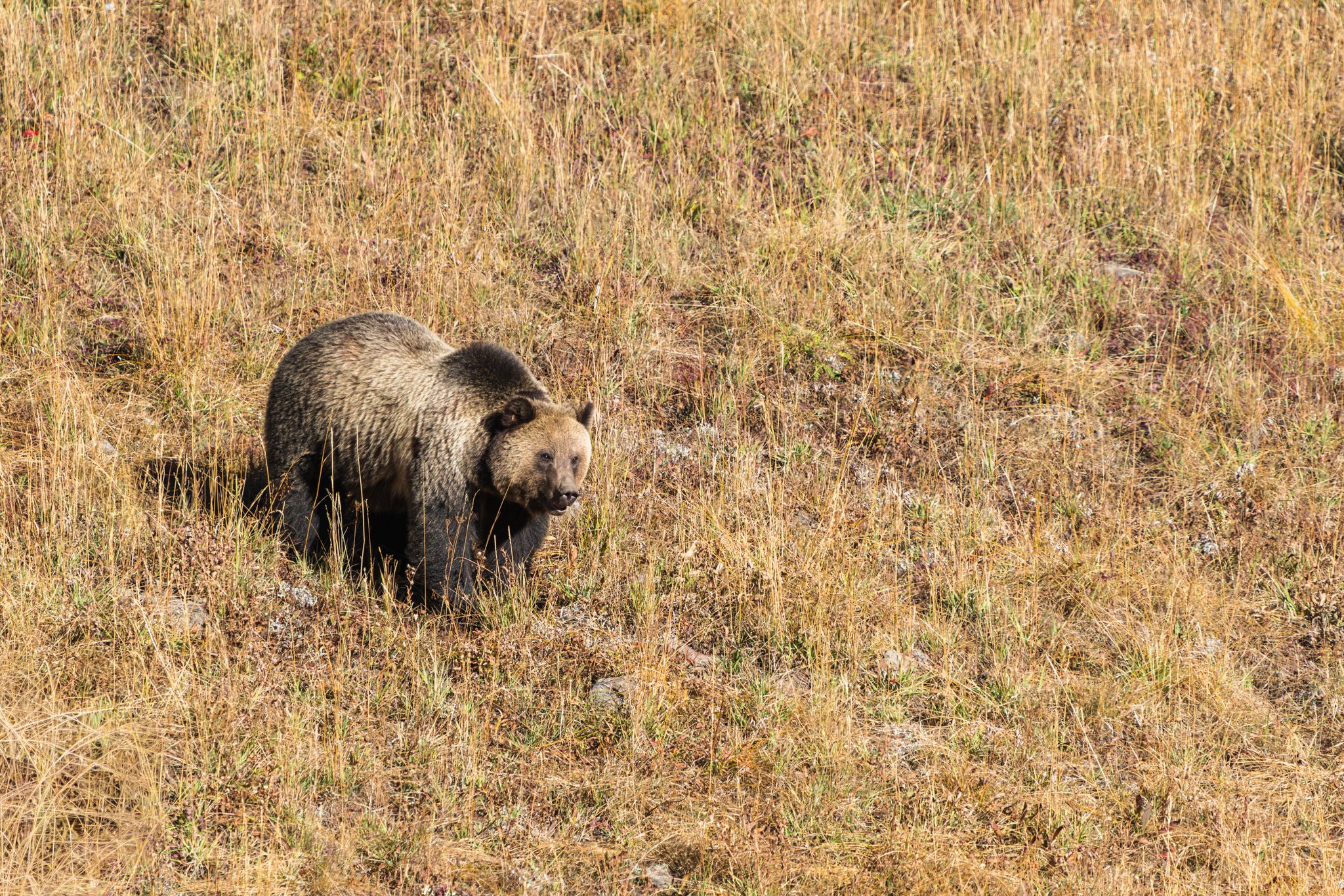
A large boar moves steadily across a hillside, lowering his head to investigate the ground before continuing toward another feeding area. Every available food source matters now. The months ahead will bring deep snow, freezing temperatures, and an extended period inside a winter den.
October is a critical time for Yellowstone's grizzly bears. As they enter the final stages of seasonal weight gain, their behavior is increasingly shaped by the need to accumulate enough energy to survive winter.
For wildlife photographers, this period offers a fascinating opportunity to observe one of Yellowstone's most powerful predators during a remarkable biological transition.
Hyperphagia: Preparing for Winter
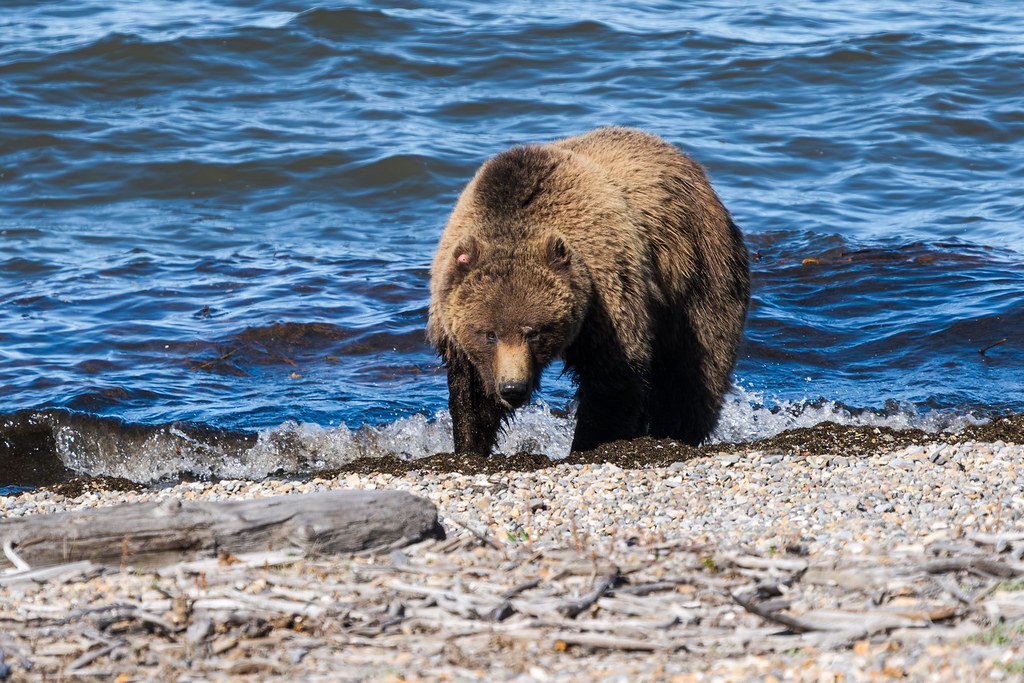
Hyperphagia describes a period of greatly increased feeding that helps bears accumulate fat reserves before entering winter dens.
For Yellowstone's grizzly bears, this process becomes particularly important during late summer and autumn.
Rather than simply eating more of the same foods, bears take advantage of available high-calorie resources throughout their home ranges.
The goal is to accumulate enough stored energy to sustain their bodies through an extended period without normal feeding.
Important Autumn Food Sources
Whitebark Pine Nuts
In years when cone production is favorable, whitebark pine seeds can provide an important source of concentrated energy.
Grizzly bears often obtain these seeds by excavating caches collected by red squirrels.
Roots and Vegetation
Bears continue feeding on roots, grasses, sedges, and other plant material where available.
Berries
Late-season berries can contribute to the diet when fruit remains accessible.
Carrion and Animal Protein
Bears may feed on carcasses of elk, bison, and other animals. These resources can provide substantial energy, particularly as other foods become less available.
Common October Behaviors
Spending extended periods searching for food
Digging for roots and other underground resources
Traveling between productive feeding habitats
Investigating or defending animal carcasses
Feeding on available berries and vegetation
Increasing body fat before den entry
Not every bear follows the same feeding pattern. Age, sex, reproductive condition, elevation, and local food availability influence where individual grizzlies feed and how they behave.
When Do Yellowstone's Grizzlies Enter Their Dens?
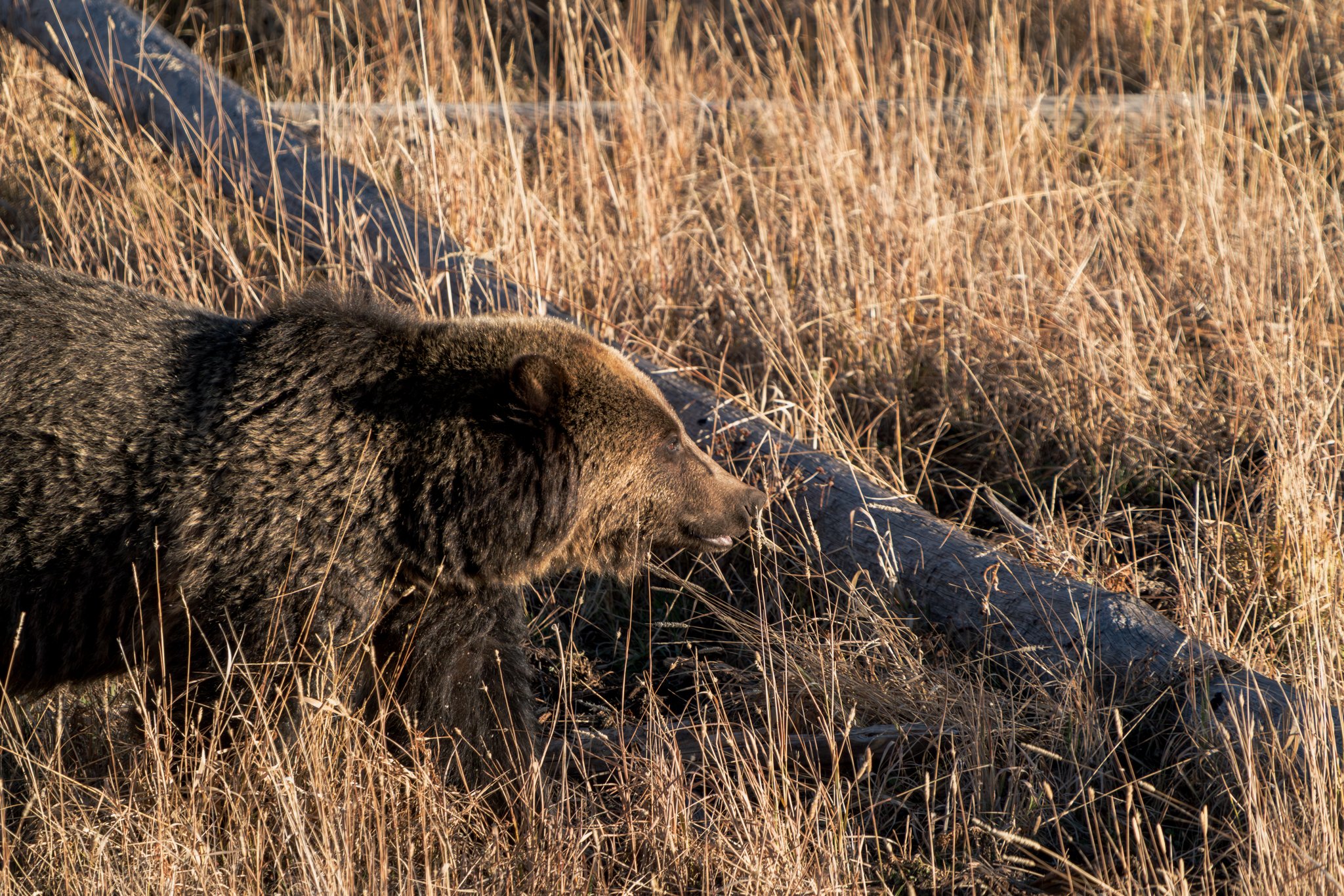
Denning generally begins during November, although the timing varies.
Pregnant females often enter dens earlier than adult males, while some bears remain active later when conditions and food availability permit.
By October, many bears are approaching their greatest body condition of the year.
The transformation can be remarkable. Bears that appeared comparatively lean during spring may look substantially heavier by autumn.
This seasonal change is one of the most interesting aspects of grizzly bear biology.
Where to Find Grizzly Bears in October
Best Areas to Search
Lamar Valley: Open slopes and surrounding habitat may provide distant viewing opportunities.
Blacktail Plateau: Grasslands and forest transitions can support seasonal bear activity.
Tower Junction Region: Forest edges and nearby hillsides provide potential habitat.
Hayden Valley: Suitable open terrain may allow observers to locate bears at considerable distances.
Dunraven Pass and Mount Washburn Region: Higher-elevation habitats may be relevant when seasonal food conditions and road access permit.
October bear distribution is heavily influenced by food.
A location that produces sightings during spring may not be equally productive in autumn. Bears feeding on whitebark pine seeds or other concentrated foods may remain in forested or remote areas rather than open roadside valleys.
Best Time of Day
Early Morning: Good light and potential feeding activity.
Late Afternoon: Another useful period for wildlife observation.
Throughout the Day: Bears may feed or travel at any hour during hyperphagia.
Weather, elevation, and food availability are often more important than a fixed daily schedule.
Photographing Grizzly Bears in Autumn
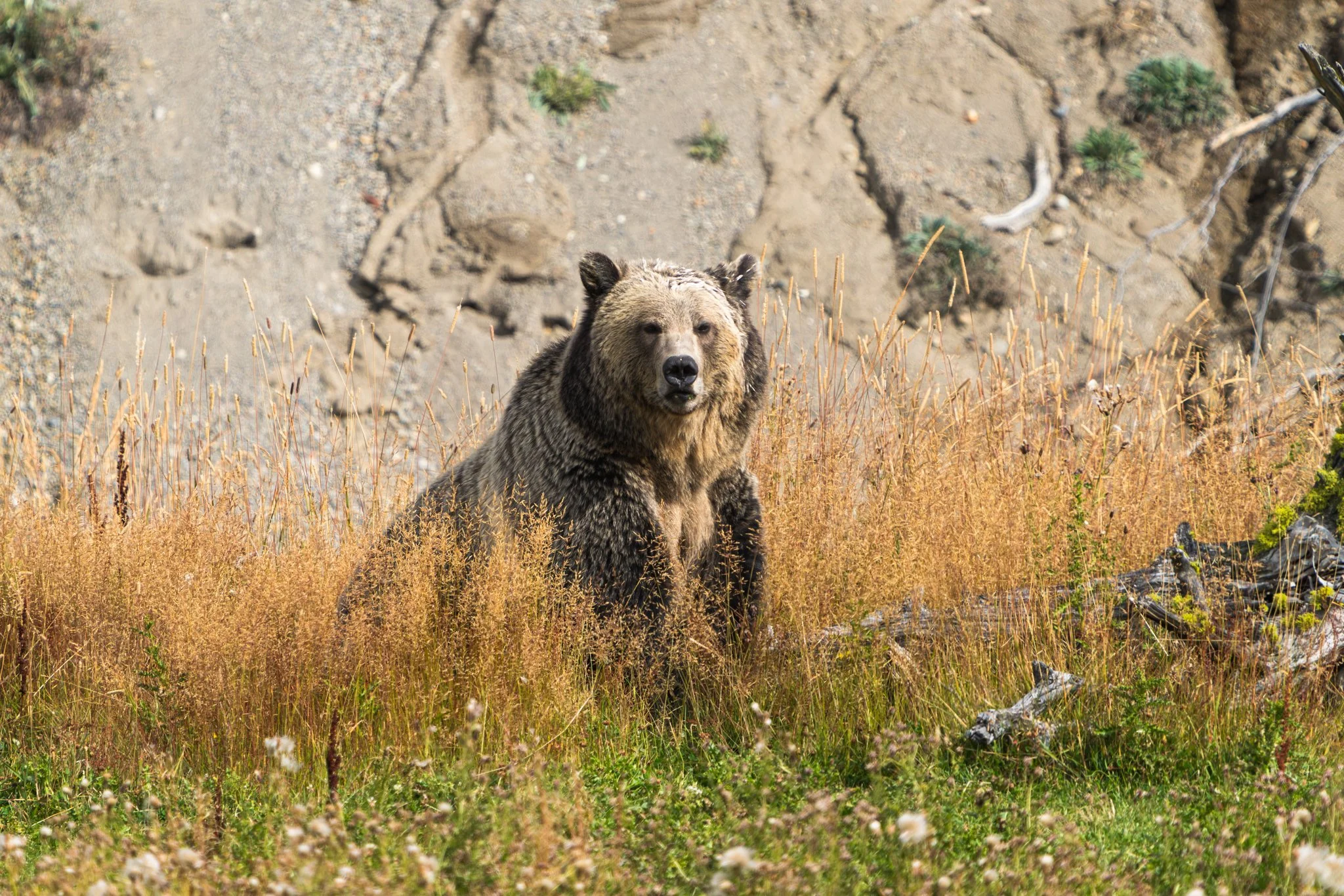
October offers a distinctive palette for wildlife photography: golden grasses, dark conifers, early snowfall, and dramatic mountain weather.
The challenge is combining those conditions with natural bear behavior.
Recommended Gear and Settings
Lens: 400–600mm telephoto, or longer when necessary
Aperture: f/5.6–f/8
Shutter Speed: 1/1000s–1/1600s for walking and feeding movement
ISO: Auto ISO
Support: Stable tripod for distant subjects
Composition Tips
Show the Landscape
An environmental portrait can be particularly effective when a bear is moving through autumn grasslands or across a snow-dusted hillside.
Look for Feeding Behavior
Digging, searching for food, and investigating the ground can help communicate the story of hyperphagia.
Include Seasonal Contrast
The difference between a grizzly's thick autumn coat and the surrounding golden vegetation creates beautiful natural contrast.
Observe Before Photographing
A bear feeding in one area may remain there for an extended period. Use that opportunity to observe its behavior and adjust your composition without moving closer.
Ethical Reminder
Maintain at least 100 yards (91 meters) from grizzly bears at all times.
Never approach a bear feeding on a carcass, enter a closed bear management area, or attempt to influence an animal's movement for a photograph.
Bears preparing for denning need undisturbed access to food. Give them the space required to feed naturally and safely.
Exploring the Wild: A Season of Preparation
One of the most interesting parts of photographing Yellowstone's grizzly bears is seeing how their behavior changes between spring and autumn.
In April, the focus is on bears emerging from winter, searching for food, and returning to active life.
By October, those same animals are preparing to disappear into the mountains again.
Understanding that cycle adds meaning to the photographs.
A grizzly digging for roots or feeding on a hillside may not appear as dramatic as a bear defending a carcass, but the behavior is part of a much larger survival story.
And in Yellowstone, those quieter moments often tell us the most about life in the wild.
See It for Yourself
October is one of Yellowstone's most beautiful and unpredictable months.
Autumn colors, changing weather, and wildlife preparing for winter create extraordinary opportunities for photographers willing to work patiently and adapt to conditions.
Join Wildscape Adventure for a private Yellowstone wildlife photography tour and experience the park's seasonal transitions through a deeper understanding of animal behavior.
