

Cold November air moves through Gardner Canyon as the first snow of the season collects along the steep cliffs above the road. High on a rocky slope, two bighorn rams stand facing one another, their massive curved horns creating unmistakable silhouettes against the pale morning sky.
One ram begins moving away, climbing higher across the rocky hillside.
Then he turns.
With a sudden burst of speed, he charges toward his rival, lowering his head just before the two animals collide.
The sound of their horns meeting carries across the canyon.
November marks the beginning of the bighorn sheep breeding season in Yellowstone, bringing some of the most remarkable displays of strength and competition found anywhere in the park.
For wildlife photographers, these encounters offer opportunities to document behavior that has evolved over thousands of years in one of North America's most extraordinary mountain mammals.
The Bighorn Sheep Rut: Dominance and Competition
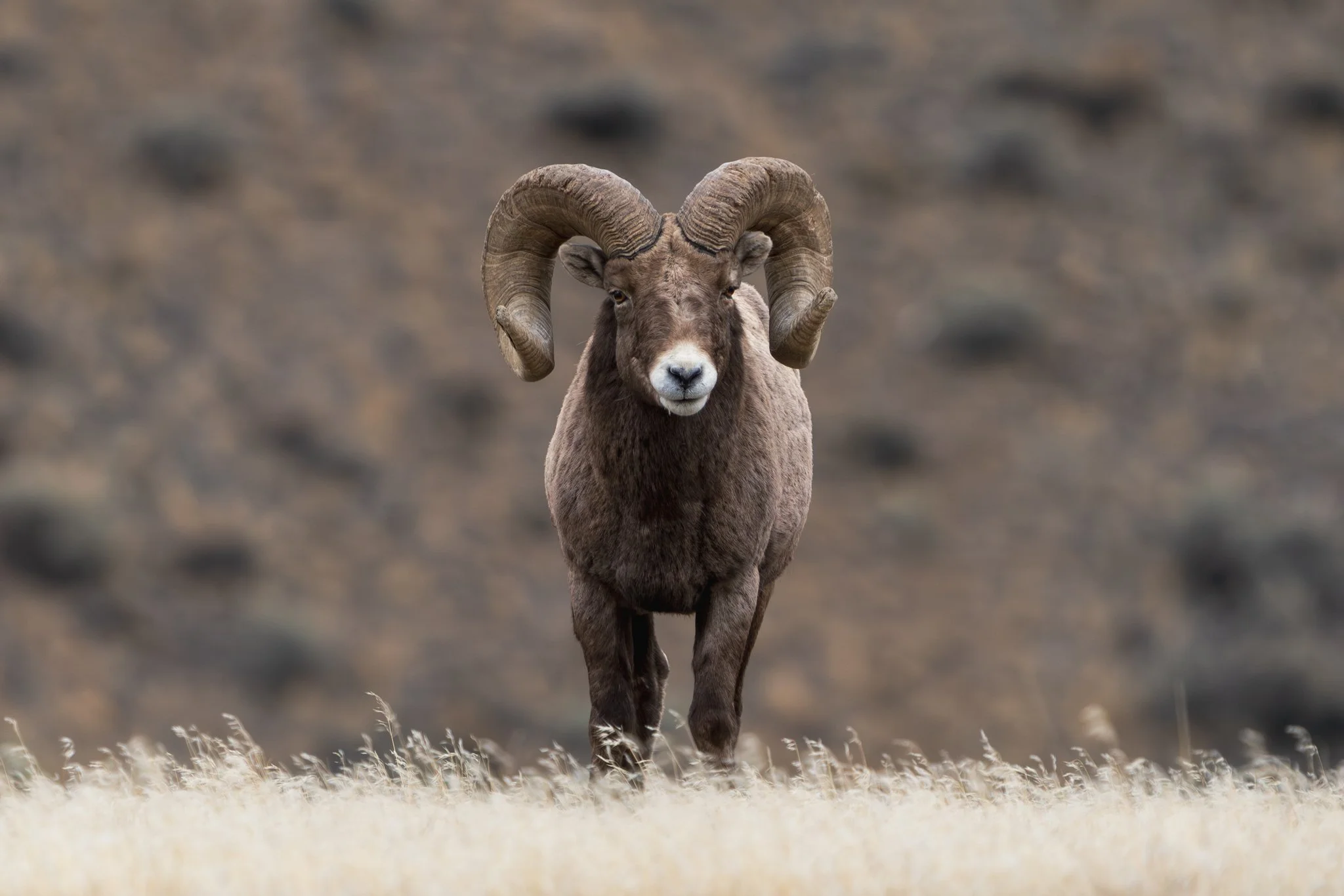
Bighorn sheep mating season generally begins in November and continues into early winter.
During this period, rams compete for access to receptive ewes. Social rank, age, body size, and horn development all influence their ability to compete.
Unlike the breeding displays of elk, bighorn sheep often use direct physical confrontations to establish dominance.
Common November Behaviors
Dominance Displays
Rams assess one another through posture, movement, and close interactions before more serious confrontations occur.
Parallel Walking
Competing males may move near one another while assessing strength and position.
Horn Clashes
When a dispute escalates, a ram may back away, turn, and charge toward an opponent. Their horns absorb tremendous force during these collisions.
Courtship
Rams investigate receptive ewes and may follow them closely during the breeding season.
Movement Between Groups
Mature rams may travel between ewe groups while searching for breeding opportunities.
Not every interaction results in a fight. Many contests are resolved through size, age, and dominance signals.
Built for Impact: The Remarkable Bighorn Ram
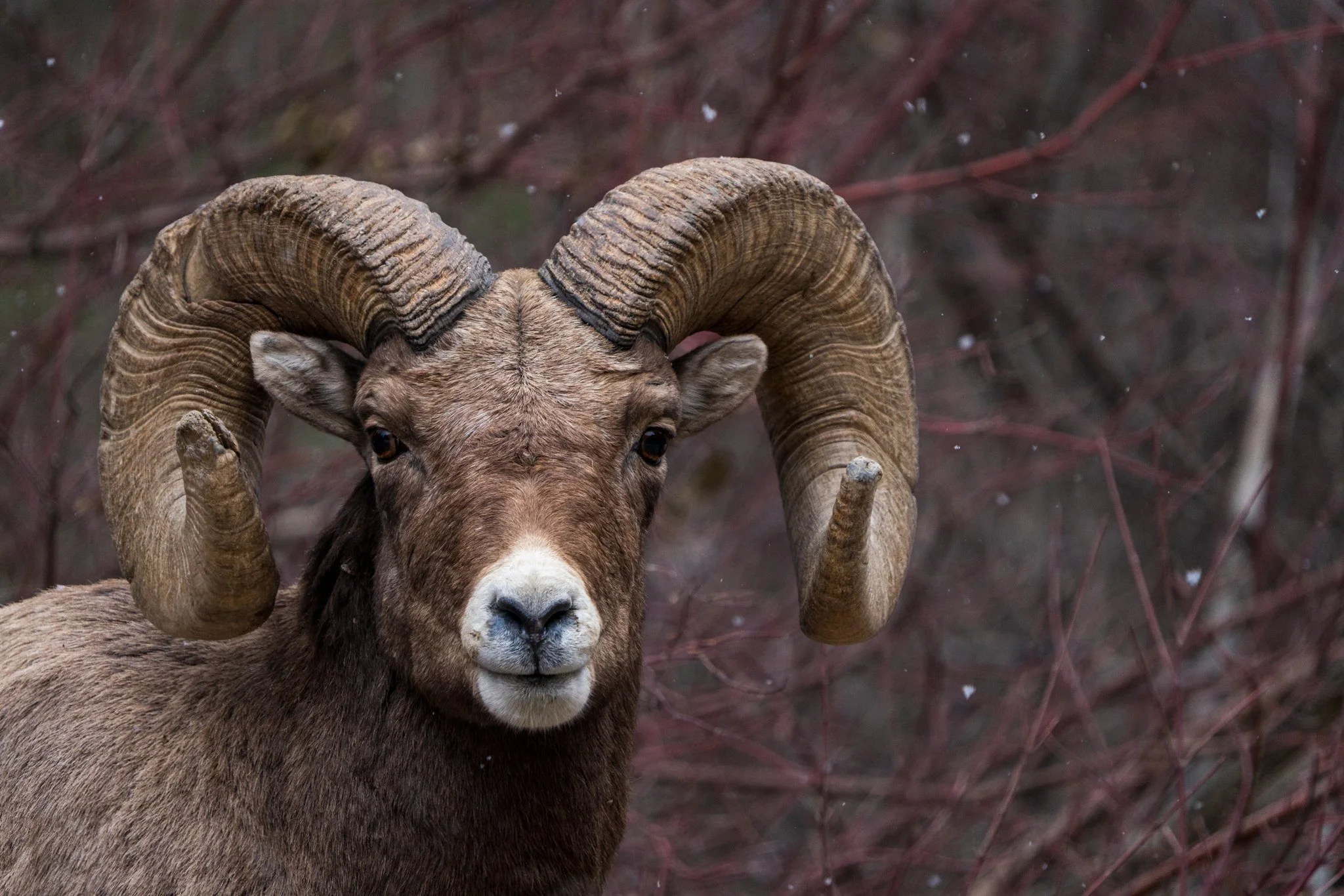
Few animals possess the physical adaptations of a mature bighorn ram.
Their enormous horns grow throughout life and can account for a substantial portion of an adult male's body weight.
These horns serve important roles in competition and social rank.
Bighorn sheep also possess specialized skull structures that help them tolerate the tremendous forces generated during head-to-head collisions.
Older rams may develop distinctive horn tips that appear worn or broken, a feature commonly called brooming.
For photographers, these details can make individual animals recognizable and provide clues about age and social status.
Where to Find Bighorn Sheep in November
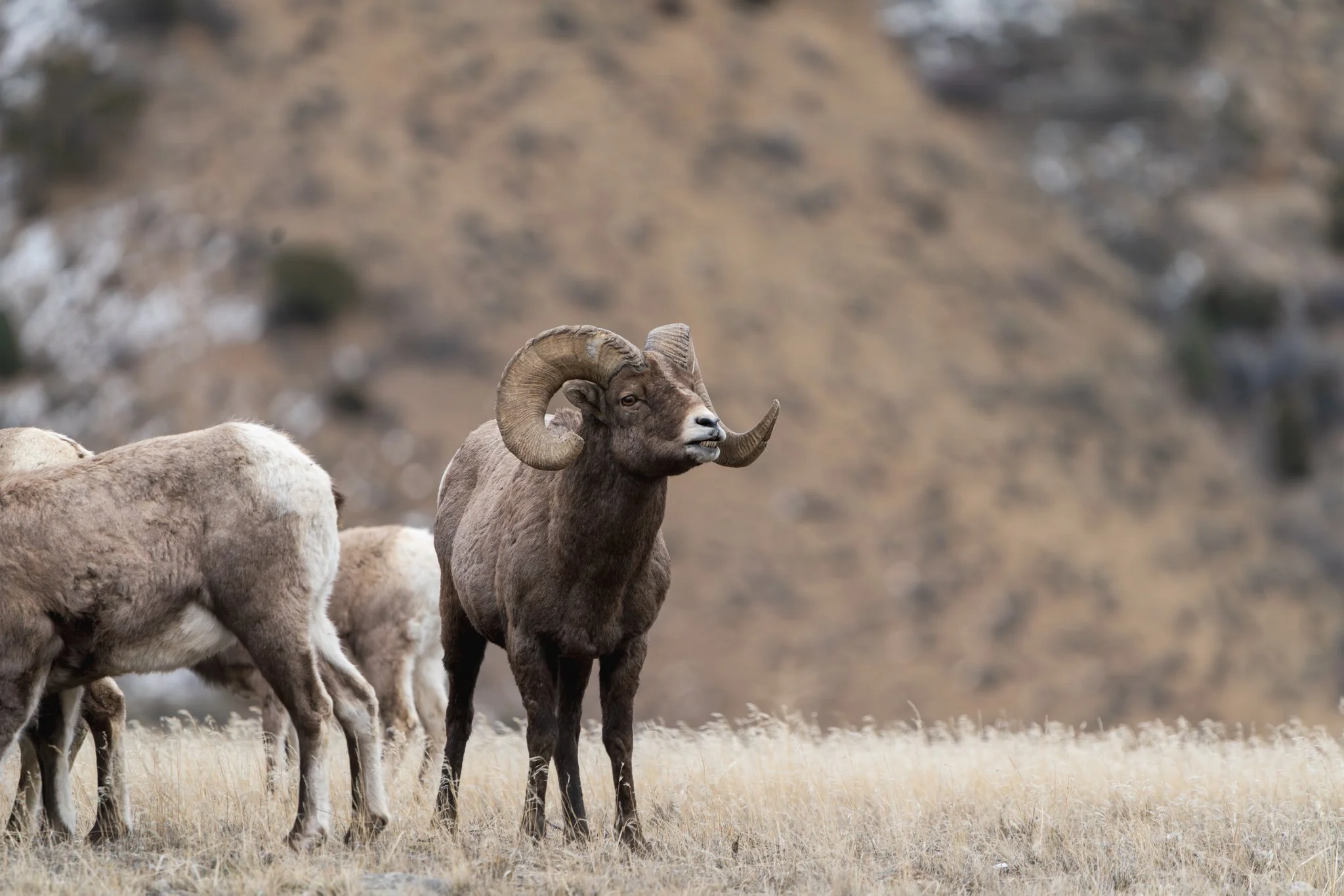
Best Areas
Gardner Canyon: The cliffs and rocky slopes between Mammoth Hot Springs and the North Entrance offer some of Yellowstone's most accessible bighorn sheep habitat.
Mount Everts: Rocky slopes and surrounding habitat support year-round bighorn activity.
Yellowstone River near Calcite Springs: Cliffs across the river provide potential viewing areas.
Soda Butte Region: Rocky slopes in the northeastern section of the park may support bighorn sheep.
Best Time of Day
Early Morning: Good for activity, cooler conditions, and soft light.
Mid-Morning through Afternoon: Useful when sunlight illuminates canyon walls.
Late Afternoon: Opportunities for warm directional light and behavior.
Rutting behavior may occur throughout the day.
November also brings a major change in access. Most park roads close to regular vehicles, while the route between the North and Northeast Entrances generally remains open, weather permitting.
That makes the Mammoth and Gardiner region especially valuable for winter wildlife photographers.
Capturing the Power of the Rut
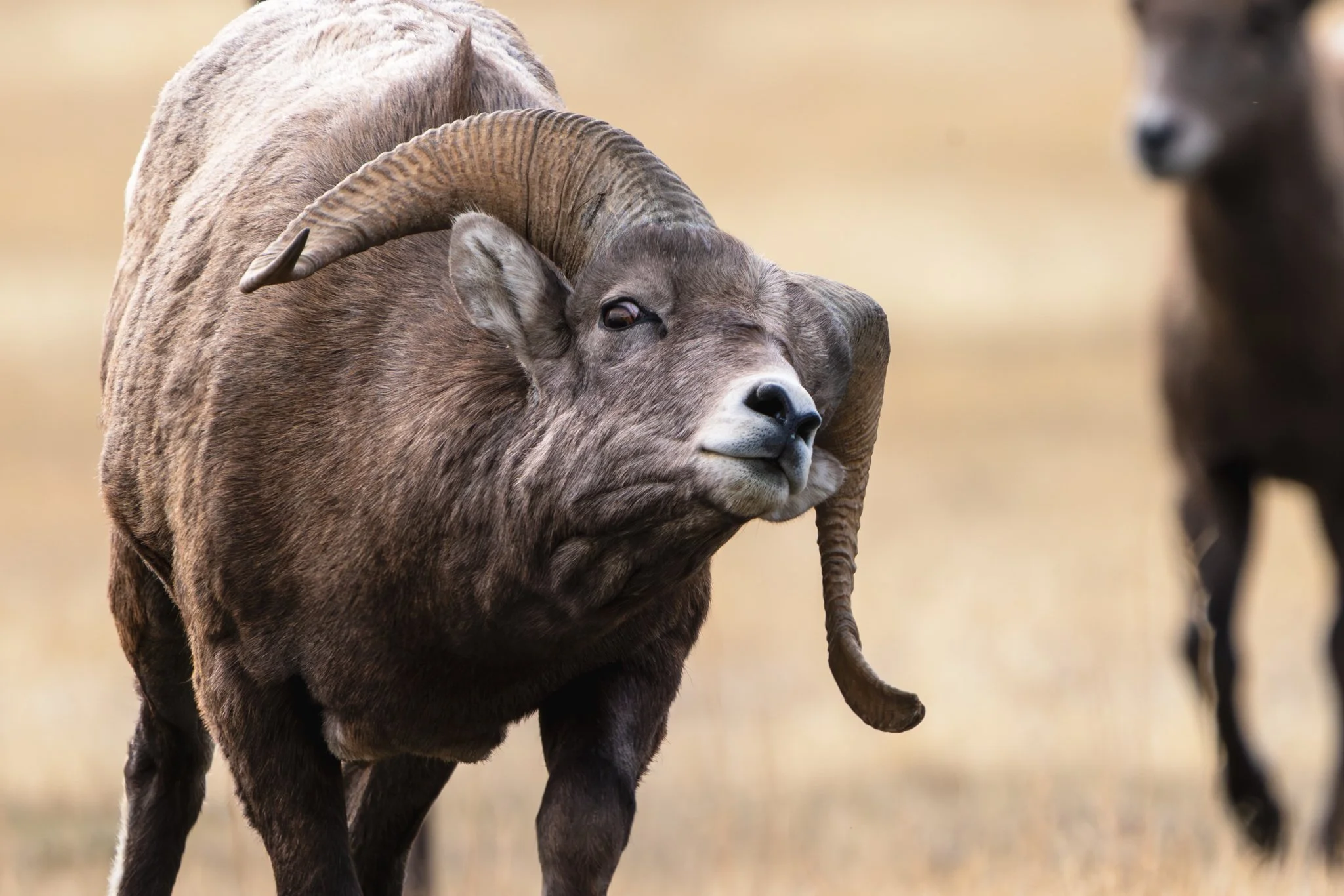
Bighorn sheep photography requires patience and an awareness of both the animals and the terrain.
Recommended Gear and Settings
Lens: 300–600mm telephoto
Aperture: f/5.6–f/8
Shutter Speed: 1/2000s–1/3200s for head-on clashes
ISO: Auto ISO
Autofocus: Continuous tracking
Drive Mode: High-speed continuous shooting
Composition Tips
Anticipate the Collision
When a ram moves away from a rival and turns to face him, watch for a possible charge. Prepare your framing before the action begins.
Include Both Rams
A wide enough composition to show both animals can make a confrontation more powerful and easier to understand.
Use the Canyon Walls
The rocky landscape is an important part of the story. Include cliff faces, ledges, and winter textures when possible.
Look for Environmental Portraits
Even without a confrontation, a mature ram standing against snow-covered cliffs can create a striking photograph.
Watch the Light
Bright snow and shaded rock can create difficult exposure conditions. Review your histogram and protect important highlight detail.
Ethical Reminder
Maintain at least 25 yards (23 meters) from bighorn sheep and give rutting animals substantially more room.
Never approach competing rams, block travel routes, or position yourself below unstable slopes in pursuit of a photograph. Observe from safe roadside areas and respect any closures or ranger instructions.
Exploring the Wild: Understanding the Competition
One of the most fascinating things about the bighorn rut is that the dramatic collisions represent only part of the story.
Much of the interaction happens beforehand.
Rams assess their rivals, establish rank, follow ewes, and respond to challenges long before a physical confrontation becomes necessary.
When photographing these animals, I pay attention to those smaller details. A change in posture, a ram moving away before turning, or two animals carefully assessing one another can signal that something is developing.
The better we understand these behaviors, the more prepared we are when those extraordinary moments finally occur.
See It for Yourself
November offers a distinctive side of Yellowstone.
The summer crowds have largely disappeared, winter begins settling across the northern range, and bighorn sheep enter one of the most dramatic periods of their annual cycle.
Join Wildscape Adventure for a private wildlife photography tour or explore our Winter Wonderland Photography Workshop to experience Yellowstone's colder seasons through your own lens.
Explore Wild Yellowstone Photography Tours
Explore Winter Wonderland Photography Workshop
