

The Wild in Yellowstone: Bison Rut
A deep, guttural bellow rolls across Hayden Valley, cutting through the stillness of an August morning. Dust rises from the dry grass as a massive bull bison lowers his head and turns toward another male standing nearby.
For a moment, neither moves.
Then the first bull paws at the ground, sending another cloud of dust into the air. The second answers with a bellow of his own.
August in Yellowstone marks one of the most dramatic wildlife events of the year: the American bison rut. Across the park's open valleys, enormous bulls compete for access to receptive females in displays of strength, dominance, and determination.
For wildlife photographers, the bison rut offers extraordinary opportunities to capture behavior that is both visually compelling and central to the survival of one of North America's most iconic species.
The Bison Rut: Competition, Courtship, and Dominance
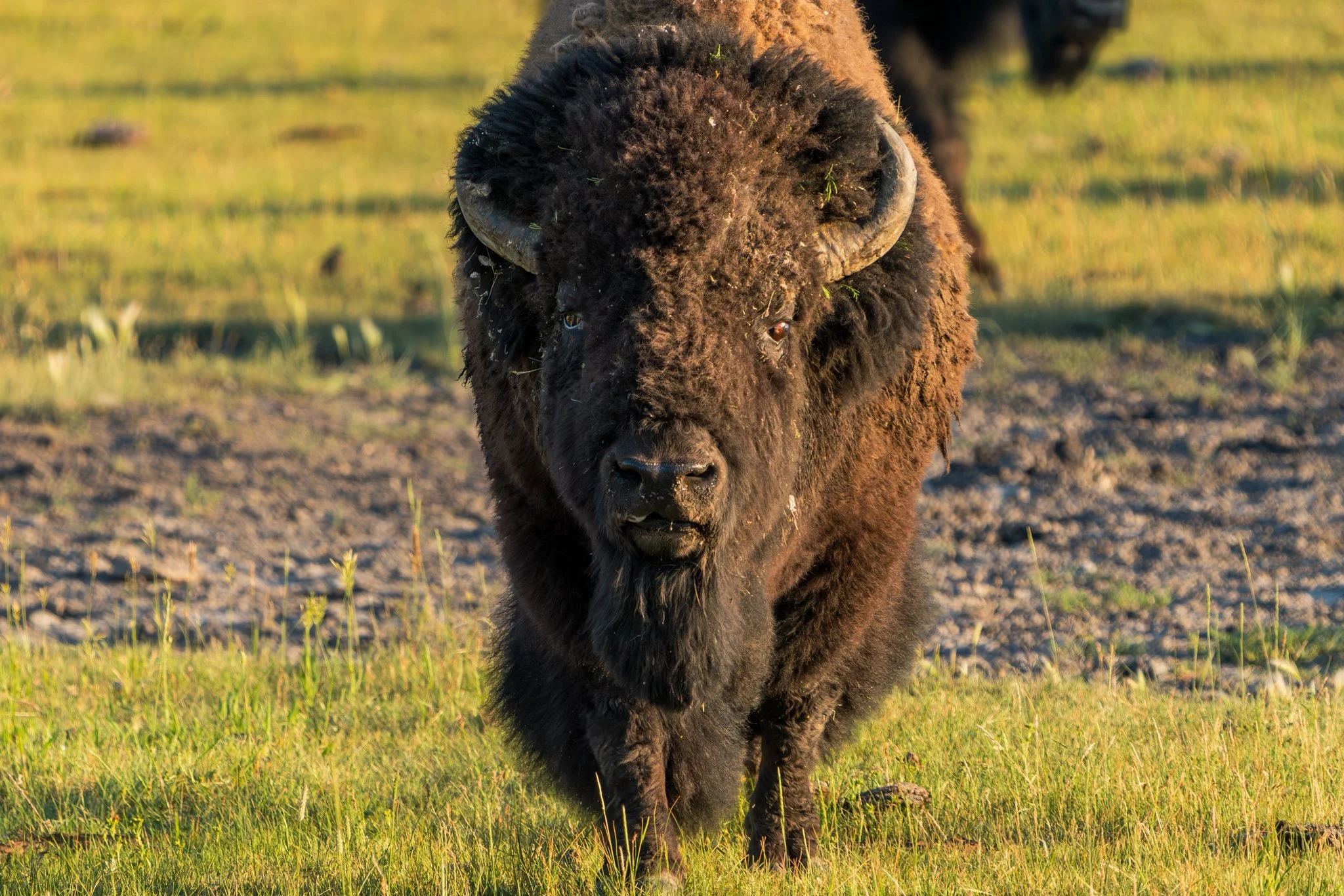
Yellowstone's bison rut begins in late July and continues through August.
For most of the year, mature bulls often travel alone or in smaller groups. During breeding season, they join larger mixed herds, where competition for receptive females intensifies.
Large, experienced bulls typically secure the greatest number of breeding opportunities.
Common Rutting Behaviors
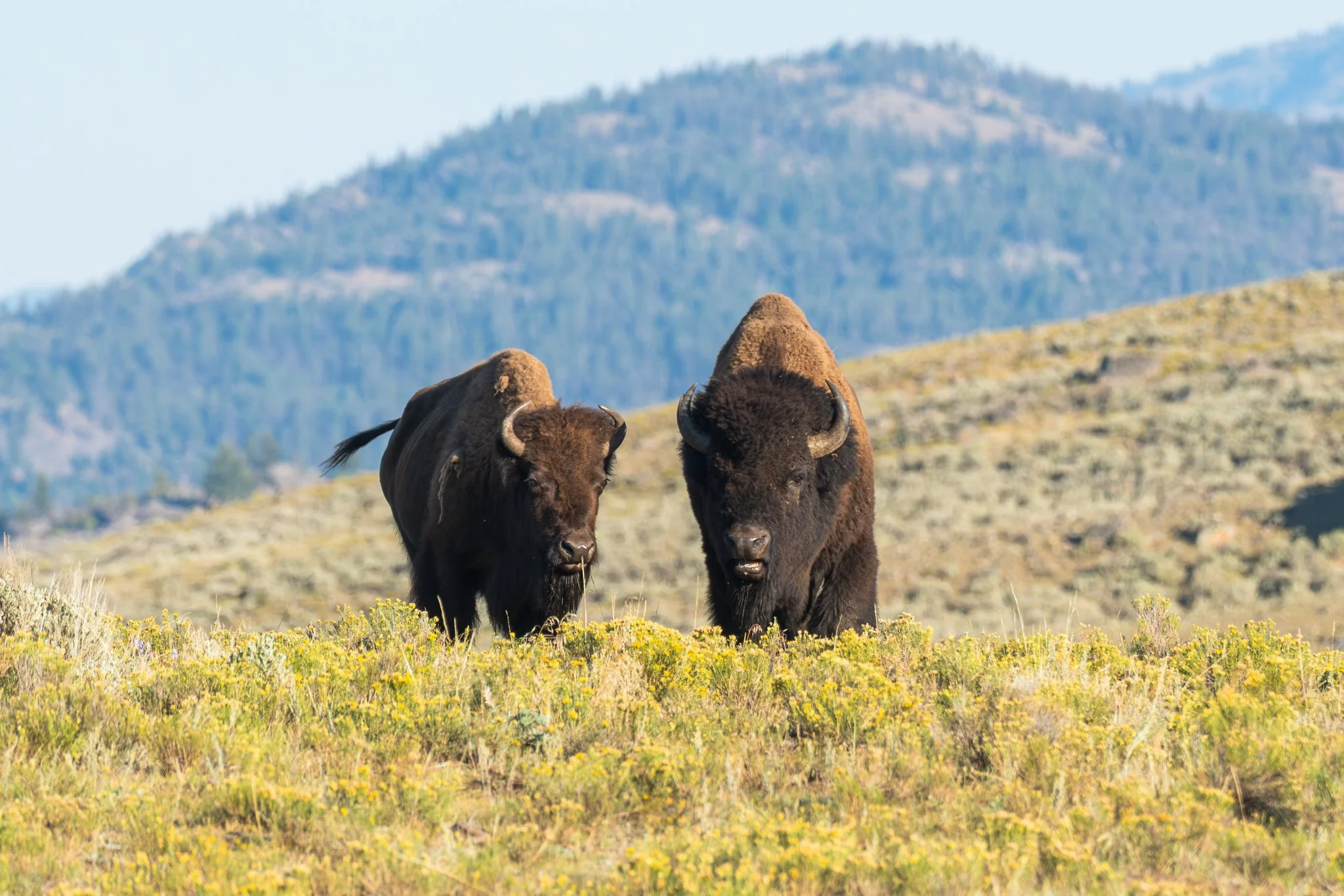
Bellowing
The low, rumbling calls of bull bison can carry across Yellowstone's valleys. These vocalizations communicate dominance and reproductive condition while warning competing males.
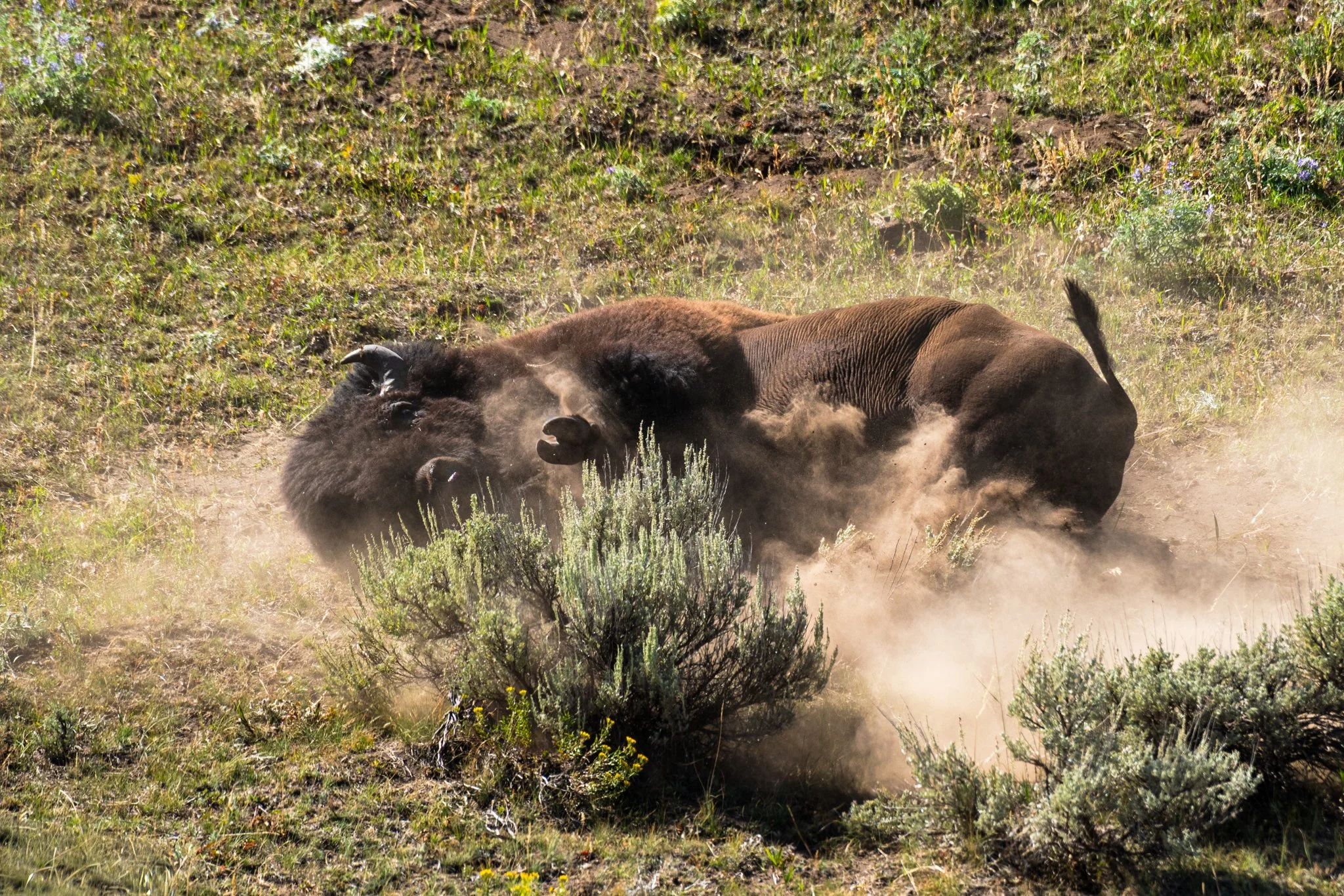
Wallowing
Bulls roll in dusty depressions, sometimes urinating before wallowing. This behavior can serve several functions, including insect relief and communicating physical condition during the rut.
Tending Females
A bull may remain close to a receptive cow, following her movements and attempting to prevent other males from approaching.
Dominance Displays
Bulls may lower their heads, posture broadside, paw the ground, or approach rivals with deliberate movements.
Physical Confrontations
When displays fail to resolve a contest, bulls may collide headfirst and push against one another. These encounters can be extremely powerful and dangerous.
While dramatic fights attract attention, much of the rut involves quieter interactions that reveal how breeding competition works.
Where to Photograph the Bison Rut in August
Best Areas
Hayden Valley: One of Yellowstone's premier locations for observing large bison herds during breeding season.
Lamar Valley: Broad grasslands provide excellent visibility and opportunities to photograph competing bulls.
Madison Valley: Bison may also be encountered in suitable grasslands along the Madison River corridor.
Hayden and Lamar Valleys are the two areas I would prioritize when planning a dedicated bison rut photography trip.
Best Time of Day
Early Morning: Sunrise through mid-morning for cooler conditions and soft directional light.
Late Afternoon: Strong opportunities for warm light, backlit dust, and interactions.
Throughout the Day: Breeding behavior can occur at any hour.
The rut is not limited to morning and evening. On a productive day, activity may continue well into the warmer hours.
Capturing the Power of the Bison Rut
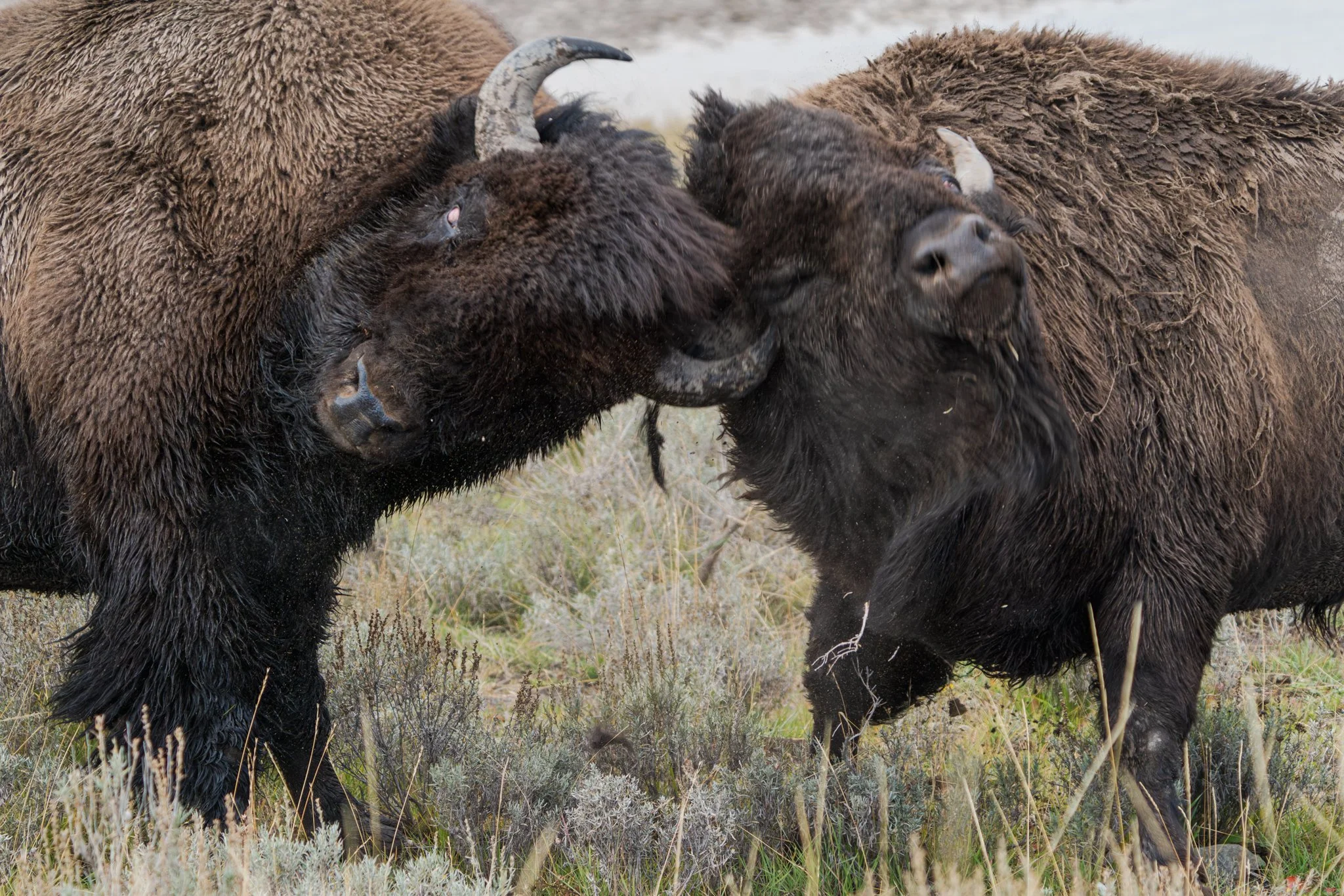
August bison photography is about capturing behavior, tension, and movement while maintaining a safe distance.
Recommended Gear and Settings
Lens: 200–600mm telephoto
Aperture: f/5.6–f/8
Shutter Speed: 1/1600s–1/2500s for confrontations
ISO: Auto ISO
Autofocus: Continuous animal tracking
Drive Mode: High-speed continuous shooting
Photography Tips
Watch the Build-Up
Before a confrontation, bulls may begin bellowing, approaching one another, or displaying stiff body language. These moments offer clues that an interaction may develop.
Capture Dust and Atmosphere
August's dry conditions often create dust clouds around wallowing bulls. Side light and backlight can reveal dramatic texture.
Include Both Animals
When photographing an interaction, use enough focal length to capture detail without cropping out the second bull or the surrounding scene.
Tell the Complete Story
Not every photograph needs to show a fight. A bull standing beside a cow, a warning posture, or the intensity of a close encounter can be equally compelling.
Ethical Reminder
Remain at least 25 yards (23 meters) from bison, and considerably farther when bulls are displaying aggression or fighting. Bison can run remarkably fast and change direction without warning.
Never stand between competing bulls or between a bull and a cow. Photograph from safe roadside locations, never use your vehicle to move or pressure wildlife, and remain inside when conditions are unsafe.
Exploring the Wild: The Sound of the Rut
One of the most memorable things about the bison rut isn't necessarily what you see. It's what you hear.
The deep bellows of mature bulls carry across Hayden and Lamar Valleys, sometimes long before you can identify the animal making the sound.
That changes the way I approach photography.
Rather than concentrating only on the largest bull in the herd, I look for the relationships developing between animals. Which bulls are following cows? Which are challenging rivals? Which interactions might develop into something more dramatic?
Understanding those relationships is what turns a simple photograph of a bison into a story about Yellowstone's breeding season.
See It for Yourself
August is one of Yellowstone's most exciting months for wildlife photography. The bison rut brings extraordinary behavior into the park's open valleys, creating opportunities that occur only during a relatively short period each year.
Join Wildscape Adventure for a private Yellowstone wildlife photography tour and experience the sights, sounds, and behavior of these remarkable animals.
Explore Wild Yellowstone Photography Tours
Bellowing Giants: Bison Rut Photography Workshop
Author: Christopher Georgia | Wildscape Adventure
Contact: hello@wildscapeadventure.com | (406) 936-0414
