

The Wild in Yellowstone: Grizzly Bears in April
The stillness of winter begins to break across Lamar Valley. Snow lingers in patches, but the valleys are waking. Meltwater cuts through the sage, ravens call overhead, and the landscape feels alive again. Then, in the distance, movement, slower this time, smaller shapes trailing behind a larger one.
This year, the first confirmed grizzly sighting came on March 9th in Yellowstone National Park, a lone boar stepping back into the landscape after months of hibernation. Just weeks later, on March 29th in Grand Teton National Park, the first sow was spotted with cubs, a clear signal that spring had fully begun to take hold across the Greater Yellowstone Ecosystem. April is where that transition becomes visible everywhere. Grizzly bears are no longer just returning, they are settling in.
A New Season: Sows, Cubs, and Spring Behavior
By April, grizzly bear activity increases significantly across Yellowstone. While adult males have already established early-season range, this is when sows with cubs become consistently visible. These family groups bring a completely different energy to the landscape. Cubs stay close, learning quickly, while mothers remain alert and highly protective.
Common April Behaviors
Sows with cubs foraging together in open valleys
Cubs climbing, playing, and staying close to cover
Feeding on early vegetation and winter-killed carcasses
Increased daytime movement as food sources expand
Heightened awareness and avoidance of adult males
April bears are shifting from survival to opportunity. As snow recedes, movement becomes less restricted and food becomes more accessible.
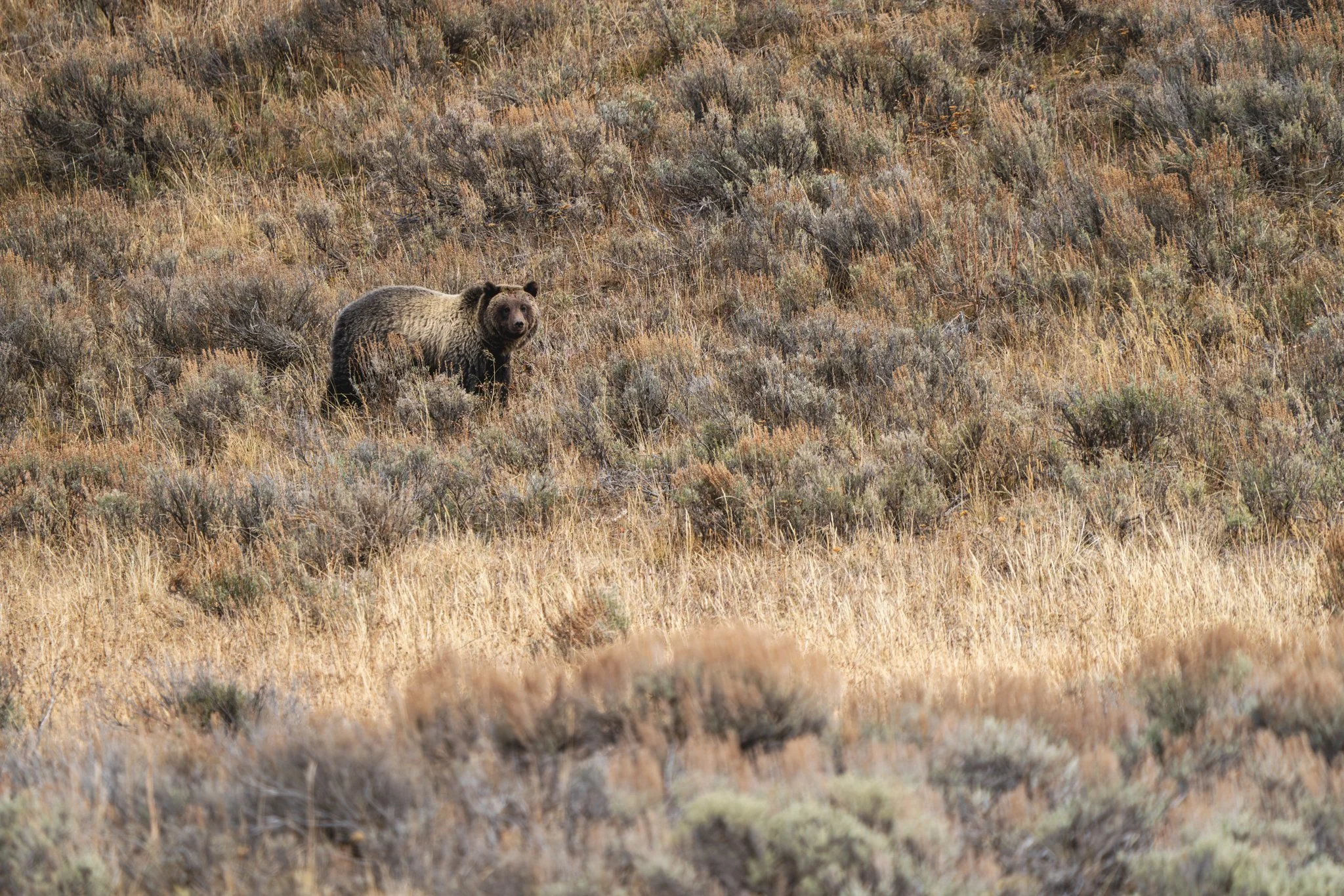
Where to Find Grizzly Bears in April
Best Areas
Lamar Valley
Blacktail Plateau
Swan Lake Flats
Tower Junction region
Hayden Valley (as roads reopen)
Lower elevations green up first, drawing wildlife into open terrain where visibility improves.
Best Time of Day
Early morning through late morning
Late afternoon into evening
April often brings more consistent daytime activity, especially for sows with cubs.
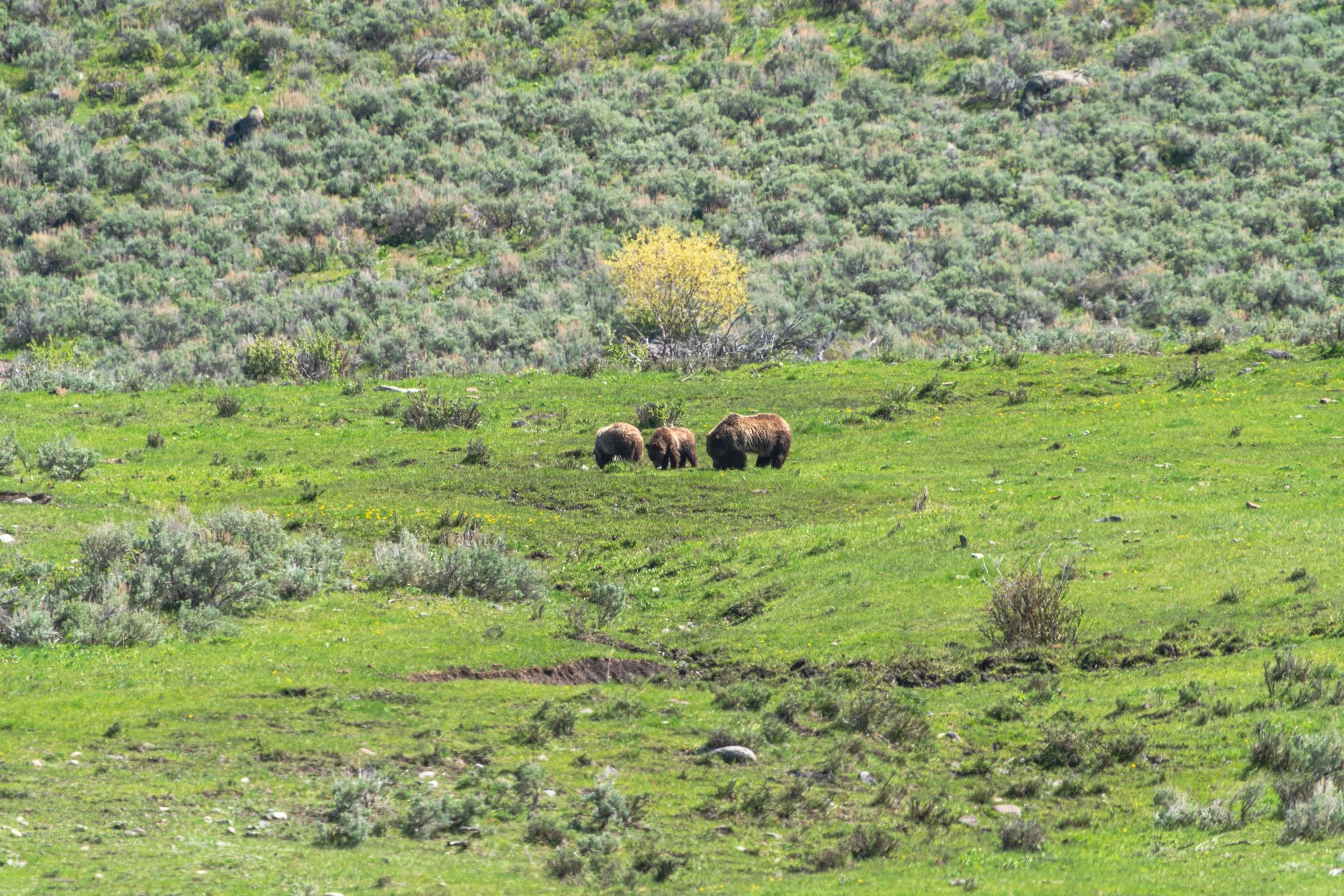
Capturing Spring Behavior
April grizzly photography is about storytelling, especially the relationship between mother and cub.
Recommended Gear
400–600mm telephoto lens
Stable tripod or window mount
Extra batteries for cold mornings
Suggested Settings
Aperture: f/6.3–f/8 (or wider if your lens allows for it)
Shutter: 1/1250s or faster
ISO: 400–800 depending on light
Composition Tips
Frame sows and cubs together
Use contrast between snow and new vegetation
Anticipate interaction between cubs and mother
Spring light softens, offering warmer tones and longer shooting windows.
Ethical Reminder
Maintain a minimum distance of 100 yards from bears. Never position yourself between a sow and her cubs.
See It for Yourself
April in Yellowstone is a season of renewal. The presence of cubs changes everything, the pace, the behavior, and the emotional weight of each encounter. If you want to experience Yellowstone’s spring awakening with a focus on behavior, safety, and photography, join us on a private wildlife photography tour with Wildscape Adventure.
Explore upcoming tours & workshops
Winter and Spring Tours
https://www.wildscapeadventure.com/wild-yellowstone
Spring Workshops
Call of the Wild - https://www.wildscapeadventure.com/call-of-the-wild
Mastering the Night Sky - https://www.wildscapeadventure.com/mastering-the-night-sky
Written by Christopher Georgia, founder of Wildscape Adventure
Leading wildlife and astrophotography workshops across Yellowstone, Grand Teton, and Acadia National Parks
📞 (406) 936-0414
✉️ wildscapeadventuretours@gmail.com
🌐 https://www.wildscapeadventure.com
