

The Wild in Yellowstone: Bald Eagles in March
The river runs dark against the snow. Steam rises where cold air meets open water, and perched above it all, a bald eagle scans the current below.
March in Yellowstone belongs to the rivers. As ice breaks and flows open, life returns in motion, and bald eagles are at the center of it. Their calls carry across the valley, sharp and unmistakable, marking territory and partnership.
For photographers, this is one of the most consistent and rewarding times to work with raptors in the park.
Courtship, Nesting, and Seasonal Behavior
By March, bald eagles in Yellowstone are deep into courtship and nesting season. Many established pairs return to the same nests year after year, reinforcing them with fresh sticks and vegetation.
Common March Behaviors:
Nest building and repair
Perch exchanges between mates
Aerial displays and circling flights
Hunting along open water
Vocal territorial calls
Egg-laying typically begins late March into early April, making this a critical period of activity and coordination between pairs.
Watch for interaction, one eagle arriving while the other departs, or synchronized flight patterns above nesting sites. These behaviors often repeat and can be anticipated with patience.
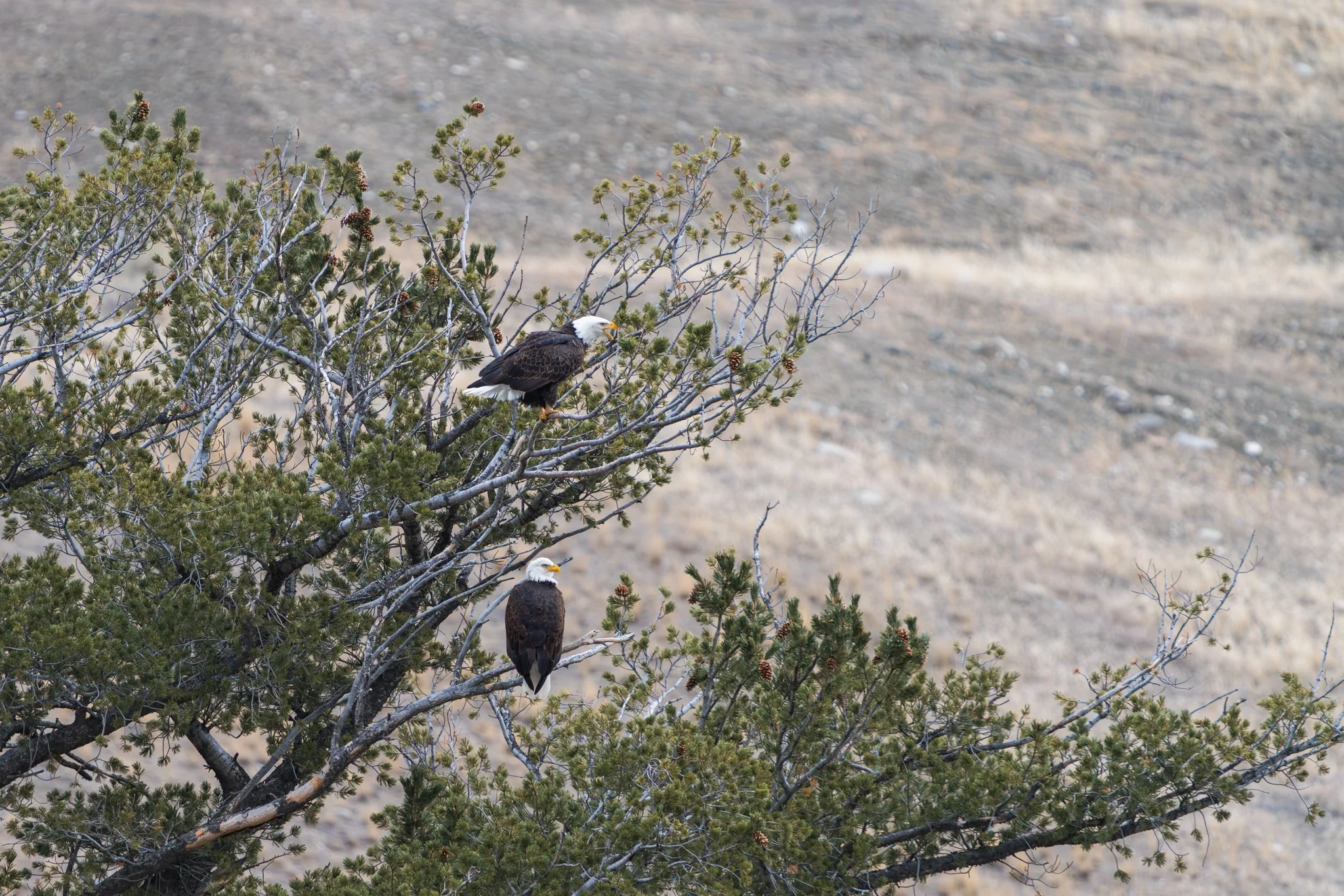
Where to Find Bald Eagles in March
Best Areas:
Yellowstone River (Gardiner to Lamar Valley)
Madison River
Mammoth Hot Springs area
Fishing Bridge / Hayden Valley (as access allows)
Open water is the key. Eagles concentrate where fish are accessible and currents remain unfrozen.
Best Time of Day:
Early morning for perch activity and first flights
Midday for soaring and aerial movement
Late afternoon for return flights and feeding
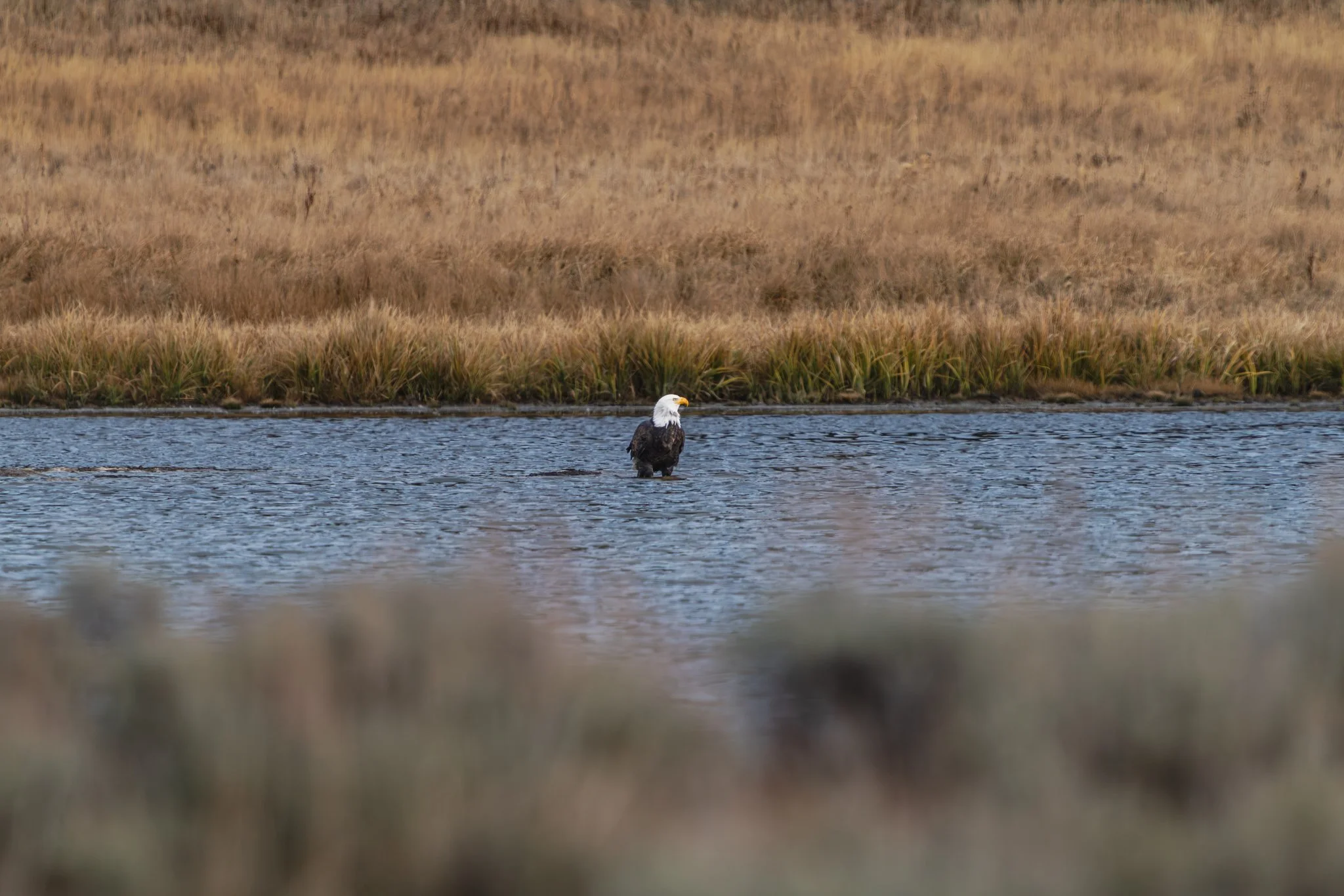
Capturing Raptors in Motion
Bald eagles offer one of the best opportunities in Yellowstone to practice flight and behavior photography.
Recommended Gear:
400–600mm lens
Fast autofocus tracking
Continuous shooting mode
Suggested Settings:
Aperture: f/5.6–f/7.1
Shutter: 1/2000s+ for flight
ISO: Adjust for sky brightness
Photography Tips:
Focus on the eye, sharpness defines the image
Track movement early to lock focus before action
Use open sky or water for clean backgrounds
Ethical Reminder: Avoid approaching nests. Give eagles space to behave naturally, especially during nesting season.
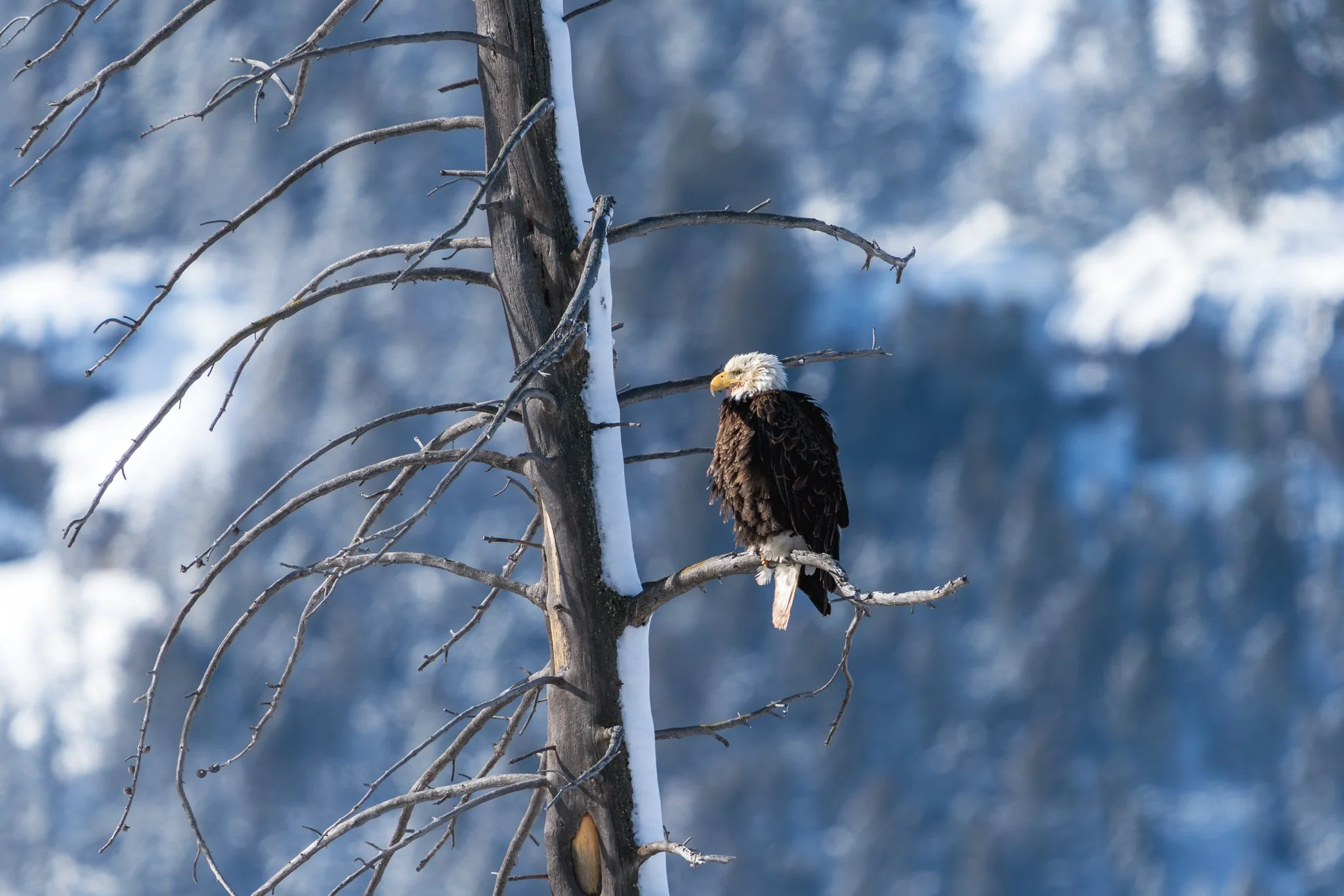
See It for Yourself
March offers a unique window into Yellowstone’s transition from winter to spring. Bald eagles are active, visible, and constantly interacting with the landscape. It’s a time to slow down, observe, and anticipate.
Join us on a private wildlife photography tour and experience Yellowstone’s rivers, wildlife, and seasonal change through a photographer’s lens.
Explore upcoming tours & workshops
Winter and Spring Tours
https://www.wildscapeadventure.com/wild-yellowstone
Spring Workshops
Call of the Wild - https://www.wildscapeadventure.com/call-of-the-wild
Mastering the Night Sky - https://www.wildscapeadventure.com/mastering-the-night-sky
Written by Christopher Georgia, founder of Wildscape Adventure
Leading wildlife and astrophotography workshops across Yellowstone, Grand Teton, and Acadia National Parks
📞 (406) 936-0414
✉️ wildscapeadventuretours@gmail.com
🌐 https://www.wildscapeadventure.com
