

The Wild in Yellowstone: Coyotes in February
The cold bites harder in February. Mornings arrive quietly, broken only by the crunch of snow underfoot and the distant call of a coyote somewhere beyond the ridge. In Yellowstone’s open valleys, these sounds carry sharp, clear, and unmistakably alive.
February is a defining month for coyotes. While much of the park remains locked in winter, coyotes are on the move, pairing up, defending territory, and hunting relentlessly. For photographers, this is one of the most rewarding times of year to observe behavior unfold naturally against a stark winter canvas.
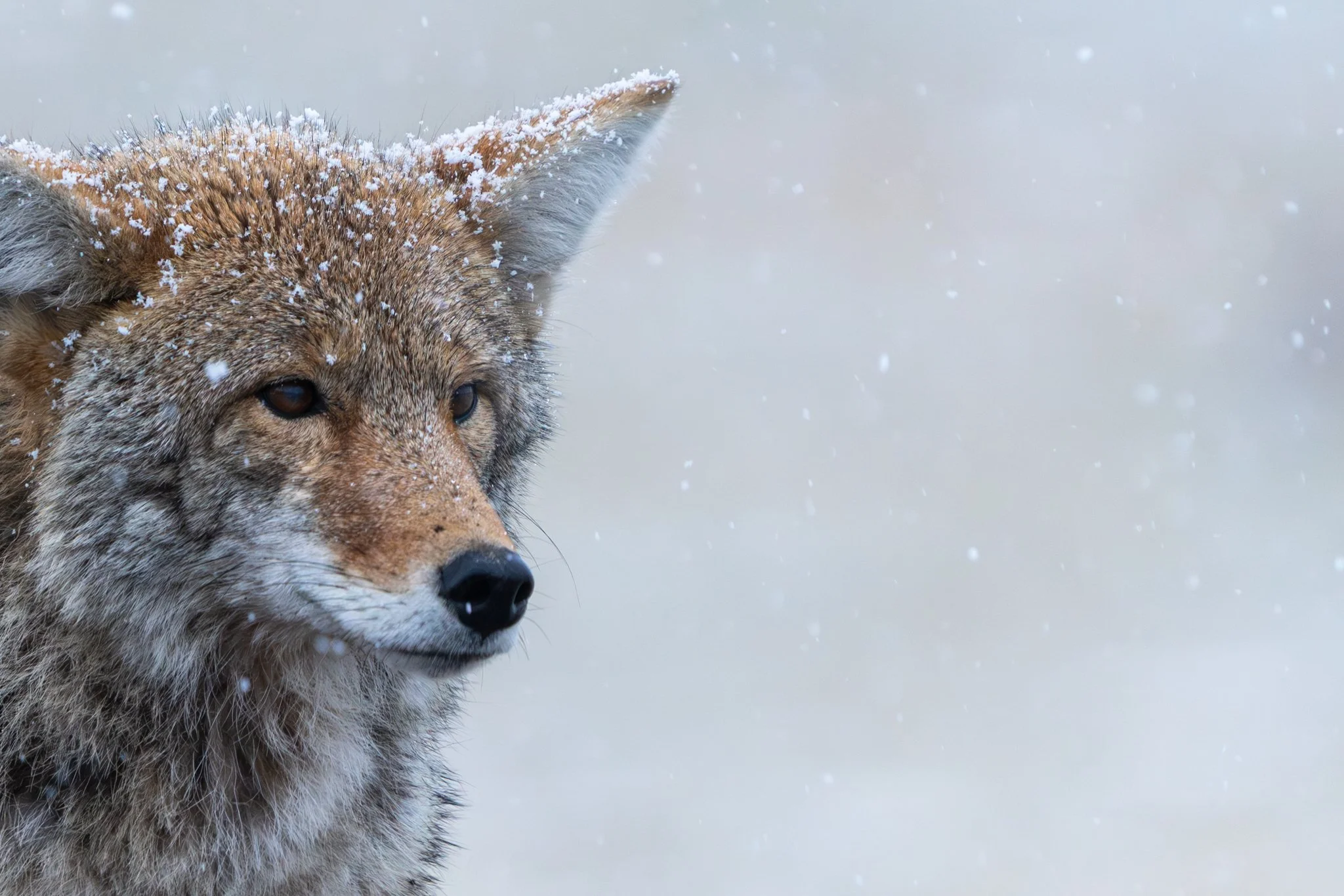
Mating Season: Timing, Pair Bonds, and Behavior
Coyote mating season in Yellowstone peaks from late January through February, with most breeding occurring between early February and mid-February. During this time, coyotes form strong monogamous pair bonds that may last for several years, sometimes for life.
What to Watch For:
Paired Travel: Coyotes moving together rather than alone, often maintaining close spacing.
Increased Vocalizations: Howling and yipping increase significantly, especially at dawn and dusk, as pairs advertise territory.
Territorial Posturing: Stiff body language, raised tails, and direct eye contact when other coyotes appear.
Courtship Behavior: Gentle nuzzling, following, and synchronized movement between mates.
Gestation lasts approximately 63 days, meaning pups will be born in April, making February a crucial preparatory month focused on survival and territory security.
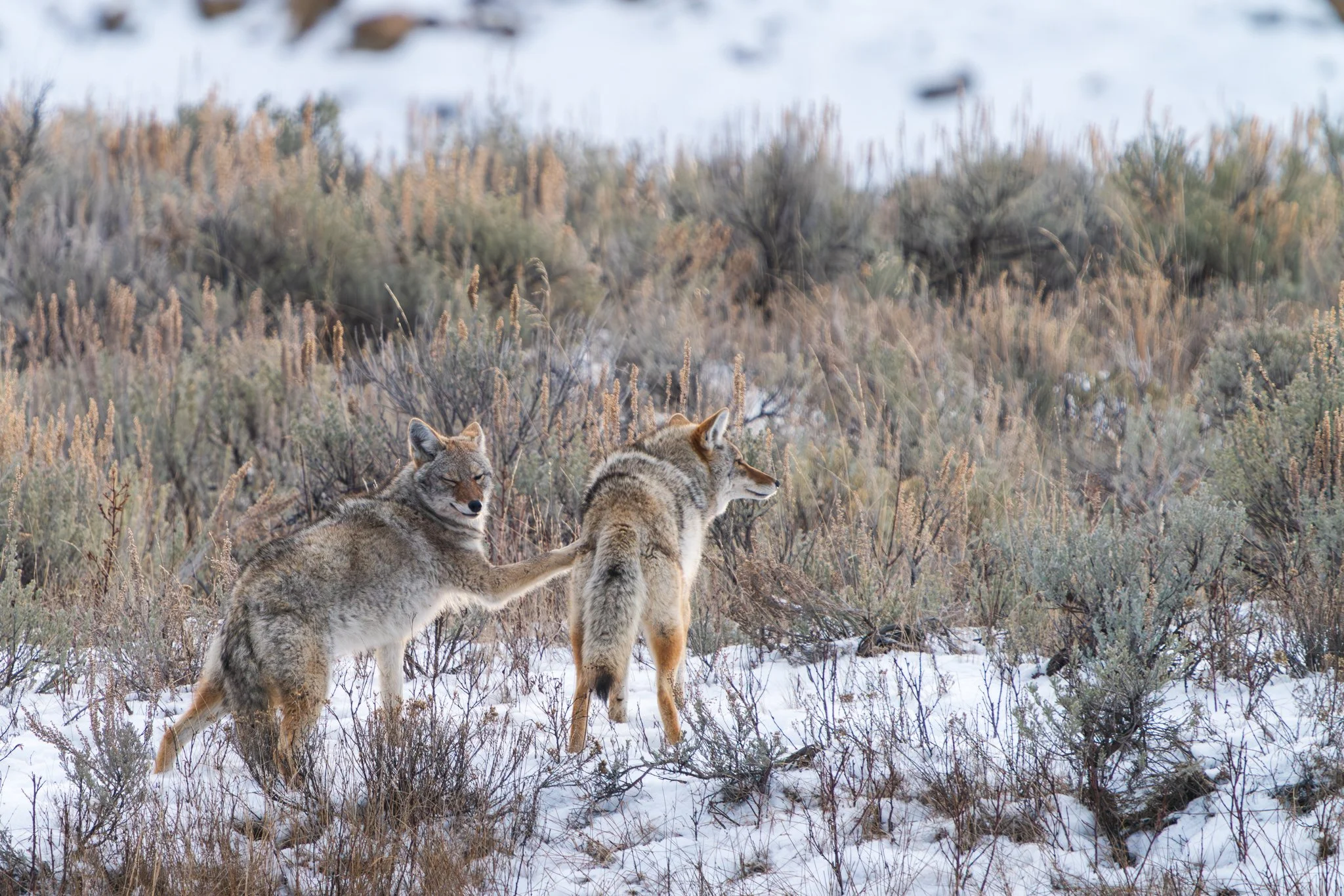
Finding Coyotes Across the Winter Landscape
Best Areas: Lamar Valley, Blacktail Plateau, Gardiner Basin, Mammoth Hot Springs area
Best Time of Day:
Early Morning: 30 minutes before sunrise through mid-morning
Late Afternoon: Golden hour into dusk
Conditions: Fresh snowfall followed by clear skies produces the best contrast and behavior visibility
Coyotes thrive in Yellowstone’s open terrain. Snow depth forces small mammals closer to the surface, making mousing behavior, high leaps followed by head-first dives, especially common this month. Look for lone or paired coyotes scanning open meadows from low ridges or road edges, often pausing to listen before striking.
The year-round northern road corridor in Yellowstone National Park offers exceptional access to these scenes, even in deep winter.

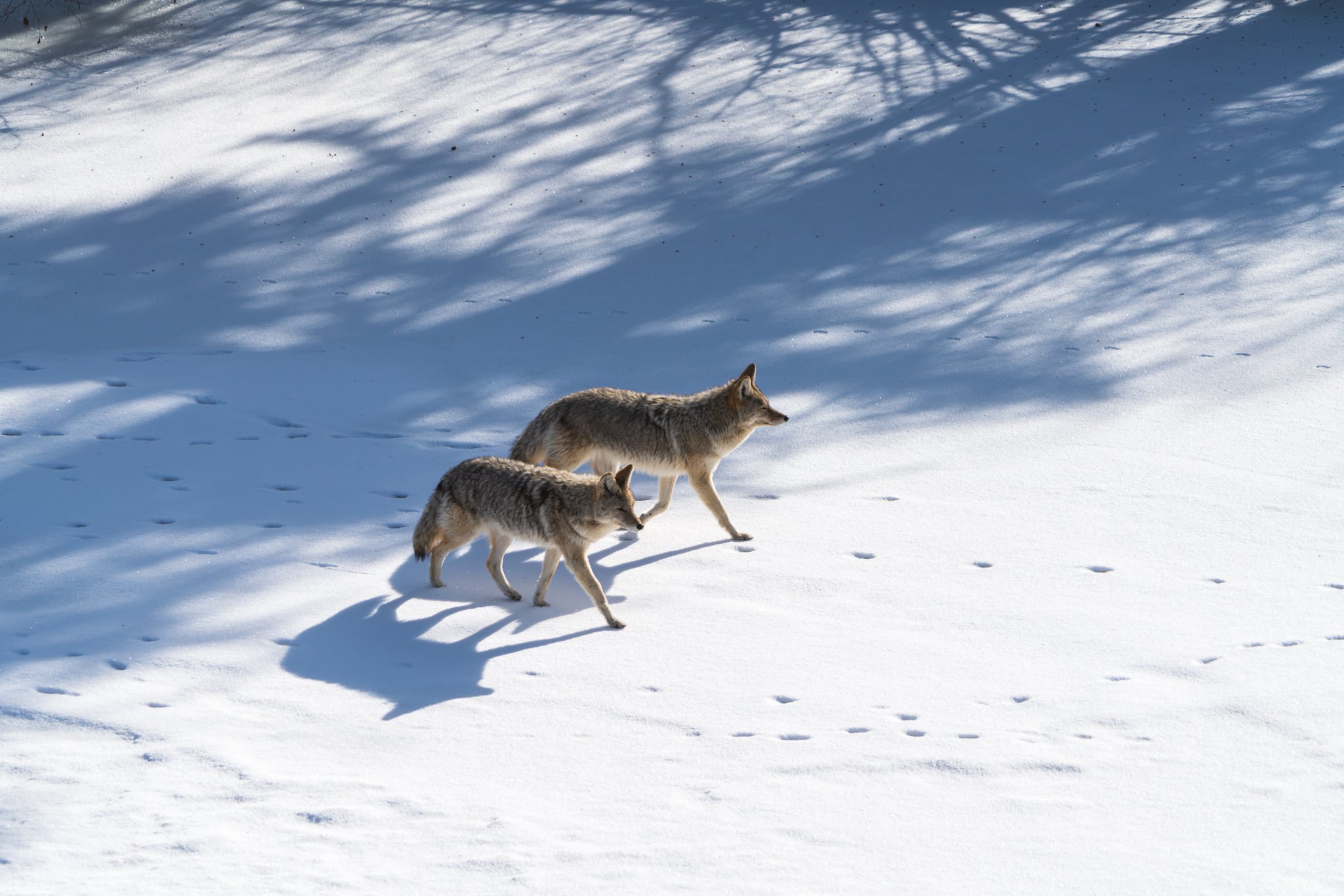
Capturing the Essence of the Wild
February coyotes are ideal wildlife photography subjects, predictable, expressive, and often active in daylight.
Recommended Gear & Settings:
Lens: 300–600mm telephoto
Aperture: f/5.6–f/7.1 to keep the subject sharp against snowy backgrounds
Shutter Speed: 1/1600s or faster for mousing jumps
ISO: 400–1000 depending on cloud cover and time of day
Photography Tips:
Watch the ears, when a coyote freezes and tilts its head, a pounce is imminent.
Leave negative space in the frame to show movement and intent.
Photograph pairs wider when possible to emphasize bonding and interaction.
Ethical Reminder: Coyotes are habituated but not tame. Maintain at least 25 yards, never encourage approach, and avoid interrupting hunting or courtship behavior.
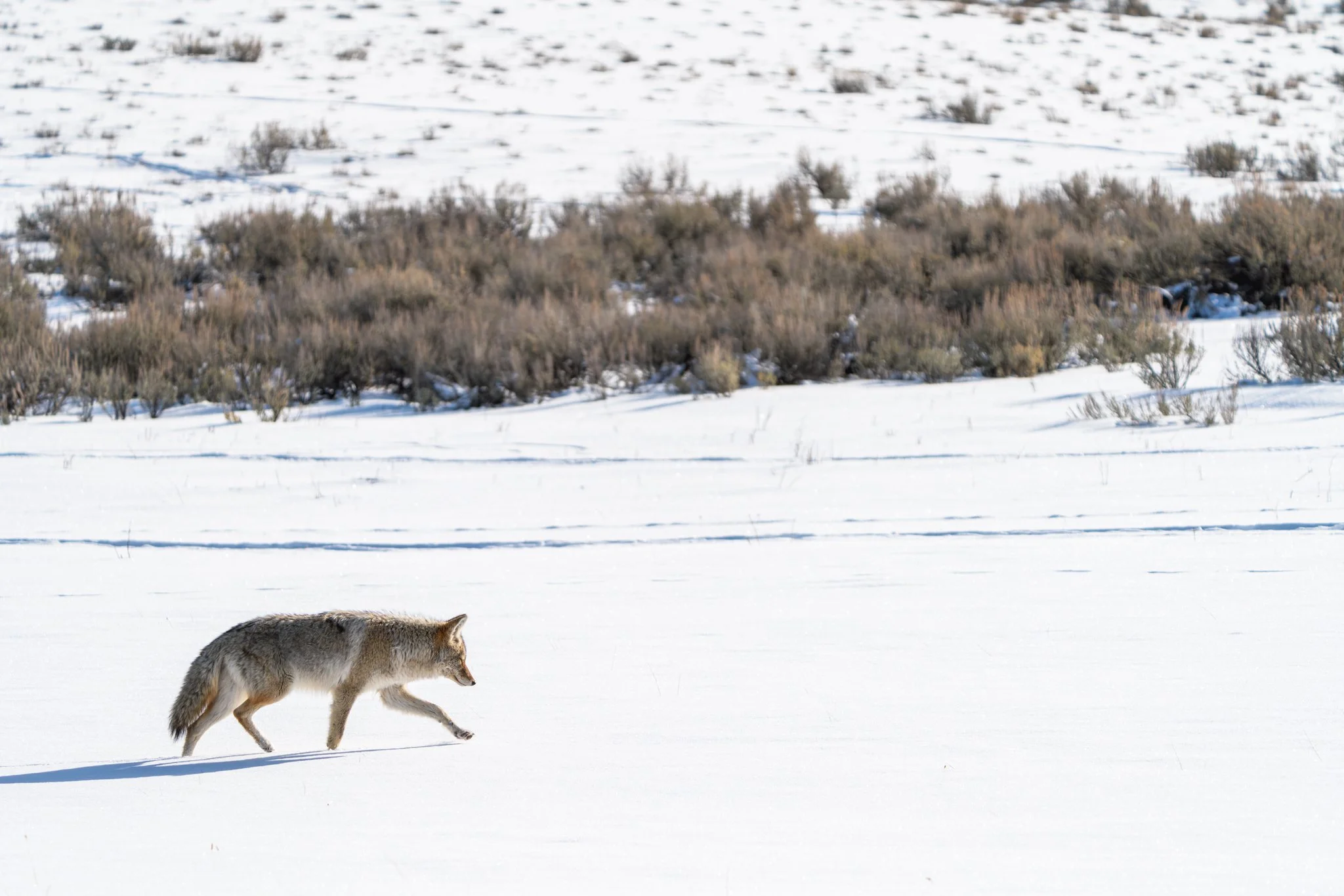

See It for Yourself
Winter reveals Yellowstone at its most honest. Coyotes, especially in February, embody that spirit, resilient, adaptive, and constantly in motion. If you want to experience this season firsthand, join a private Wild Yellowstone Tour and learn how to anticipate behavior, read landscapes, and create meaningful wildlife images.
Explore upcoming tours & workshops
Winter and Spring Tours
https://www.wildscapeadventure.com/wild-yellowstone
Spring Workshops
Call of the Wild - https://www.wildscapeadventure.com/call-of-the-wild
Mastering the Night Sky - https://www.wildscapeadventure.com/mastering-the-night-sky
Written by Christopher Georgia, founder of Wildscape Adventure
Leading wildlife and astrophotography workshops across Yellowstone, Grand Teton, and Acadia National Parks
📞 (406) 936-0414
✉️ wildscapeadventuretours@gmail.com
🌐 https://www.wildscapeadventure.com
