

The Wild in Yellowstone: Bighorn Sheep in January
The wind sweeps through the Gardiner Basin, carrying the scent of sage and the crisp echo of colliding horns. On the canyon walls above the Yellowstone River, bighorn sheep move with quiet purpose, their hooves gripping ice-slicked ledges as easily as most creatures tread dry ground.
January is a month of endurance. While much of Yellowstone lies silent under deep snow, bighorn sheep thrive in the exposed cliffs and wind-blown slopes that others avoid. For photographers, it’s a season of clear light, quiet scenes, and a rare chance to capture the wild heart of winter.
Life on the Ledge: Seasonal Behavior and Adaptation
Bighorn sheep are masters of survival. In winter, they descend from higher elevations to the steep, south-facing slopes near Gardiner, the Yellowstone River Canyon, and the Blacktail Plateau. These areas stay relatively snow-free, exposing vital grasses and shrubs.
January marks the post-rut period; rams recover from the energy spent during the November battles, often resting and feeding near ewe groups but showing little aggression. Ewes, meanwhile, focus on conserving strength through pregnancy, forming tight bonds that stay close to accessible forage.
When temperatures drop below zero, watch for early-morning steam rising from their nostrils or the way snowflakes cling to their coats, subtle details that reveal both beauty and endurance in every frame.
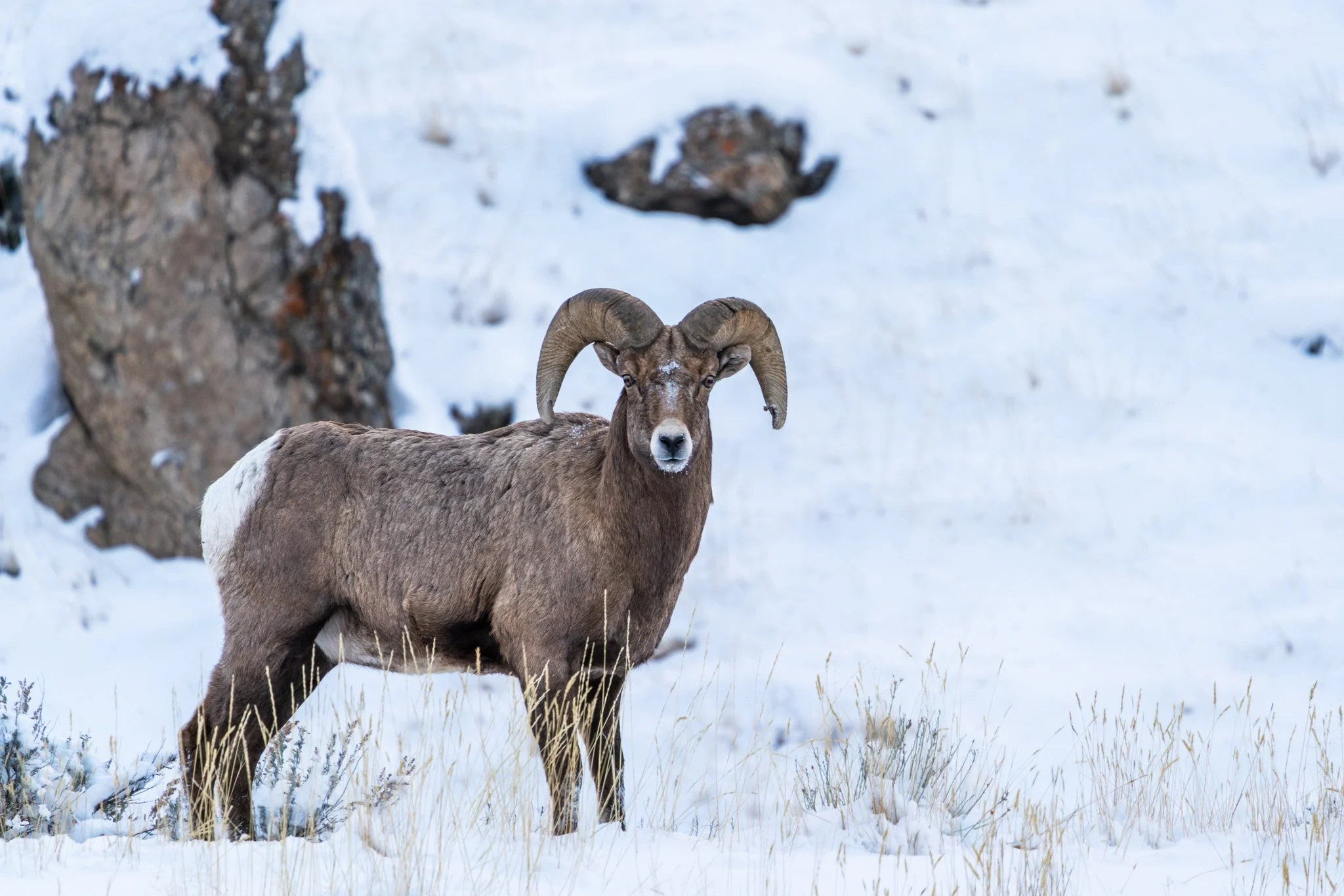
Finding Bighorn Sheep Across the Winter Landscape
Best Areas: Gardiner Canyon, Lava Creek, Blacktail Plateau Drive and along the cliffs between Mammoth and Tower Junction.
Best Time of Day: Mid-morning to late afternoon, when sunlight strikes the canyon walls.
Conditions: Clear, calm mornings with partial sun often create the most dramatic contrast for photography.
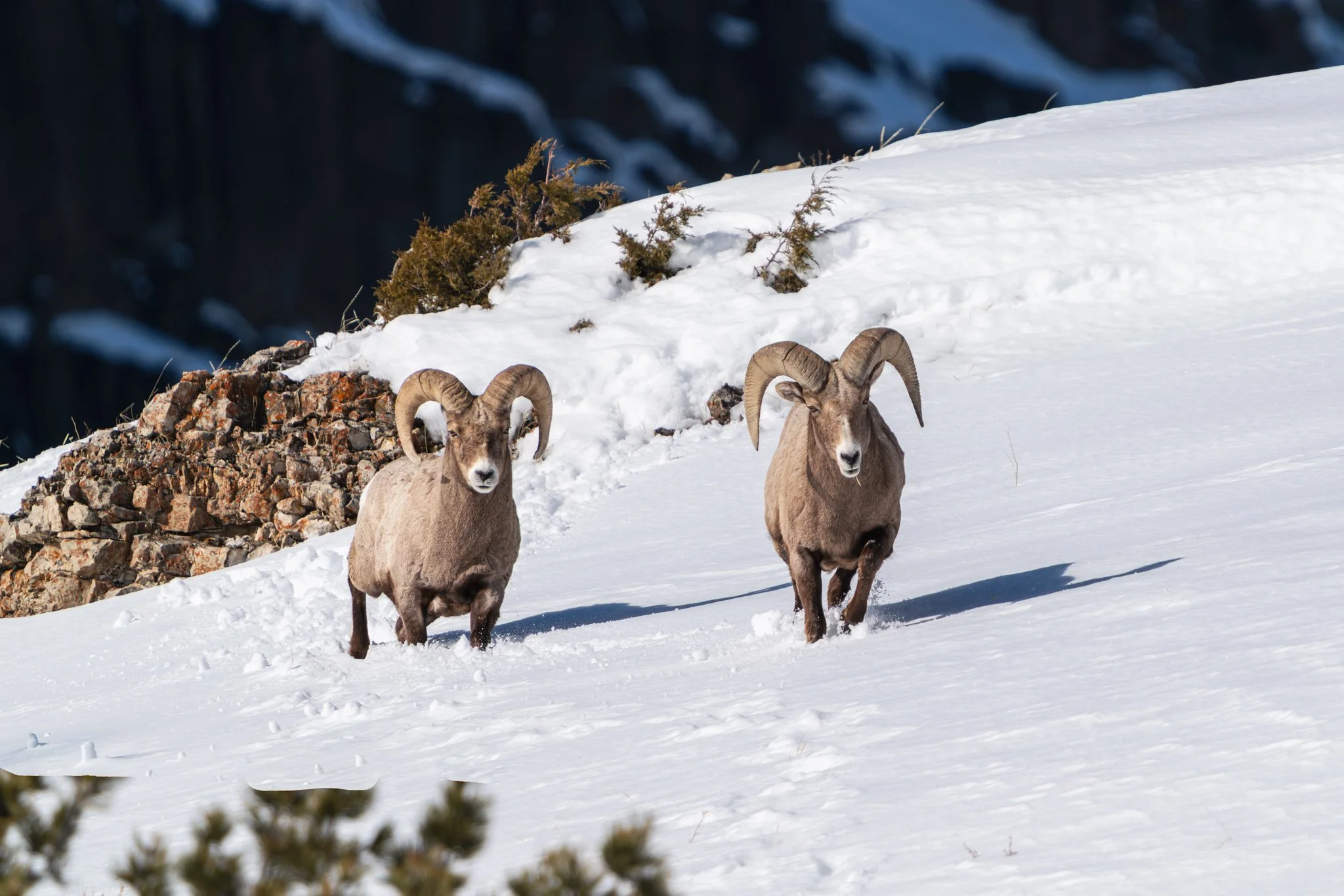
While many roads in Yellowstone close for winter, the northern corridor from Gardiner to Cooke City remains open year-round. This makes it the ideal region to search for sheep, especially near the Yellowstone River, where cliffs rise sharply from the valley floor. Keep binoculars ready; they often blend perfectly into the golden rock.
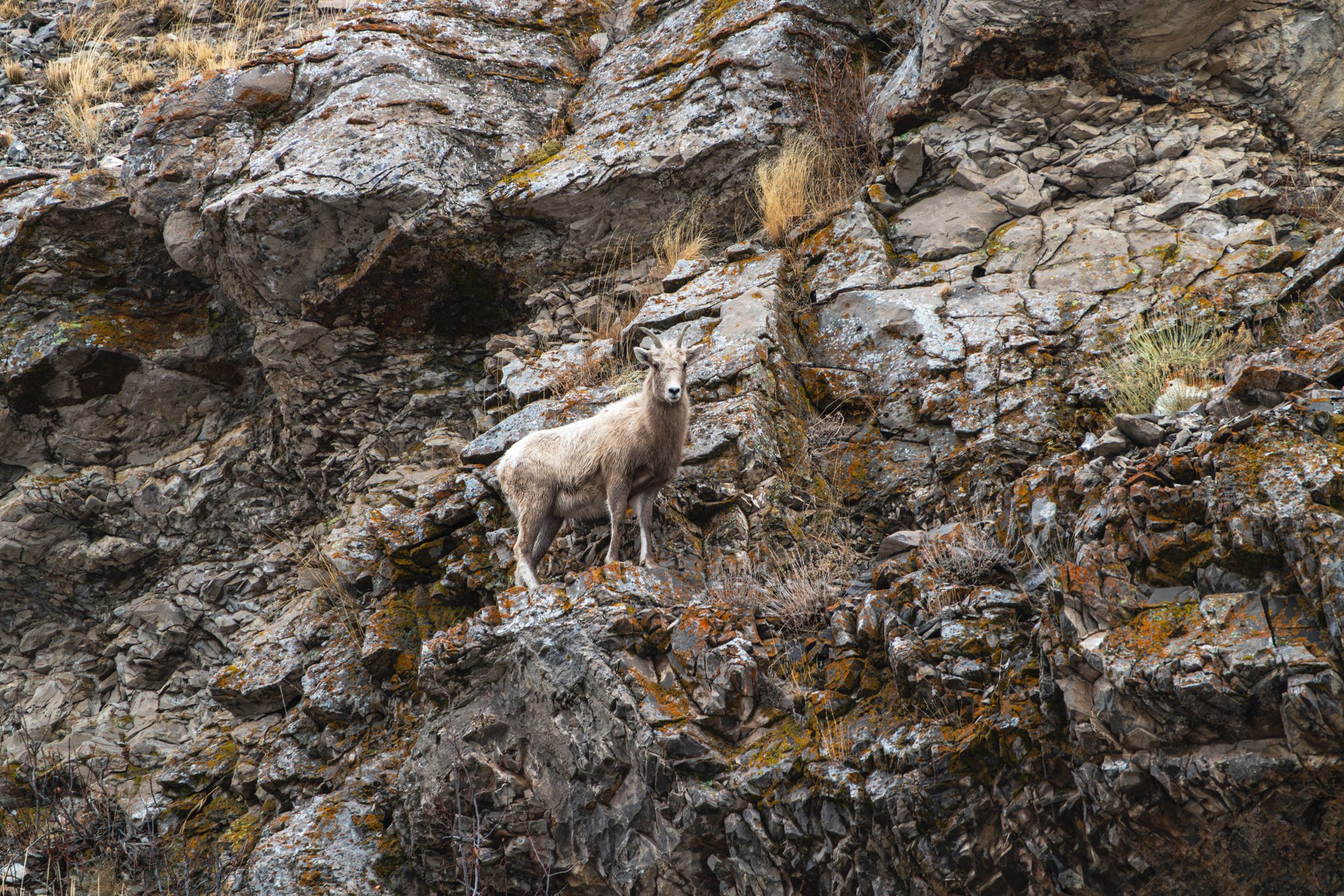
Capturing the Essence of the Wild
Photographing bighorn sheep in January is about patience and position.
Recommended Gear & Settings:
Lens: 400mm–600mm telephoto for intimate portraits and behavior shots.
Aperture: f/5.6–f/8 for balanced sharpness and soft backgrounds.
Shutter Speed: 1/1000s or faster for headbutts or movement on ledges.
ISO: Start around 400–800 in morning light; adjust as shadows shift.
Composition Tips:
Frame against the canyon for scale, their habitat tells the story.
Use diagonal lines of the cliffs to guide the eye toward your subject.
Capture interaction: a glance, a leap, a quiet moment of stillness.
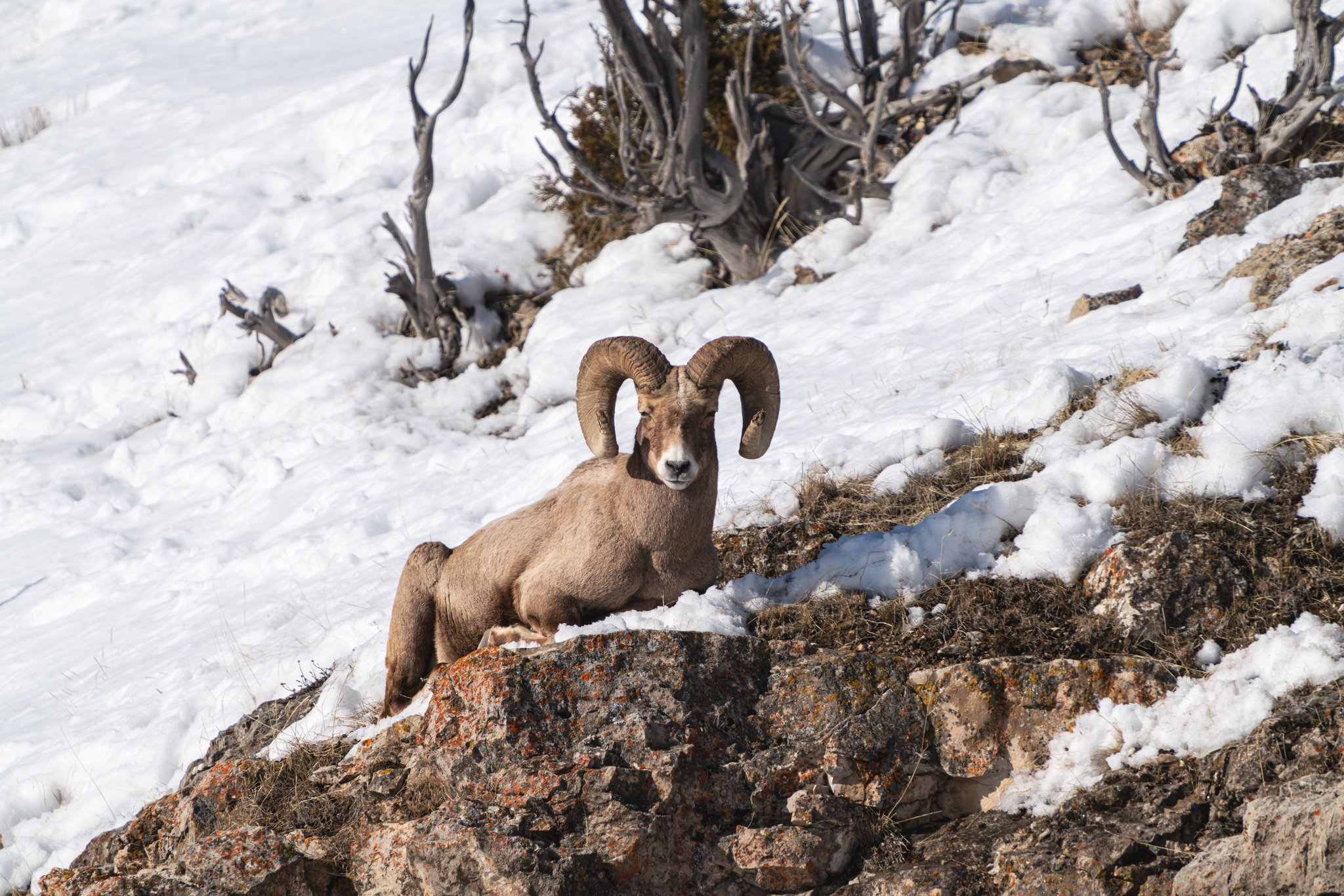
Ethical Reminder: Always maintain at least 25 yards of distance (91 meters). Use long lenses, not close approaches; the best images come from respect and observation.
See it for Yourself
If you’ve never experienced Yellowstone in winter, you’ve never truly seen its soul. The quiet, the light and the resilience of its wildlife reveal a side of the park most visitors miss. Join a private Wild Yellowstone Winter Tour or our Winter Wonderland Workshop and experience the beauty of Yellowstone’s northern range firsthand.
Explore upcoming tours & workshops:
Wild Yellowstone Tours
Winter Wonderland - Wildlife Photography Workshop
Written by Christopher Georgia, founder of Wildscape Adventure
Leading wildlife and astrophotography workshops across Yellowstone, Grand Teton, and Acadia National Parks
📞 (406) 936-0414
✉️ wildscapeadventuretours@gmail.com
🌐 https://www.wildscapeadventure.com
