

The Wild in Yellowstone: Bison in May
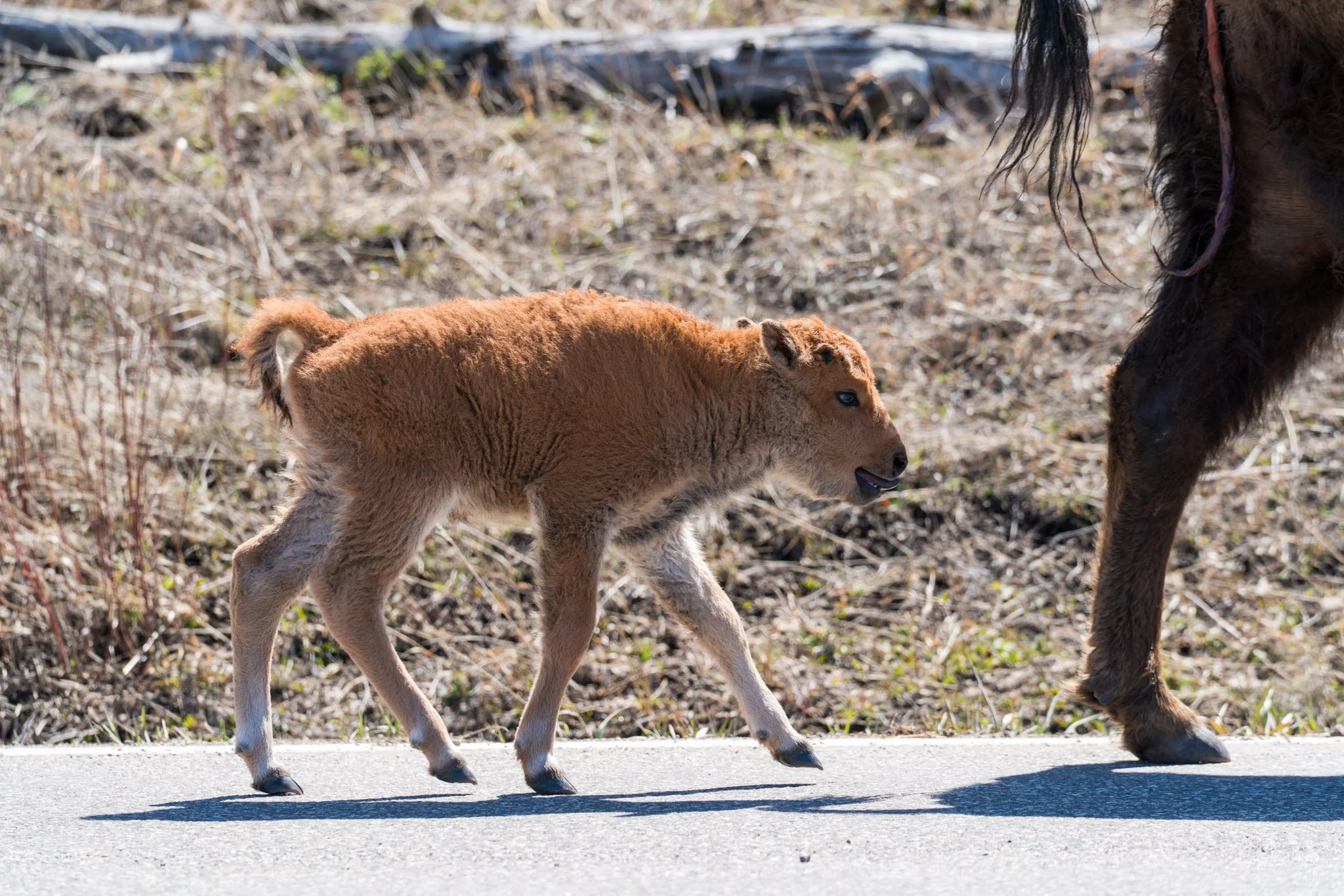
Morning light stretches across Lamar Valley, warming the sage as the last traces of frost begin to fade. The air feels different now, softer, quieter, full of movement. In the distance, a herd of bison grazes slowly across the valley floor. Then, a flicker of motion, small, bright, unmistakable. A calf, still unsteady, trots alongside its mother. Its coat glows a deep orange against the muted greens and browns of spring.
May in Yellowstone is a season of renewal. The long grip of winter has loosened, and life returns in full force. For bison, this is calving season, a time of vulnerability, protection, and constant awareness. For photographers, it’s one of the most powerful and emotional periods in the park, where moments of new life unfold in the open landscape.
As the landscape comes back to life, so does access across Yellowstone National Park. The West Yellowstone entrance opened on April 17. Canyon to East Entrance road today, May 1. By May 8, the South Entrance into Grand Teton National Park reconnects the ecosystem, with Dunraven Pass (Tower Fall to Canyon) is scheduled to open later in the month, on May 22. With each road that opens, new valleys, wildlife corridors, and photographic opportunities unfold, expanding the rhythm of spring deeper into the park.
New Life on the Landscape: Calving Season Behavior
By May, bison herds are spread across Yellowstone’s northern range and central valleys. Calving season is in full swing, with peak births typically occurring from late April through May. These newborns, often called “red dogs,” can stand within minutes of birth and begin following their mothers shortly after. Despite their quick mobility, they remain highly vulnerable.
Common May Behaviors:
Mothers isolating briefly to give birth, then rejoining the herd
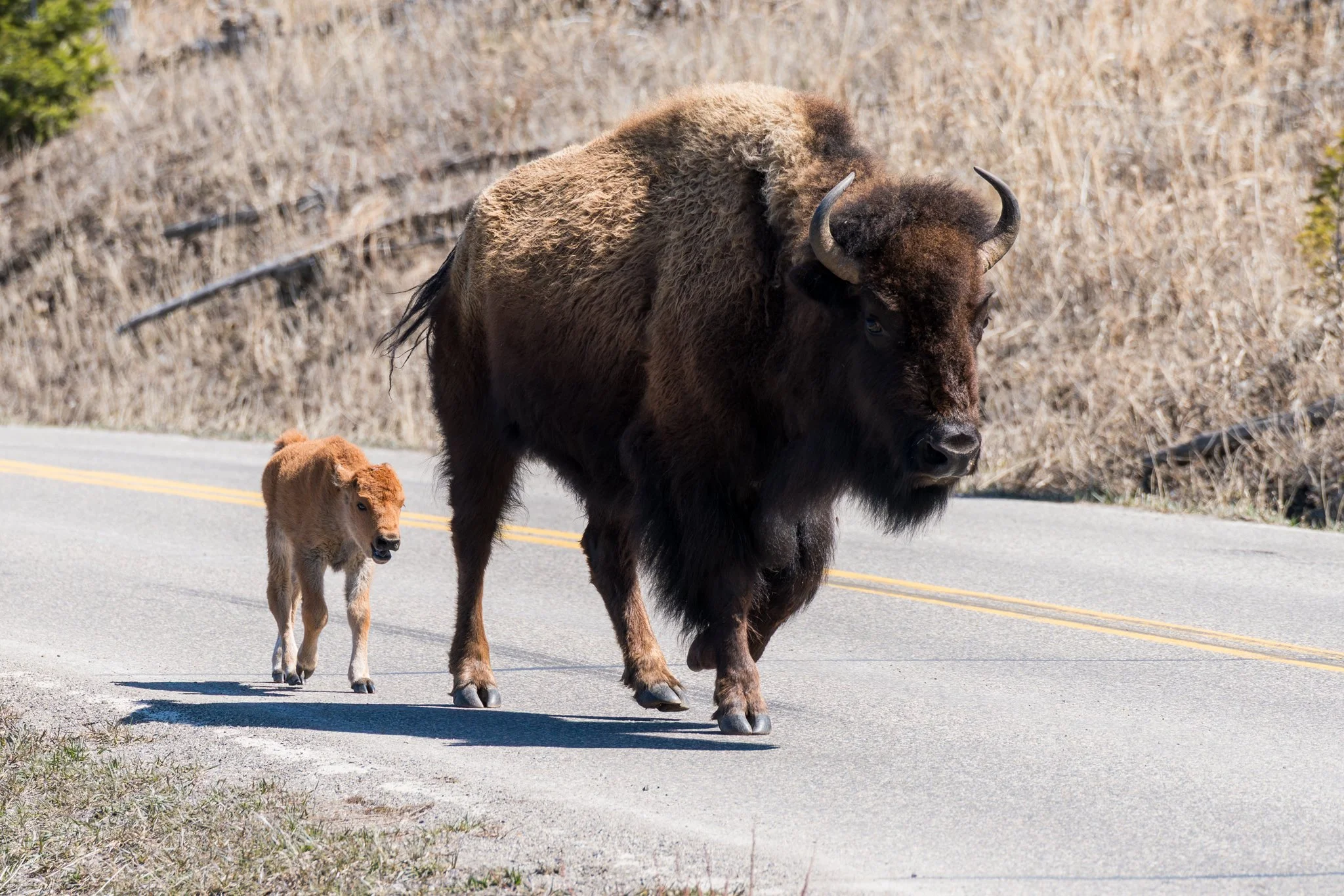
Calves staying close to cows, often tucked just behind or beside them
Protective herd dynamics, with adults forming loose defensive groupings
Calves running, playing, and testing their strength in short bursts
Increased alertness toward predators such as wolves, coyotes, and bears
The herd itself becomes a shifting network of protection. While the landscape feels calm, there’s constant awareness beneath the surface, every movement measured, every sound noticed. Watch for subtle tension. A cow positioning herself between her calf and an approaching animal, a sudden stillness in the herd, or a group tightening formation, these moments reveal the deeper story of survival during calving season.
Finding Bison Across the Spring Landscape
Best Areas:
Lamar Valley
Hayden Valley
Mammoth Hot Springs area
Madison Valley and surrounding meadows
As grasses begin to emerge, bison concentrate in open valleys where forage is most accessible. These same areas provide excellent visibility for observers and photographers.
Best Time of Day:
Early morning for soft light and active movement
Late afternoon into sunset for warm tones and herd behavior
Spring conditions can shift quickly, passing clouds, brief rain, and changing light all add depth and variation to the landscape. Within Yellowstone, bison are often seen moving across roadways or grazing near pullouts. When they decide to move, they do so with purpose, it’s always best to let them pass and observe from a distance.
Capturing the Essence of the Wild
Photographing bison in May is about storytelling, the relationship between mother and calf, and the presence of life returning to the landscape.
Recommended Gear & Settings:
Lens: 200mm–600mm telephoto for flexibility between portraits and environmental shots
Aperture: f/6.3–f/9 for depth and subject separation
Shutter Speed: 1/1000s or faster to capture calf movement
ISO: 200–800 depending on light conditions
Composition Tips:
Focus on interaction, calves following, nursing, or resting beside their mothers
Use layers in the landscape, grasses, rolling hills, and distant herds
Highlight contrast between the calf’s bright coat and the darker tones of adult bison
Spring light is softer than winter, with longer shooting windows and warmer color tones. These conditions allow for more dynamic compositions that blend wildlife with environment.
Ethical Reminder:
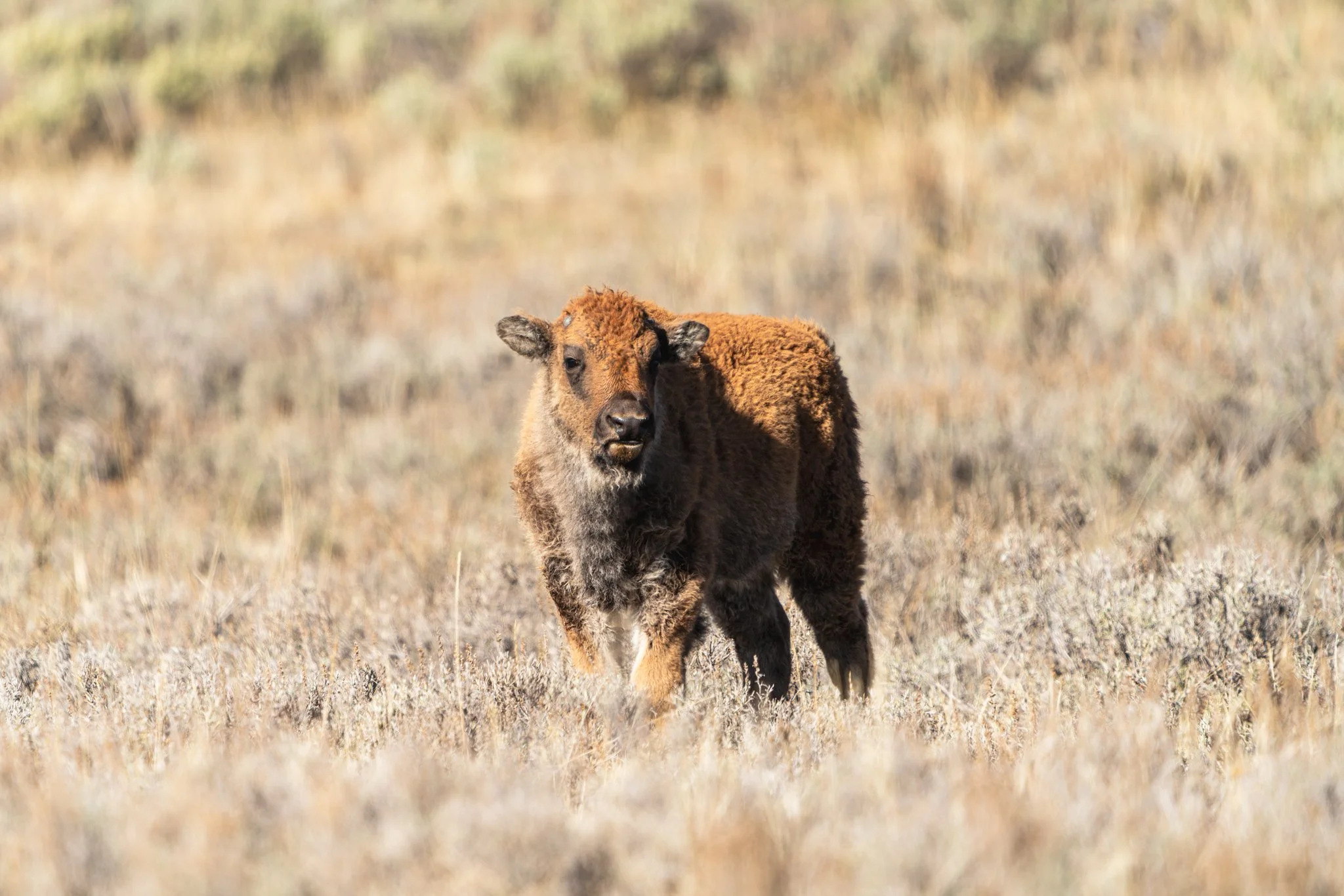
Maintain a minimum distance of 25 yards (23 meters) at all times more if animals are active or with calves. Never approach a cow with a newborn. Bison are highly protective and can react quickly.
See It for Yourself
May in Yellowstone is one of the most rewarding times to experience the park. The landscape is alive, wildlife is active, and the presence of new life adds depth to every encounter. If you want to witness calving season and learn how to photograph these moments with intention and respect, join us on a private wildlife photography tour with Wildscape Adventure.
Explore upcoming adventures:
Yellowstone Tours -
https://www.wildscapeadventure.com/wild-yellowstone
Call of the Wild -
https://www.wildscapeadventure.com/call-of-the-wild
Mastering the Night Sky -
https://www.wildscapeadventure.com/mastering-the-night-sky
Written by Christopher Georgia, founder of Wildscape Adventure
Leading wildlife and astrophotography tours & workshops across Yellowstone, Grand Teton, and Acadia National Parks
📞 (406) 936-0414
✉️ wildscapeadventuretours@gmail.com
🌐 https://www.wildscapeadventure.com
