

The Wild in Yellowstone: Pronghorn in June
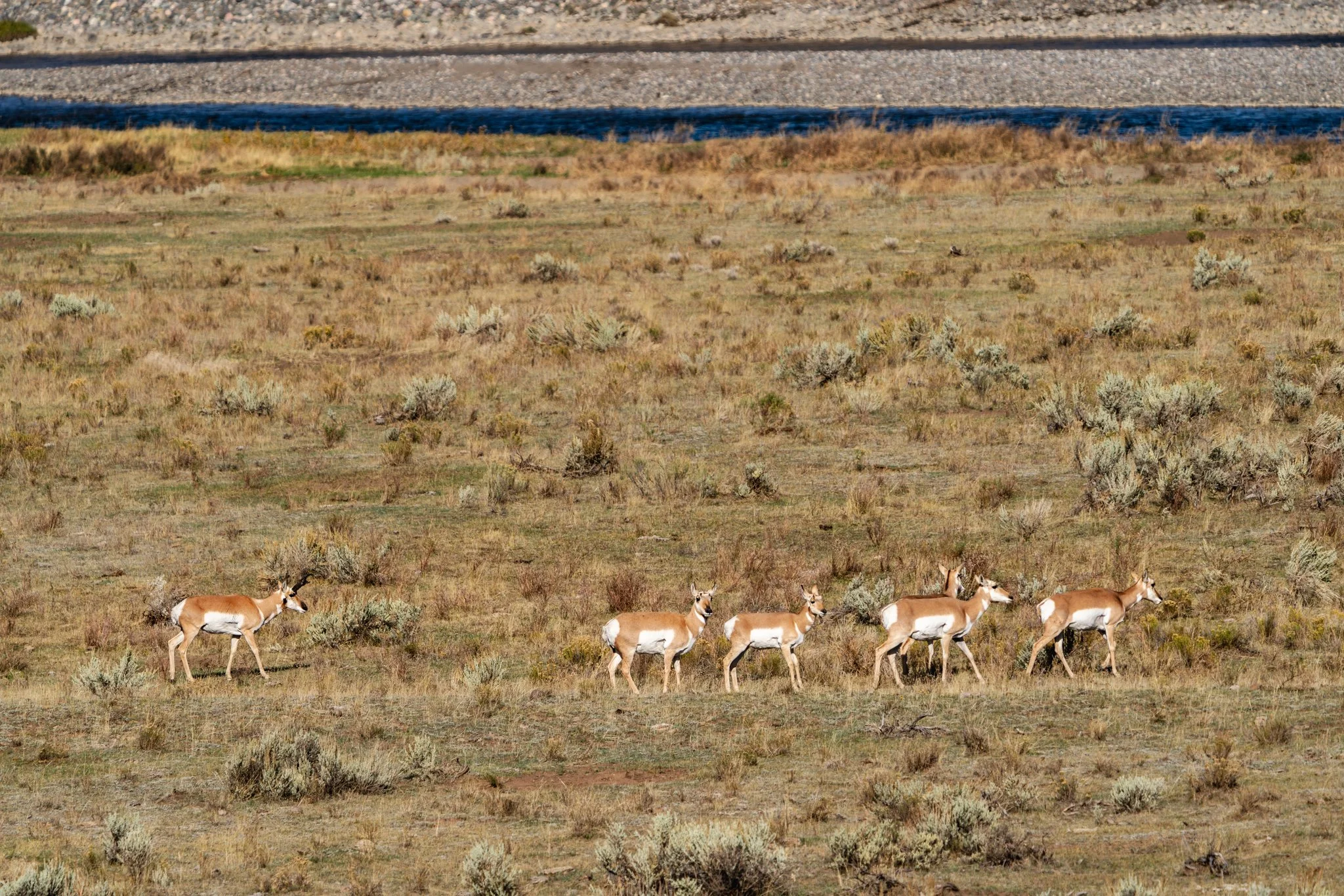
Morning sunlight stretches across Yellowstone's northern range, illuminating the broad sagebrush flats beneath the surrounding mountains. A small group of pronghorn moves through the open grassland, their reddish-tan coats blending almost perfectly with the landscape.
Suddenly, one raises its head. Its ears turn forward, and the brilliant white markings along its neck and rump stand out against the green of early summer.
Within moments, the group is moving again.
June is an excellent time to explore the remarkable adaptations of one of Yellowstone's most overlooked large mammals. Pronghorn may lack the imposing size of bison or the dramatic antlers of bull elk, but their speed, awareness, and ability to survive in open country make them equally fascinating.
For wildlife photographers, understanding pronghorn behavior is the key to creating images that go beyond a simple portrait.
Built for Speed: The Remarkable Pronghorn
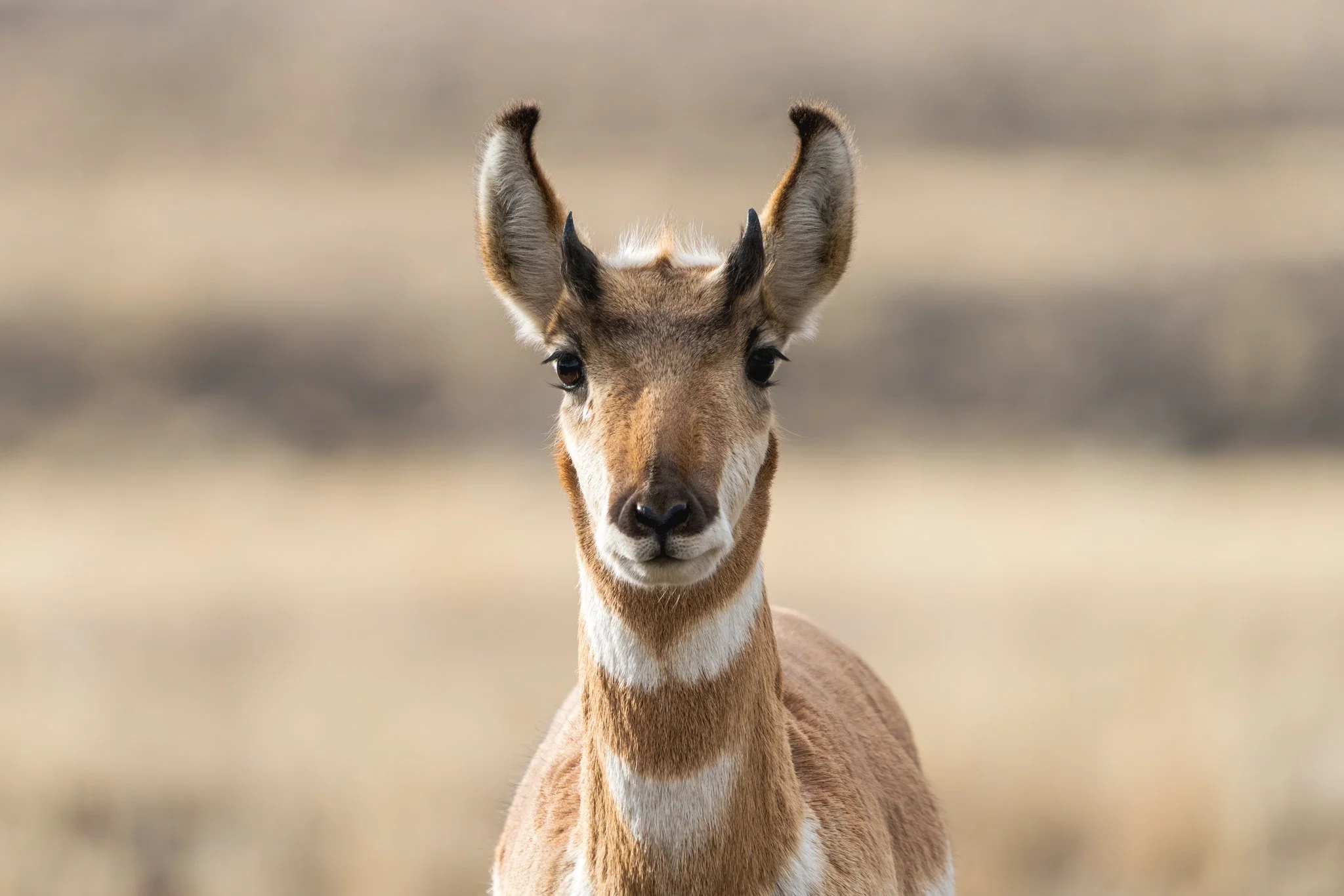
Pronghorn are often called antelope, although they aren't true antelope. They belong to a uniquely North American lineage that has survived for millions of years.
Perhaps their most remarkable adaptation is speed.
Pronghorn can reach approximately 45–50 miles per hour, making them the fastest land mammals in North America.
Their lightweight bodies, powerful legs, highly developed cardiovascular systems, and exceptional vision allow them to detect potential danger and escape across enormous distances.
Summer Behavior and Social Dynamics
By June, pronghorn are taking advantage of Yellowstone's newly green grasslands.
Adults spend much of their time feeding on grasses, forbs, sagebrush, and other vegetation while remaining alert to their surroundings.
Males may be encountered alone or in bachelor groups, while females occupy their own seasonal ranges.
Bucks are also continuing to grow their distinctive horn sheaths. Unlike the antlers of elk or moose, pronghorn horns consist of keratin-covered bony cores, and the outer sheaths are shed and replaced annually.
Common June Behaviors:
Feeding across open sagebrush flats
Bucks traveling alone or in small groups
Vigilant scanning for potential threats
Short bursts of running and playful movement
Grooming, resting, and interactions between adults
Although pronghorn give birth in late May and June, this article focuses on adult behavior and the adaptations that make these animals so successful in open landscapes.
Where to Find Pronghorn in June
Best Areas
Lamar Valley: One of the park's best summer areas for observing pronghorn against expansive grasslands.
Gardiner Basin: Open sagebrush and grassland habitat near Yellowstone's North Entrance.
Northern Range: Suitable open hillsides and grasslands between Gardiner and the Lamar Valley.
Pronghorn prefer open terrain where their exceptional eyesight provides an advantage. Rather than searching thick forests, concentrate on broad valleys and unobstructed sagebrush habitat.
Best Time of Day
Early Morning: Sunrise through approximately 9:00 AM
Late Afternoon: The final two to three hours before sunset
Overcast Conditions: Potentially productive throughout the day
Pronghorn may be visible at any hour, but cooler periods often provide more comfortable conditions for both the animals and photographers.
Midday heat shimmer can make sharp telephoto photographs difficult, even when the subject appears perfectly still.
Capturing Speed and Awareness
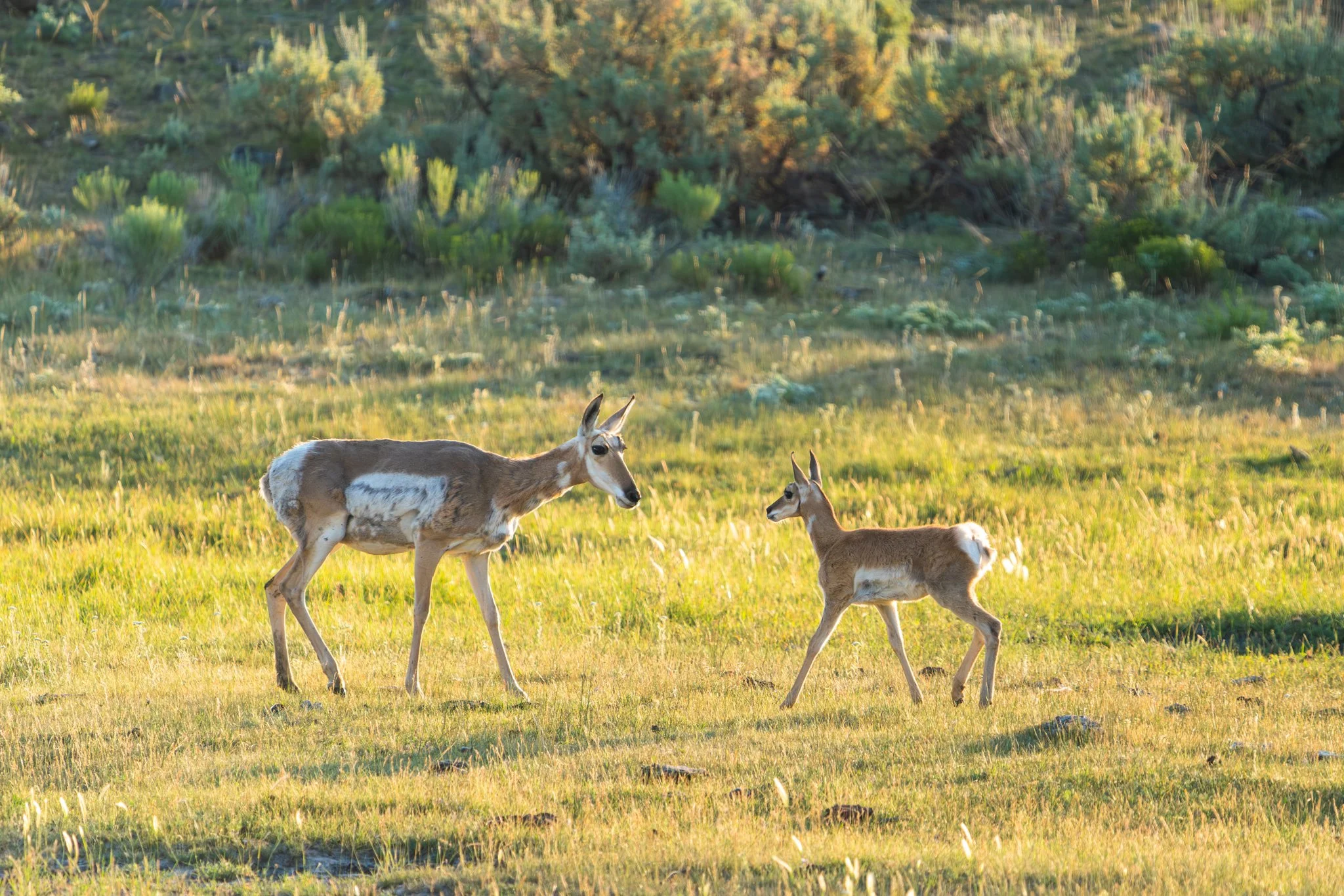
Photographing pronghorn requires a combination of patience, anticipation, and attention to composition.
Unlike animals that spend much of their time in wooded habitats, pronghorn live in wide-open landscapes. This creates opportunities for environmental portraits that emphasize space and scale.
Recommended Gear and Settings
Lens: 200–600mm telephoto
Aperture: f/5.6–f/8
Shutter Speed: 1/1000s for walking and feeding; 1/2500s or faster for running
ISO: Auto ISO, adjusted for changing conditions
Autofocus: Continuous tracking with animal subject detection when available
Composition Tips
Use the Landscape
Rather than filling every frame with your subject, try photographing pronghorn with plenty of surrounding habitat. The broad sagebrush flats and distant mountains are an important part of their story.
Watch the Body Language
A pronghorn raising its head, orienting its ears, or turning to scan the horizon can create a stronger portrait than an animal simply grazing.
Prepare for Movement
When photographing running pronghorn, leave extra room in front of the subject. A fast shutter speed and responsive autofocus system will help capture sharp images during sudden movement.
Control Heat Distortion
On warm afternoons, long shooting distances can introduce atmospheric distortion. Early mornings typically offer more stable air and cleaner detail.
Ethical Reminder
Maintain at least 25 yards (23 meters) from pronghorn and avoid approaching or pushing them into running. Their speed is impressive, but unnecessary flight wastes energy and disrupts normal behavior.
Exploring the Wild: More Than Just Speed
When photographing pronghorn, I encourage people to pay attention to the moments between movement.
Their ability to remain alert while feeding, their constant awareness of the horizon, and the subtle relationships between individuals offer just as much photographic potential as a full-speed run.
Sometimes the strongest image is a single buck standing motionless in the sagebrush with Yellowstone's mountains rising behind him.
That photograph tells us something important about the animal and the landscape it calls home.
See It for Yourself
June brings fresh color, long daylight hours, and wonderful opportunities to photograph wildlife across Yellowstone's northern range.
Pronghorn remind us that some of the park's most remarkable animals are hiding in plain sight.
Join Wildscape Adventure for a private wildlife photography tour and discover how understanding animal behavior can transform the way you photograph Yellowstone.
