

The Wild in Yellowstone: Moose in June
The first light settles softly across a willow-lined meadow as mist lifts from the water’s edge. Somewhere in the stillness comes the slow sound of movement. Deliberate, heavy, quiet. A bull moose steps from the shadows, water dripping from his muzzle as fresh velvet antlers catch the early morning light.
June in Yellowstone feels alive in a different way. Spring has fully taken hold, wildflowers spread across the valleys, and wetlands hum with movement. For moose, this is a season of rebuilding and growth. Bulls feed constantly to fuel rapidly developing antlers, while cows move carefully through willow flats with newborn calves never far behind.
For photographers, June offers one of the best opportunities of the year to observe moose behavior in soft light and rich habitat, a chance to tell stories of patience, scale, and quiet presence.
Summer Growth: Velvet, Calves, and Feeding Behavior
June is one of the strongest months for observing moose behavior in the Greater Yellowstone Ecosystem. After winter, food becomes abundant again, and moose shift into a season focused on nutrition and growth.
Bull moose spend much of the month feeding to support rapid antler development. Covered in soft velvet rich with blood vessels and nutrients, antlers can grow astonishingly fast during early summer. In June, bulls are often solitary, moving steadily between wetlands, ponds, and willow flats while feeding for extended periods.
Cows tell a different story.
By June, many cows are accompanied by newborn calves, often born in late May or early June. These calves stay close, moving cautiously behind their mothers and learning quickly where to feed, rest, and hide.
Common June Behaviors:
Bulls browsing heavily on willow and aquatic vegetation
Velvet antler growth and frequent feeding behavior
Cows feeding while calves remain close to cover
Calves nursing or navigating marshy terrain beside their mothers
Moose entering ponds or wetlands to feed and cool themselves
Unlike the intensity of fall rutting season, June moose feel calm and deliberate. Their movements are slower, quieter, and often deeply tied to habitat.
Watch for pauses.
A bull lowering his head into water, a calf hesitating before crossing mud, or a cow turning to check behind her.. these small moments often reveal the strongest photographs.
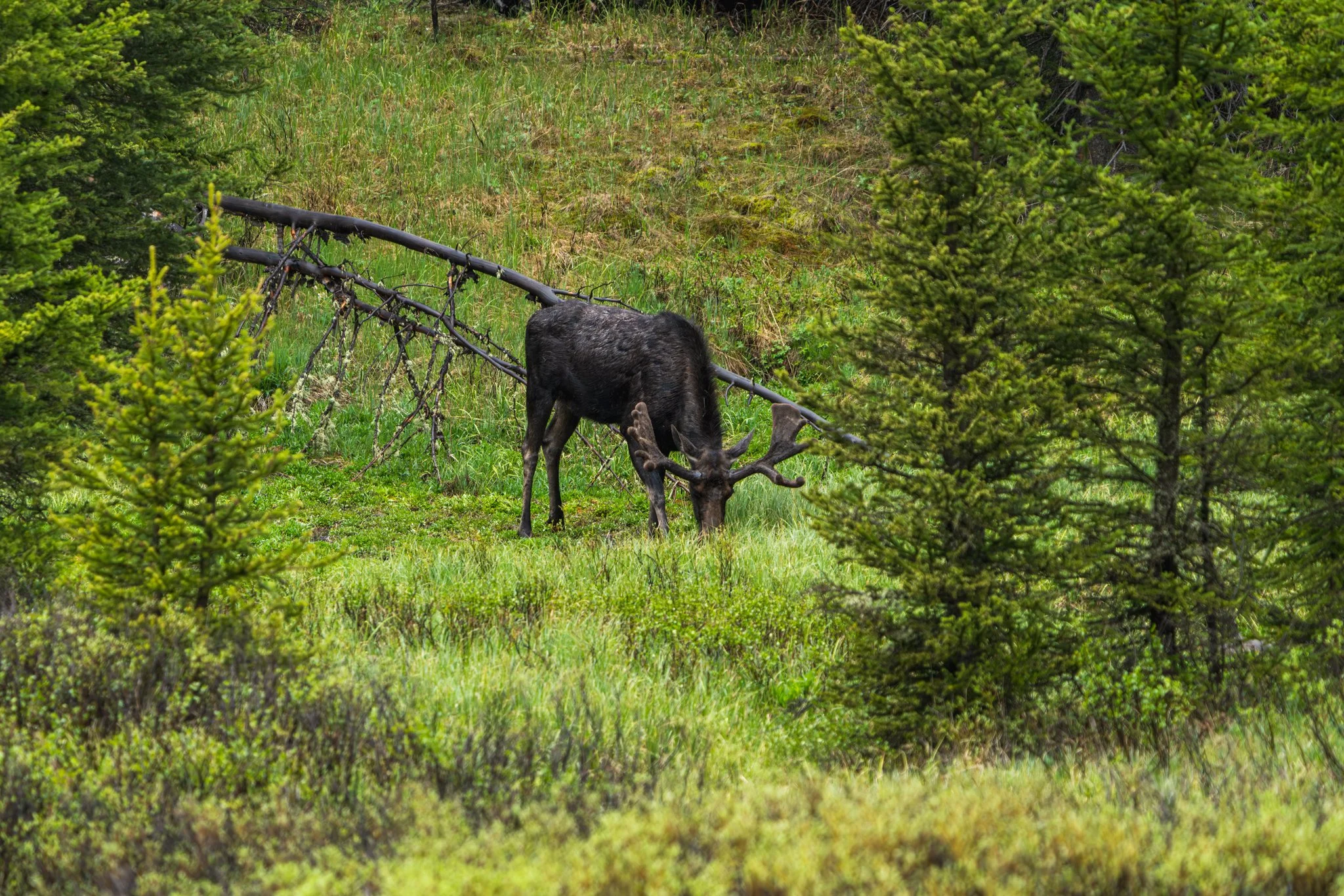
Finding Moose Across the Early Summer Landscape
Best Areas:
Soda Butte Creek corridor
Pebble Creek area
Swan Lake Flats
Willow-rich habitat near the Northeast Entrance
Wet meadows and ponds throughout Yellowstone’s northern range
As summer settles into Yellowstone, moose stay close to food and water. Willow-lined creeks, marshes, ponds, and wet meadows become prime habitat.
Nearby regions of the Greater Yellowstone Ecosystem, including areas surrounding Grand Teton National Park, also become productive for moose sightings as aquatic vegetation increases.
Best Time of Day:
Sunrise through mid-morning (approximately 5:30 AM–9:00 AM)
Late afternoon through sunset
Cooler temperatures keep moose active longer. By midday, especially on warmer days, activity often slows as animals retreat into shade or thick cover.
Cloudy mornings and light mist can create exceptional conditions for photography, adding atmosphere and softness to the frame.
Capturing the Essence of the Wild
Photographing moose in June is about patience, habitat, and behavior. Moose rarely move quickly unless startled, which gives photographers time to slow down and anticipate moments
Recommended Gear & Settings:
Lens: 200–600mm telephoto for portraits and environmental compositions
Aperture: f/5.6–f/8 depending on depth of field needs
Shutter Speed: 1/800s–1/1250s for feeding or walking movement
ISO: 200–1000 depending on morning light conditions
Commosition Tips:
Include wetlands, willow flats, or reflections to tell the story of place
Frame velvet antlers against soft morning light
Watch for interaction between cows and calves
Use foreground grasses to create depth and atmosphere
June mornings often bring low-angle light and moisture in the air, creating opportunities for layered, cinematic compositions.
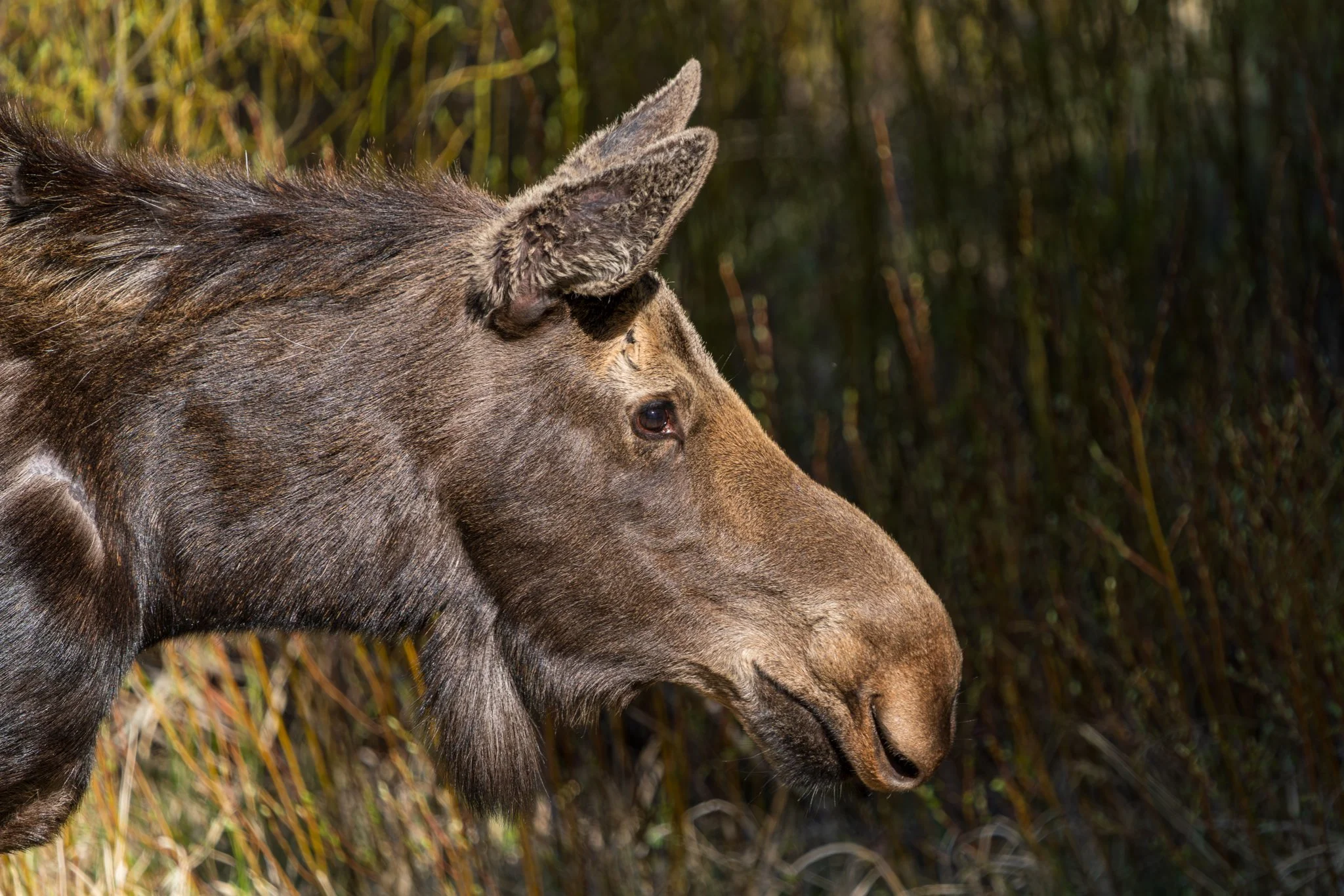
Ethical Reminder:
Always maintain at least 25 yards (23 meters) from moose, though more distance is often wise. Moose can be unpredictable, especially cows with calves. If ears pin back, posture stiffens, or movement becomes direct, give them additional space immediately.
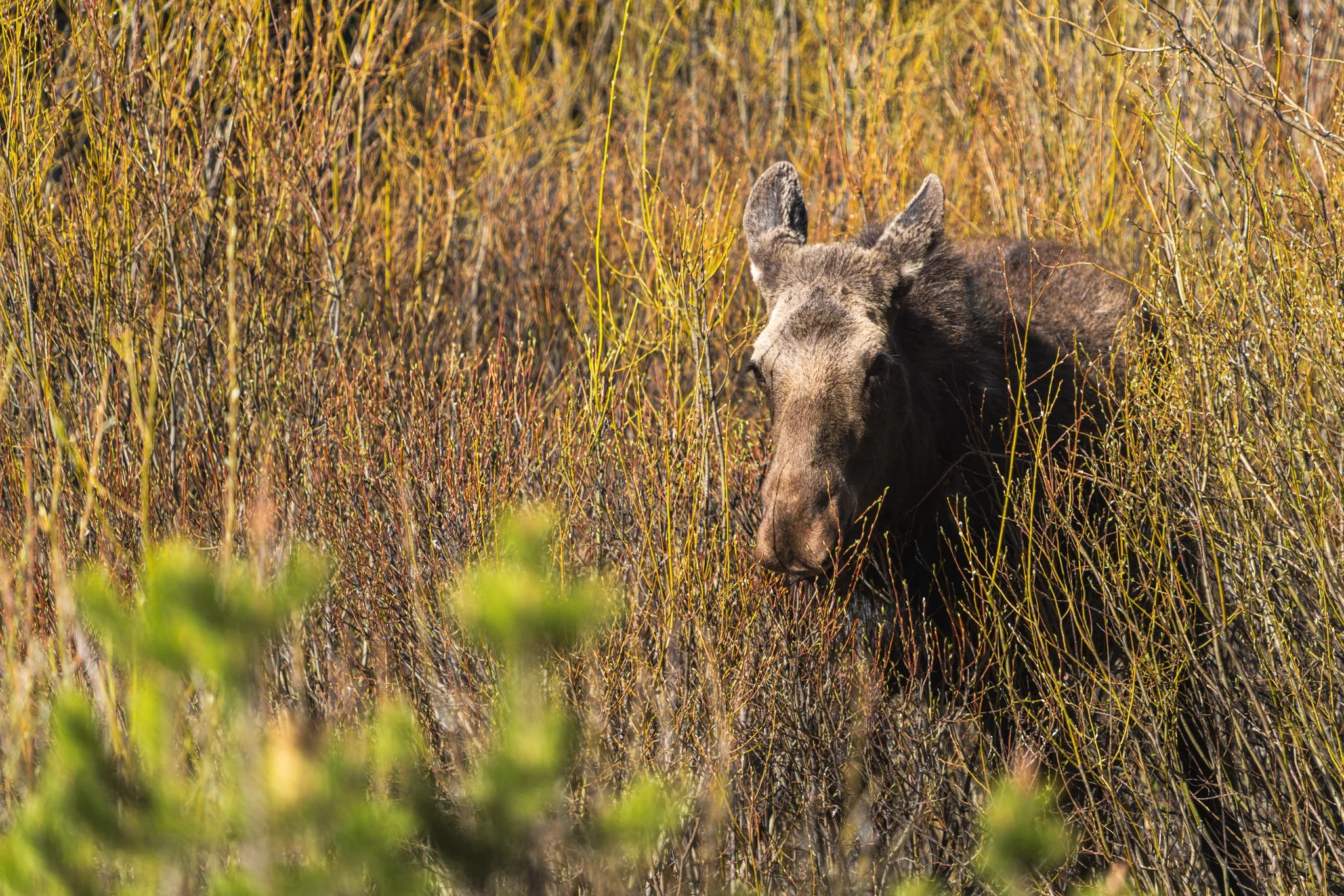
See It for Yourself
June is one of Yellowstone’s most rewarding months for wildlife photography. Wetlands come alive, calves begin exploring the world, and velvet-covered bulls move through willow flats under soft summer light.
If you want to photograph moose while learning behavior, timing, and fieldcraft in one of the wildest places in North America, join us on a private wildlife photography tour with Wildscape Adventure.
Explore upcoming adventures:
Yellowstone Tours -
https://www.wildscapeadventure.com/wild-yellowstone
Call of the Wild -
https://www.wildscapeadventure.com/call-of-the-wild
Mastering the Night Sky -
https://www.wildscapeadventure.com/mastering-the-night-sky
Written by Christopher Georgia, founder of Wildscape Adventure
Leading wildlife and astrophotography tours & workshops across Yellowstone, Grand Teton, and Acadia National Parks
📞 (406) 936-0414
✉️ wildscapeadventuretours@gmail.com
🌐 https://www.wildscapeadventure.com
