

The Wild in Yellowstone: Otters & Foxes in January
A thin layer of frost covers the sagebrush as the first light reaches Yellowstone's northern range. Along the river, water moves steadily between shelves of ice, while the surrounding meadows remain buried beneath winter snow. Somewhere along the riverbank, an otter slips into the current. Farther across the valley, a red fox pauses, listening carefully for movement beneath the frozen surface.
January is one of Yellowstone's quietest months, but beneath that stillness, wildlife remains remarkably active. While many animals conserve energy or retreat into shelter, river otters and red foxes continue hunting through some of the most demanding conditions of the year.
For photographers, these two predators provide an opportunity to explore winter survival from completely different perspectives. One thrives in icy rivers, while the other searches the snow-covered landscape for its next meal.
Two Winter Hunters: Behavior and Adaptations
River Otters: Life Beneath the Ice
North American river otters remain active throughout winter, relying on their exceptionally dense, waterproof fur to insulate them from freezing water. Their streamlined bodies, powerful tails, and webbed feet make them highly effective swimmers.
Fish form an important part of their diet, although otters also consume crayfish and other aquatic animals when available.
One of their most recognizable behaviors is sliding across snow and ice. Rather than walking continuously, otters often alternate between short bounds and belly slides, an efficient way to travel across slippery surfaces.
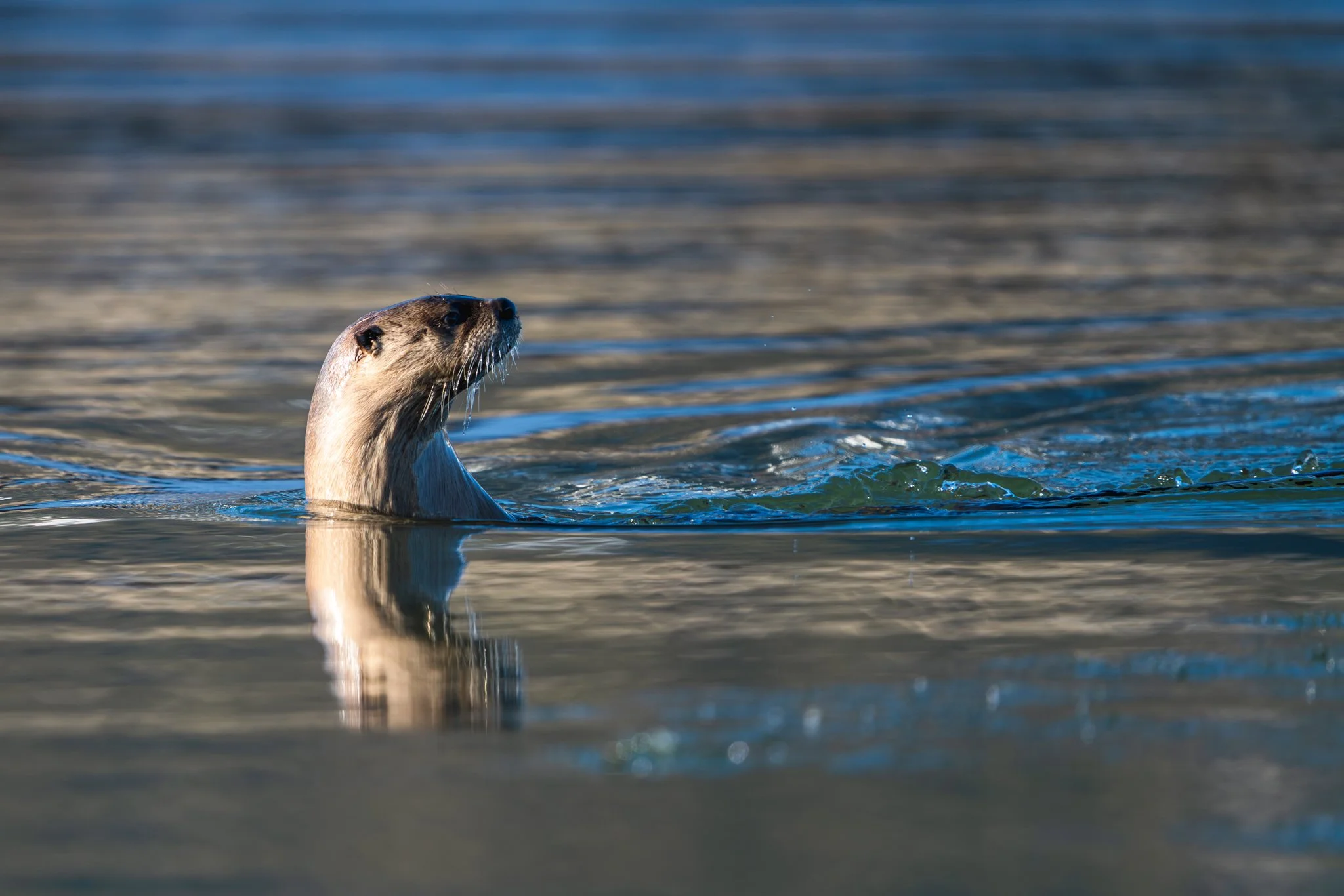
Behaviors to Watch For:
Swimming and diving along open river channels
Sliding across snow-covered riverbanks
Surfacing with fish or other prey
Grooming to maintain their insulating fur
Traveling and interacting in family groups
Although otters are often most active around dawn and dusk, sightings can occur throughout the day. Their movements are influenced by food availability, river conditions, and access to open water.
Red Foxes: Hunting Beneath the Snow
Away from the river, red foxes face a different challenge.
These adaptable predators rely heavily on their hearing to locate voles and mice moving beneath the snow. Once a fox identifies its prey, it may freeze, tilt its head, and launch into a sudden leap before plunging headfirst toward the hidden animal.
This behavior, commonly called mousing, creates some of Yellowstone's most captivating winter photography opportunities.
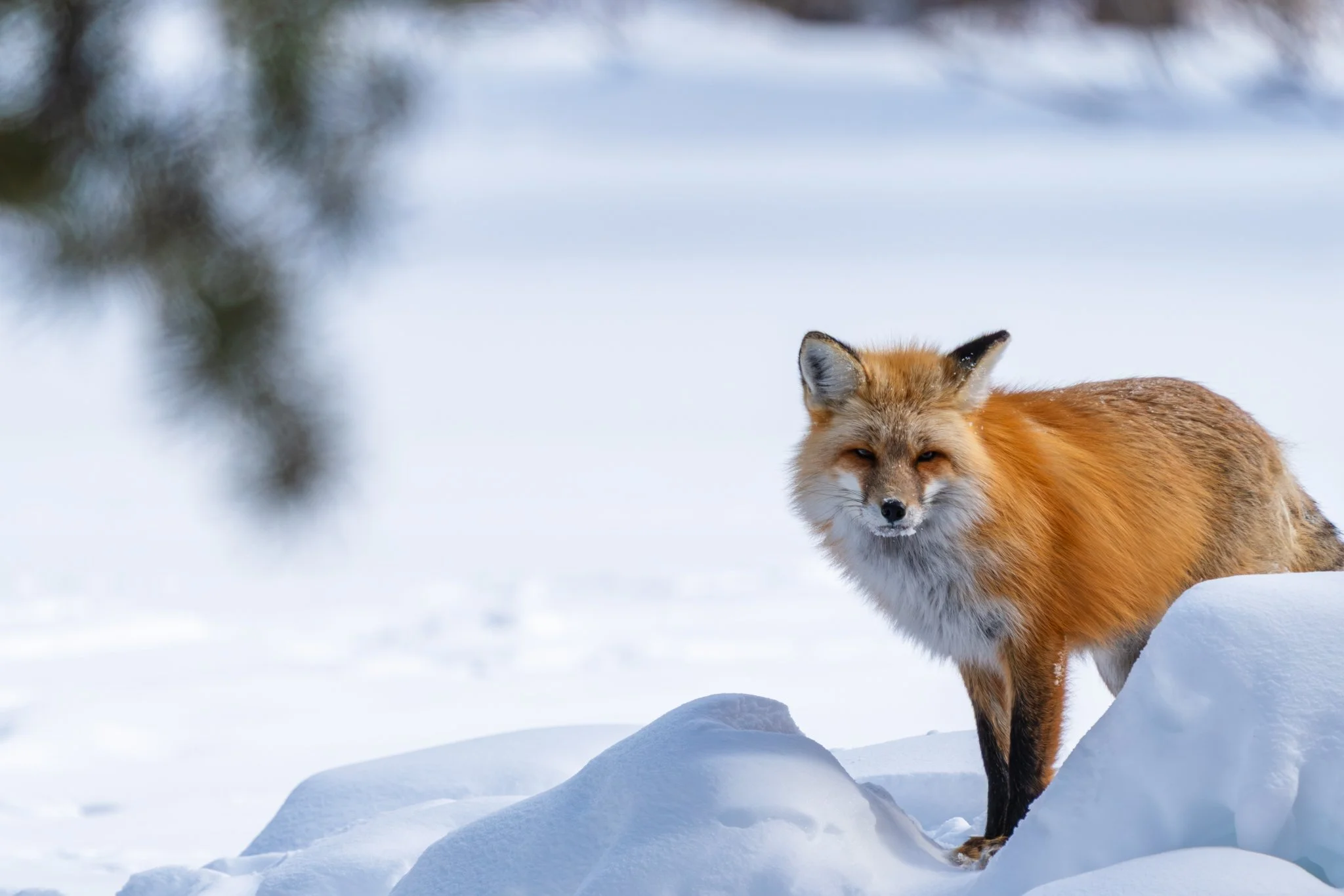
Behaviors to Watch For:
Listening intently with ears directed toward the ground
Sudden leaps and headfirst hunting dives
Traveling along forest edges and open meadows
Investigating tracks, scent marks, and potential food sources
Resting or curling up in sheltered locations
Their thick winter coats provide insulation, while their bushy tails can help conserve warmth when resting.
Unlike river otters, foxes are generally solitary hunters. Their survival depends on locating relatively small prey scattered across large areas.
Where to Find River Otters and Red Foxes in January
Best Areas for River Otters
Lamar River: Look for accessible stretches of open water and evidence of activity along snowy banks.
Yellowstone River: Ice-free sections and quieter river margins provide potential feeding and travel habitat.
Soda Butte Creek: Some open-water stretches may provide suitable habitat, although sightings are unpredictable.
Otters can travel considerable distances between feeding areas, and a productive location one day may be empty the next.
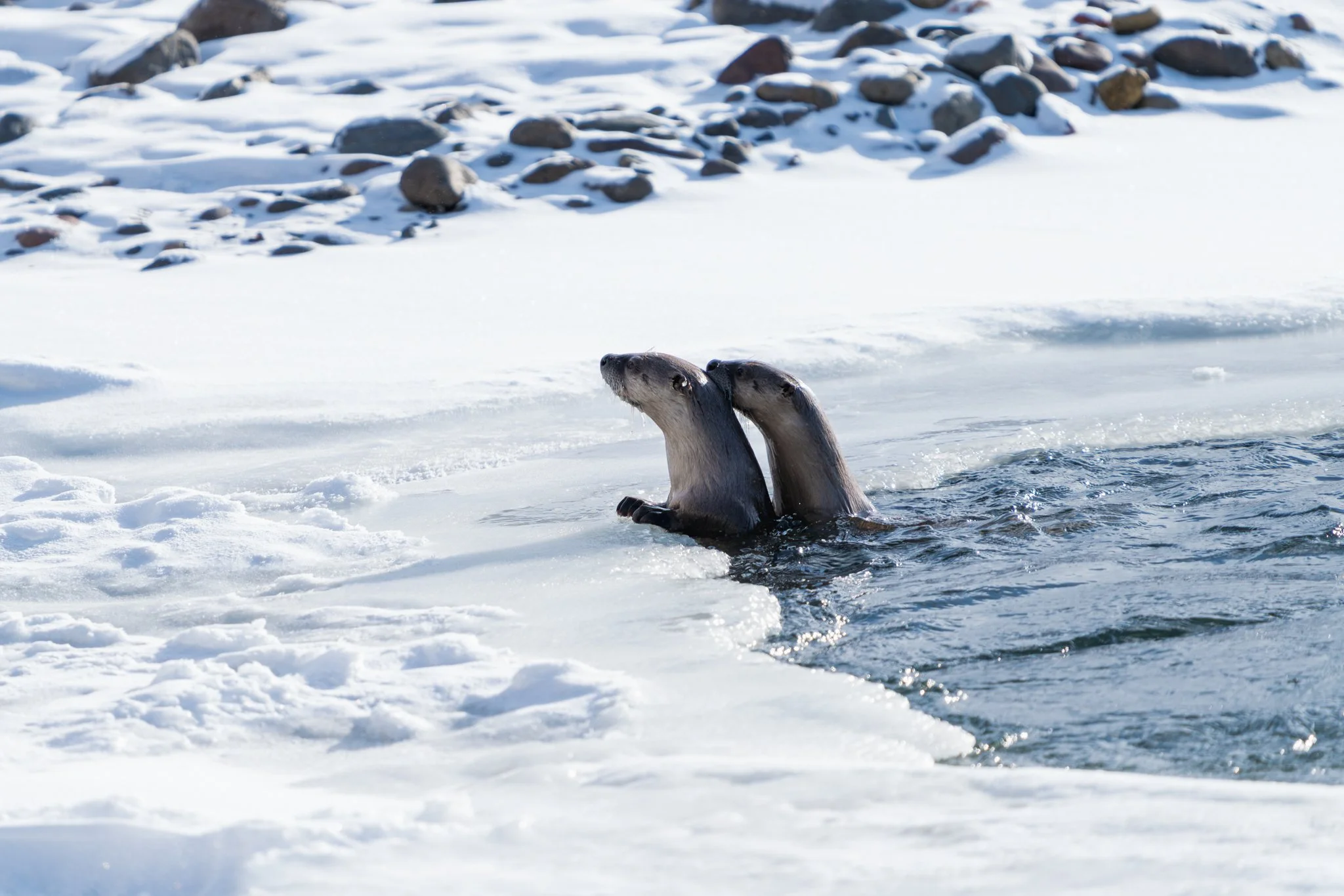
Best Areas for Red Foxes
Lamar Valley: Open meadows and the transition between grassland and forest.
Blacktail Plateau: Sagebrush openings and meadow edges.
Gardiner Basin: Lower-elevation grasslands and lightly snow-covered hillsides.
Mammoth Hot Springs vicinity: Meadow margins and suitable open habitat away from developed areas.
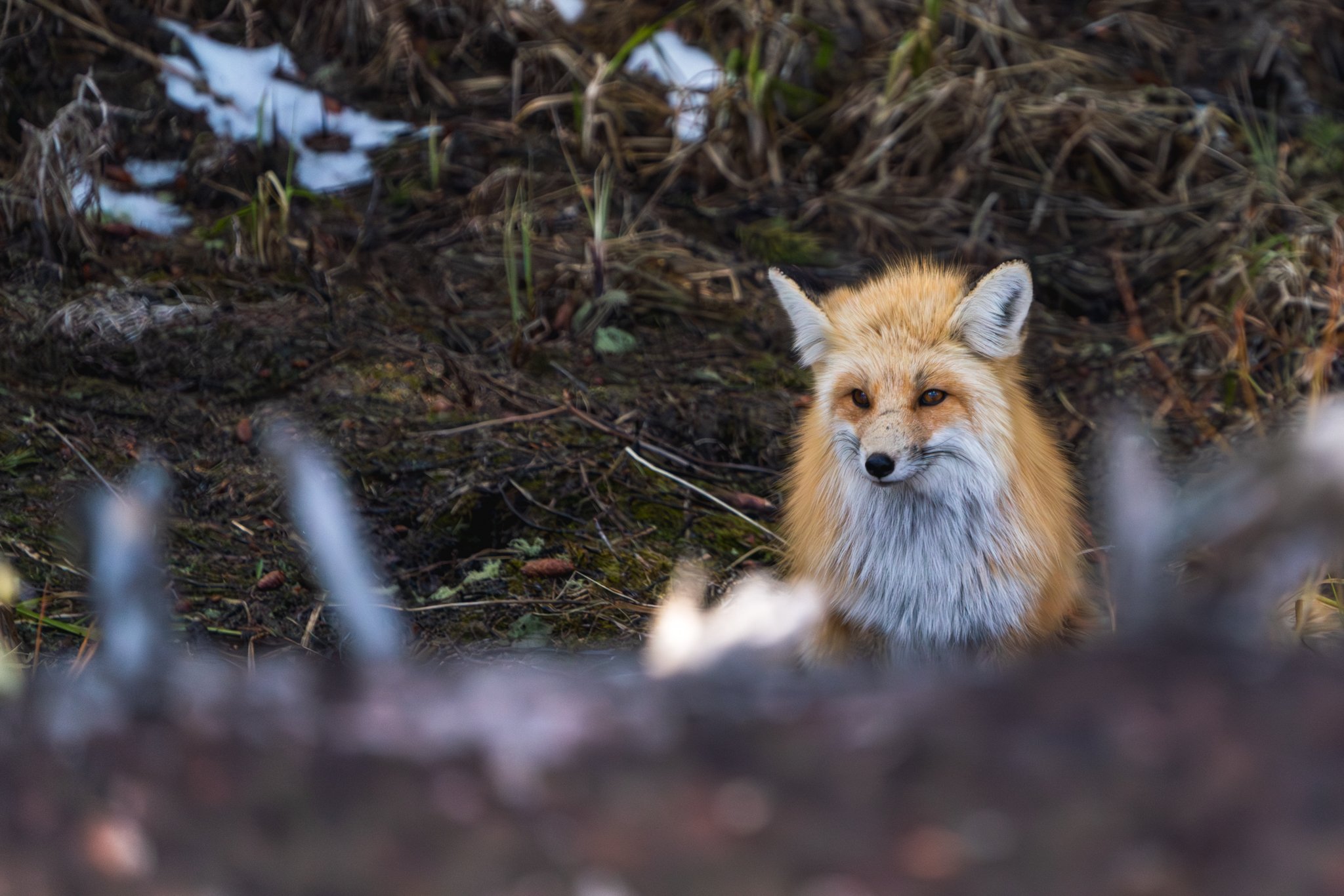
Best Time of Day
River Otters: Early morning and late afternoon are useful observation periods, although daytime activity is possible.
Red Foxes: Sunrise through mid-morning and the final hours before sunset are particularly promising for hunting behavior.
In January, regular vehicle access is generally limited to Yellowstone's northern corridor between Gardiner and the Northeast Entrance, weather permitting.
Capturing Two Different Winter Stories
Photographing these animals requires two distinct approaches. River otters demand fast reactions near water, while foxes reward photographers who learn to anticipate subtle hunting cues.
Recommended Gear and Settings
River Otters
Lens: 300–600mm telephoto
Aperture: f/5.6–f/8
Shutter Speed: 1/1600s–1/2500s for swimming or diving
ISO: Auto ISO, adjusted to available light
Red Foxes
Lens: 200–600mm telephoto
Aperture: f/5.6–f/7.1
Shutter Speed: 1/2000s or faster for mousing
ISO: Auto ISO, with exposure compensation as needed for snow
Photography Tips
For river otters, keep your framing slightly wider than you might for a stationary subject. Otters move quickly, and extra room allows you to follow sudden dives, splashes, and changes in direction.
With foxes, pay particular attention to their ears and posture. When a fox stops and concentrates on a specific patch of snow, prepare your autofocus and shutter speed before the leap begins.
Snow can also fool your camera's meter into underexposing the scene. Review your histogram and watch the highlights rather than relying entirely on the brightness of the rear LCD.
Ethical Reminder
Maintain at least 25 yards (23 meters) from both species and give them more space whenever necessary. Never pursue animals along riverbanks, block travel routes, or interrupt active hunting.
Exploring the Wild: Reading the Winter Landscape
One of the things I enjoy most about winter wildlife photography is learning to recognize the signs that an animal has been there.
A series of tracks disappearing into open water tells one story. Small paw prints crossing a meadow, interrupted by a sudden disturbance in the snow, tell another.
Sometimes those signs lead to a photograph. Other times, they simply help us understand the animals moving through Yellowstone when no one is watching.
River otters and red foxes may occupy very different environments, but both remind us that winter is far from a dormant season.
See It for Yourself
January reveals a quieter, more intimate side of Yellowstone. Icy rivers, open valleys, and fresh snowfall create opportunities to observe wildlife against some of the most beautiful winter scenery in North America.
Join Wildscape Adventure for a private Yellowstone wildlife photography experience, where we'll explore winter habitats, interpret animal behavior, and work toward meaningful photographs without disturbing the wildlife we encounter.
Explore Wild Yellowstone Photography Tours
Explore Winter Wonderland Photography Workshops
Author: Christopher Georgia | Wildscape Adventure
Contact: hello@wildscapeadventure.com | (406) 936-0414
