

The Wild in Yellowstone: Great Gray Owls in July
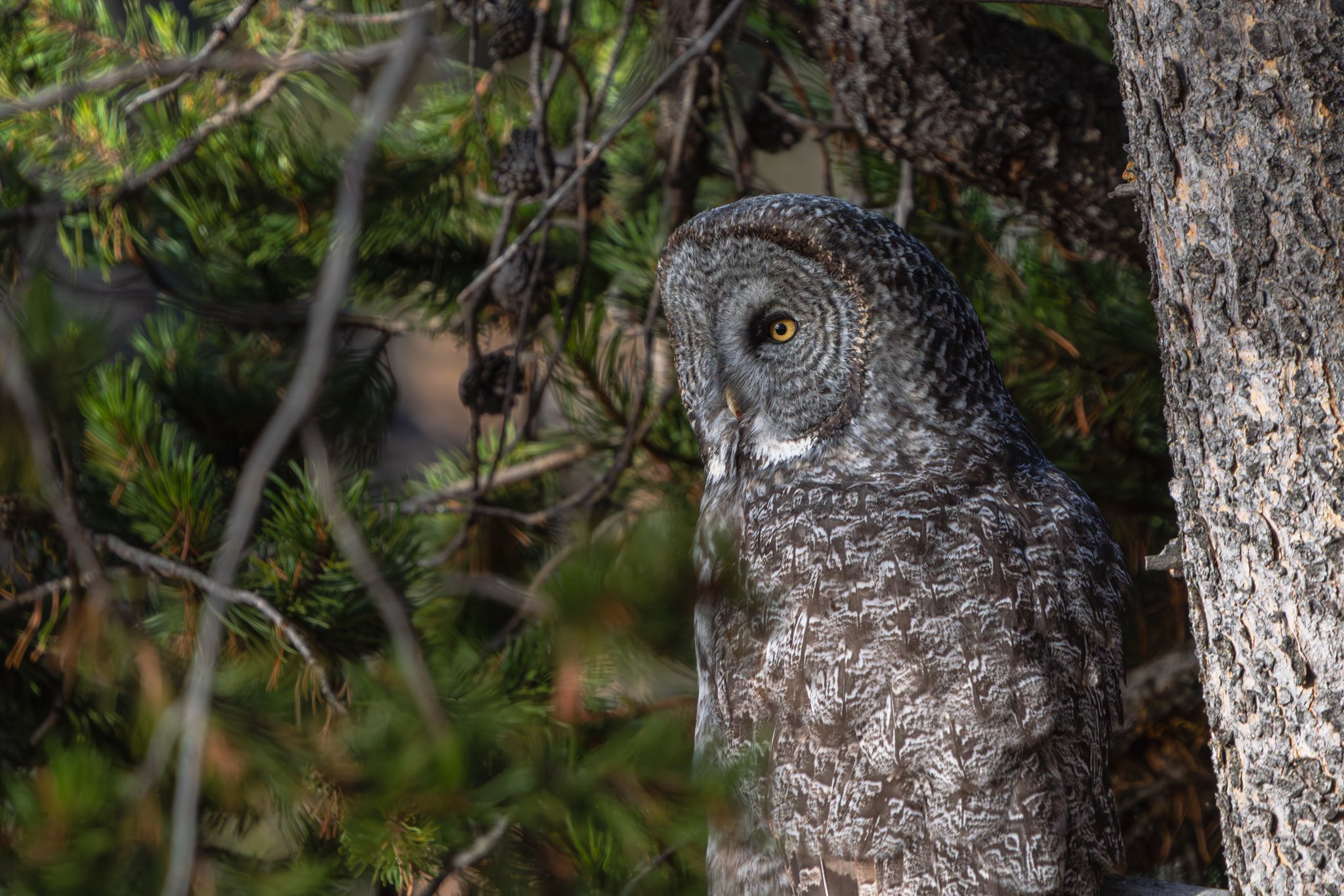
The meadow is still except for the gentle rustle of a summer breeze through the pines. Wildflowers sway beneath the morning light while dew clings to the grasses. Then, almost without warning, a silent shadow glides across the clearing.
A Great Gray Owl lands atop a weathered snag, its brilliant yellow eyes fixed on something hidden beneath the grass. For several moments it remains perfectly motionless before slipping effortlessly back into the air, disappearing into the forest as quietly as it arrived.
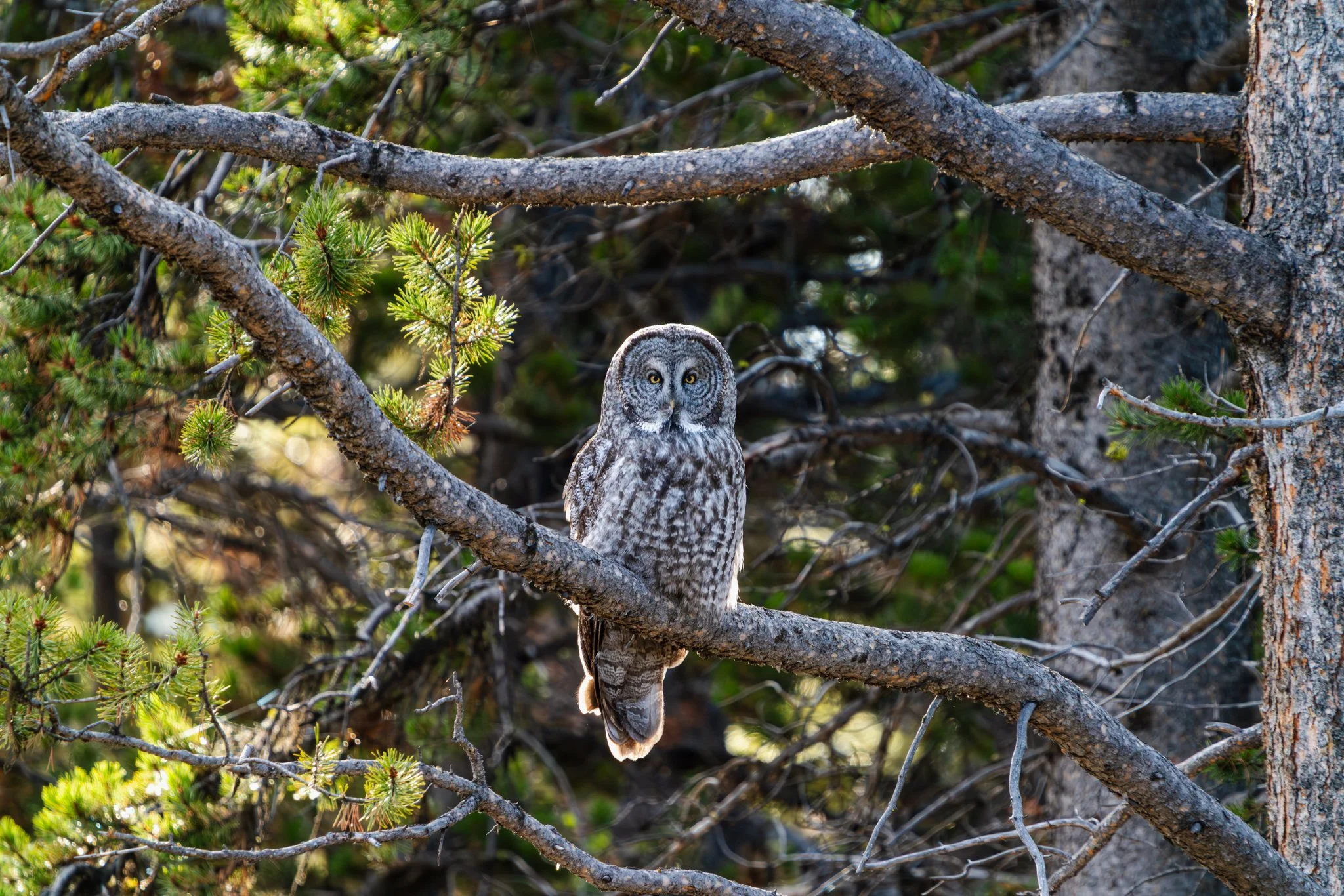
July is a remarkable time to encounter Great Gray Owls in Yellowstone. Their young are beginning to leave the nest, adults are hunting almost constantly, and every successful hunt helps prepare the next generation for life in the wild. For wildlife photographers, few experiences compare to watching one of North America's largest owls move silently through Yellowstone's forests.
Raising the Next Generation: Summer Behavior
Unlike many birds that have already finished raising young by midsummer, Great Gray Owls remain incredibly active throughout July.
By now, many owlets have left the nest but are still dependent on their parents for food and protection. These fledglings spend much of their time perched low in nearby trees while adults continue making frequent hunting trips.
Common July Behaviors
Adults delivering prey to recently fledged young
Juveniles exploring nearby branches and learning to fly
Silent hunting flights across open meadows
Perching on snags while listening for small mammals
Family groups remaining within established nesting territories
Great Gray Owls rely heavily on their extraordinary hearing. Even with dense summer vegetation, they can pinpoint the movement of voles and other small mammals hidden beneath tall grasses.
One of the most fascinating behaviors to watch is the owl's intense focus before a hunt. Its head tilts slightly from side to side as it triangulates sound before launching into an almost silent flight toward its prey.
Where to Find Great Gray Owls in July
Best Areas
Forest edges bordering mountain meadows
Open grasslands surrounded by mature lodgepole pine forests
Burn areas with standing dead trees that provide hunting perches
Quiet willow-lined meadows in Yellowstone's northern and central regions
Rather than remaining deep within dense forest, Great Gray Owls often hunt where forests meet open meadows. These transition zones provide excellent visibility while supporting healthy populations of voles and other small mammals.
Best Time of Day
Sunrise through mid-morning
Late afternoon through sunset
Overcast mornings often provide excellent activity throughout the day
During hotter afternoons, activity frequently slows as owls retreat into shaded portions of the forest before resuming hunting later in the evening.
Capturing the Silent Hunter
Great Gray Owls reward patience more than persistence.
Instead of chasing an owl from perch to perch, spend time observing its behavior. Many individuals repeatedly hunt the same meadow, returning to familiar perches throughout the morning.
Recommended Gear
400–600mm telephoto lens
Fast autofocus with subject tracking
Monopod or tripod for extended observation
Binoculars for locating distant birds
Suggested Settings
Aperture: f/5.6–f/7.1
Shutter Speed: 1/2500s or faster for flight
ISO: 400–1600 depending on available light
Composition Tips
Include meadow grasses to create environmental portraits.
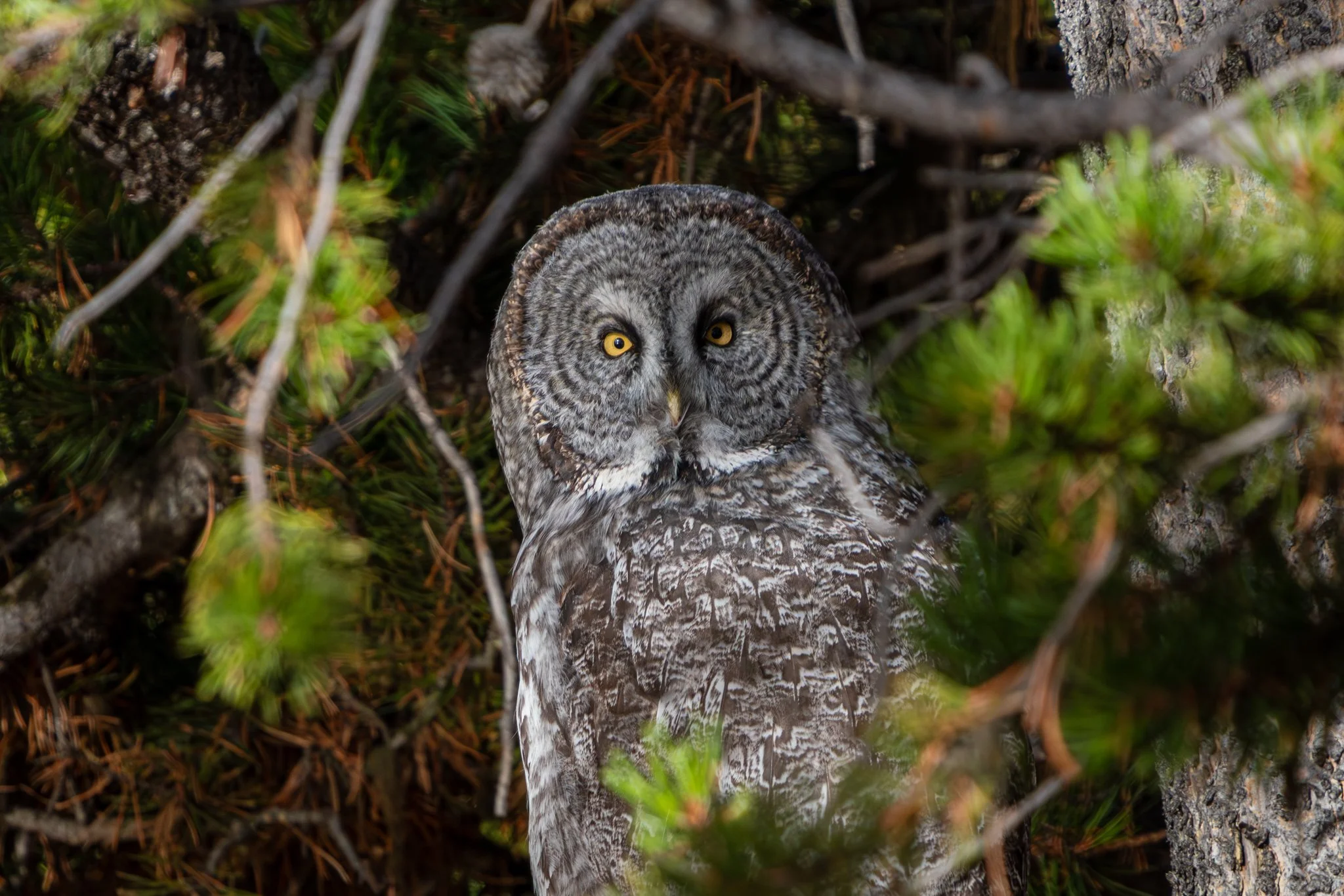
Watch for eye contact. Those piercing yellow eyes immediately draw the viewer into the image.
Leave room in the frame for the owl's direction of travel.
Capture hunting behavior rather than simply perched portraits whenever possible.
Morning light filtering through forest edges often creates beautiful layers of light and shadow that complement the owl's soft gray plumage.
Ethical Reminder
Great Gray Owls are particularly sensitive during nesting and fledging season. Never approach nests or recently fledged juveniles. If an owl changes its behavior because of your presence, you've moved too close. Give wildlife the space they need to hunt, feed, and raise their young naturally.
See It for Yourself
July reveals a quieter side of Yellowstone. While many visitors focus on the park's larger mammals, Great Gray Owls remind us that some of Yellowstone's greatest wildlife encounters happen in silence.
If you'd like to learn how to locate wildlife ethically, understand animal behavior, and create meaningful wildlife photographs, join us on a private wildlife photography tour with Wildscape Adventure.
Explore upcoming adventures:
Yellowstone Tours - https://www.wildscapeadventure.com/wild-yellowstone
Call of the Wild - https://www.wildscapeadventure.com/call-of-the-wild
Mastering the Night Sky - https://www.wildscapeadventure.com/mastering-the-night-sky
Written by Christopher Georgia, founder of Wildscape Adventure
Leading wildlife and astrophotography tours & workshops across Yellowstone, Grand Teton, and Acadia National Parks
📞 (406) 936-0414
✉️ wildscapeadventuretours@gmail.com
🌐 https://www.wildscapeadventure.com
